

 Spotify

 Apple Podcasts

 YouTube
Uniting an Industry: Wendy Porter on Event Codes, Lobbying, and Long-Term Success
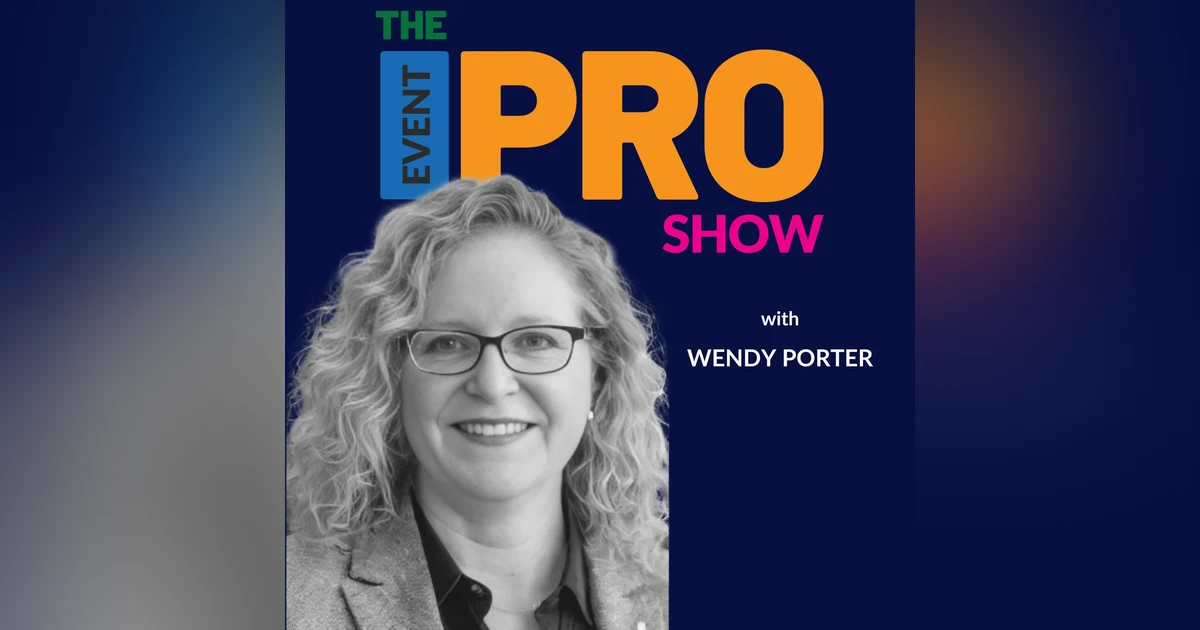

Welcome to The Event Pro Show, your go-to resource for all things corporate events, experiential marketing, and live event production. In this episode, host Seth Macchi sits down with Wendy Porter, founder and chief event strategist of Wendy...
Welcome to The Event Pro Show, your go-to resource for all things corporate events, experiential marketing, and live event production. In this episode, host Seth Macchi sits down with Wendy Porter, founder and chief event strategist of Wendy Porter Events, to discuss the evolving world of corporate events. Wendy brings over 23 years of industry experience, including a pivotal role as head of events at a Fortune 25 company, and recognition as one of the 100 most influential people in the US events industry.
In their conversation, Seth and Wendy explore Wendy’s unique journey from her early memories of Hawaii’s King Kamehameha Day parade to her unexpected foray into corporate event planning. They discuss the often-overlooked complexity of creating seamless events, the disconnect between C-suite leadership and event teams, and Wendy’s advocacy to raise the profile of the live events industry—especially during the pandemic.
Wendy also unpacks innovative concepts like “fractional head of events” roles, shares practical tips for managing event costs (especially when dealing with union venues), and reveals her signature “cranberry thread” approach to crafting high-impact, cohesive experiences. Plus, you’ll hear about her passion for networking, mentorship for the next generation of event pros, and her optimistic view on the future of event technology and personalized attendee experiences.
Get ready for a fascinating look at what it takes to create memorable, strategic corporate events—and hear firsthand from one of the industry’s top voices on how to stay resilient and innovative in a rapidly changing landscape.
Resources:
https://www.linkedin.com/company/live-events-coalition/
https://www.linkedin.com/in/wendyporter/
The Event Pro Show is a production of LEMG.
LEMG is a leading event production company known for delivering exceptional experiences. From site planning and event design to technical production, staging, lighting, sound, and more—we do it all. As a second-generation company, we’re proud of our rich history and commitment to innovation. Whether it’s a corporate meeting, conference, convention, or live event, we’re the team our clients trust to execute their vision flawlessly.
https://lemg.live/
0:00 Welcome to the Event Pro show, your ultimate guide to the world of corporate events. Whether you're a corporate event planner, experiential marketing pro, producer, technician, or anyone involved in creating exceptional events, this podcast is your go to resource for valuable insights, expert tips, and inspiring stories from the industry's leading professionals. Well, thank you for joining us on the Event Pro show. We have a great show today and I want to get into it. Uh, but before that, I have Wendy Porter with me. Wendy, what is the temperature in Minneapolis right now? We are at one degree. Okay. Mine feels like mine is 13. Oh my goodness. Okay. I'm in the Carolinas. It's in the 40s and 50s. People are freaking out. There's big jackets, everybody's pulled out. You know, people aren't running around in. Shorts and sandals and that temperature. Right? Yeah, yeah.
0:51 So we do not live in similar places for sure, but let me do your intro, Wendy. You know, today we're joined by Wendy Porter. She's the founder and chief event strategist at Wendy Porter Events and like we mentioned, a Minneapolis based agency known for crafting high impact corporate events that foster brand engagement and deliver measurable ROI. With over 23 years of experience in the event industry, Wendy spent 13 years as the head of events at a Fortune 25 company. I bet you needed a nap after that. Yep. Leading large scale conferences, strategic sponsorships, and recognized for her leadership. She was named one of the 100 most influential people in the US events industry in 24.
1:32 Congratulations. And also congratulations for receiving the Smart Woman and Meetings Visionary award. And Wendy is also passionate, a passionate advocate for the industry, having played a pivotal role in lobbying for the live events sector during the pandemic. And thank you for that. And her insights have been featured in major outlets like the Wall Street Journal, CNB and local media. Wendy's strategic vision and advocacy continue to shape the future of corporate events. And we're excited to dive into our expertise today. So please welcome to the show, Wendy Porter. Thank you so much, Seth. It's wonderful to be here. Yes. And truth be told, we met on LinkedIn as all good business relationships begin. And we just started talking and you have like a really compelling story about what you do and I needed to hear more about it. So thank you for being a guinea pig on the Event Pro Show. I love this kind of stuff. So. Well, let me ask you like an opening question. So what's the first event that you can remember attending? So this is kind of an interesting one. I had to think back. We. We lived in Hawaii when I was a kid. So let's talk about fundamental shift from Minnesota to Hawaii. Wow. My dad was stationed there as an army guy. And one of the things they have in Hawaii is something called King Kamehameha. You ever heard of that? No, I have not. It's celebrating, basically, the king who, you know, founded Hawaii. Okay. And so parades and, you know, all the floats and the flowers and just, you know, really
3:04 festive kind of experience. And I. We lived in Hawaii when I was about 1 until I was 5. So some of my earliest memories are of Hawaii. And I remember going to the King Kamehameha Day parade in Hawaii. Made a big impression on you. Yeah, totally. Those are some of my favorite memories are when I'm about that age, because they were more. They're just more impressions, you know? And so you. You remember colors and smells and sounds and things that were inspiring. But you're a kid and you just didn't really understand it, but you knew you loved it, you know? So that's kind of like how I remember a lot of things back in that time frame. But fast forward then. So professionally, what was the first time that you went to an event? You're like, oh, I think, like, I think I want to do this as a job. You know, that's not really how my career progression happened. Like, a lot of people in my age, honestly, there wasn't an event curriculum when I was in college, Right. So I went to school actually for mathematics and German, believe it or not. And my plan was to go into international business. That was my thinking. Okay. So I started my career doing marketing, which was great, and ended up doing some international marketing work, which was. I loved it. And I planned some events as part of that, but it was more sort of client, client events and people coming into the office and planning, you know, full day kind of events for them. I didn't really think of that as an event. I thought of it as a meeting. Right. And it wasn't until I got
4:35 to United Healthcare, where I came in as an acquisition marketing manager. And my very first year there, our VP of events came over, or VP of marketing came over and handed me a folder and said, hey, we're gonna sponsor this event. You're gonna do it. I was like, okay. Never done that before in my life, but I'll figure it out, right? So that's how I fell into it. And so as I got into it, it turns out I was actually really good at it. And I, you know, I always liked sort of planning gatherings and I did a lot of that in my neighborhood. I planned our first progressive Christmas party for the neighborhood, which 31 years later. Right. You know, I used to, when I was a kid, I did the lemonade stand and I, you know, I did all that kind of stuff, so. And I gathered my friends for plays and, you know, all that kind of stuff. So I was sort of a natural gatherer as it was. And so it turns out I was really good at it professionally. And so that's, that's really how I fell into it. So.
5:27 Yeah, it's interesting you mentioned that because there's, it's so entrepreneurial. There's so many people that are in events that are entrepreneurial and everything that you were just saying was very much like that. You had eliminate stand. You're a gatherer, you can. Meaning how I take that is that you, you figure stuff out. Like you, you have a skill, a knack for figuring stuff out. And then the other similarity that I heard you say just now is I think so many people were handed a notebook of like, okay, you're doing this event. Exactly. And either you love it or you don't. Right. I mean, it's like people shake out pretty quick. Right. And then. But there's people that stick and they're like, I think I really like this. You know, I like the environment that's like that adrenaline, do or die kind of, you know, it's harder than people think to do and not everybody can do it.
6:18 That's exactly right. Yeah. So, yeah, the plan when I first got it was that I was going to have that program for two years. Right. And I would have an assistant and the assistant would be helping me in learning the ropes. And then after two years, I would hand it off to the next person and that person would do it with an assistant. So it's never going to be anybody's real job. Right, right. Because again, leadership didn't really understand A, the value of events and B, how much it takes to do them and that you actually need people who know what they're doing. Right. So we tried that two year stint because I still had a real, you know, the rest of my job. So we tried that for two years. I went to roll it off to my assistant and it started to go sideways really quick. And so they pulled it back and said, no, we're gonna, we're gonna give this to you now and we're actually gonna create a position around this now. Right. So we're going to let that other part of your job go. You're going to now have a position. They actually made it as a director of marketing for events. And then they said, oh, and we've got these other things we need you to do now. So you're going to take on our sales meetings and you're going to take on our CEO leadership conferences. And, you know, as my team developed, you know, all of a sudden we were doing 350 town hall meetings a year. I worked in the Medicare division of UnitedHealthcare, so we were B2C.
7:28 Right. So we were out meeting with customers and explaining their benefits from year to year. So we had 350 of those. We had to. In eight weeks every fall, just on. Top of the pile of the other. Events, we stood up our CSR programming and just. And oh, by the way, none of them can mess up. Don't mess up on any of them. No, by the way, don't mess up. Yeah. Why do you think there tends to be, I mean, this story of a disconnect between the C suite or top leadership and what events actually do, how hard they are, what impact they have. I know you have thoughts on total spend, that marketing spend, and the ROI on it, but even more than that, why do you think there has been historically this big disconnect between leadership and what events, how hard they are to do? Yeah, I think honestly, it's sort of. We sort of created our own problem. It's a little bit by design because we want it to look effortless. Right. That's why we're all dressed in black. We're behind the scenes. We're supposed to be invisible. You're not supposed to know there's 30 people behind the curtain scurrying around doing production.
8:34 Right. It's supposed to look effortless and magical and people just show up and it's just done. And, yeah, so because of that, in a way, we created our own problem because they don't know what goes into it. So I've always said, I've written some posts about this, that every leader should have to be at the table, in the trenches with the team on at least one event. Like, get in the trenches, behind the scenes and see what really goes into it. Otherwise you're never really going to get it. I. I love that I run an AV company, and I firmly believe that everyone in the company should go to at least one event a year. And it's. The same concept that you're speaking of is like you can get detached from the reality of what it takes to do an event if everything is Just a, just a spreadsheet, you know, and it's not a reality. Right. And my, the first trade show that I did, my parents actually came to it because it was a, it was an aarp, big AARP thing. And so it was a business to consumer show. And so my. I, it was in Chicago. And so I had my mom and dad come and I said to my mom, I said, just imagine when I showed up, this was a concrete floor. There was nothing here. Yeah. You're literally building a house, if you will. Yes. In three days or whatever we had, you know, our booth was, at Its height was 13,000 square feet. So if you can wrap your head around how big that is with an 80 foot semi trailer in it that looked tiny and you know, but when you show up, there's nothing there. It's a concrete floor and you're literally building the house. Yep.
10:04 You talked about being behind the scenes. I, I see this as well too. So again, we, we work, we work the same events from maybe different sides of the room sometimes. But the goal for everybody is to have this experience, this totally seamless, you know, and an attendee comes in and they just. What you just said, like, they wouldn't know that. You know, this was like nothing here. Like, there wasn't even carpet here. Guys like you don't. There was nothing, nothing here. And, and we do. So we did so good of a job that. Tell me if you think this is accurate. Over Covid. Our industry got overlooked because nobody realized how many people were involved in this industry. And we really hadn't done a good job of making noise about the impact that we have and what it takes and the energy and the jobs involved. Yeah. So. So you lobbied a lot during that time. So tell me about that. Yeah, so that's exactly right.
11:00 So March 13th of 2020, I was in San Francisco when everything shut down. Yeah. So I had to scramble home. It was. I wasn't even sure I was going to get home. I thought, well, if, if my flights start getting canceled, I'll just. I was in California, I thought, I'll just grab a car and I'll drive to Phoenix and fly from there. Because there was all this worry they were going to shut flights down in. Right. California specifically. Yep. So anyway, I get home and within days after that, it became very apparent that this was not going to be a thing and that our industry was, was not known about. So there was a guy by the name of Isaac Rothwell who put out a survey or it was actually, you know, one of those change.org petitions. Yeah, he put that out, pretty much, you know, throwing the flag saying, okay, this is my industry. We're in trouble, you know, and people started signing, and overnight, I think. I can't remember what the number was, but it was several hundred thousand signatures he had on this petition.
12:00 And so that gave him the aha moment that, hey, I think we need to organize around this. We need to develop something. Because we didn't really have anybody that was fighting for the industry as a whole. And to your point, it's because it's very disparate. It's all. It's AV companies, it's planners, it's caterers, it's, you know, it's decor people. It's, you know, all these different kind of companies. And they weren't all rolling up together for everybody to see the magnitude of who we were. So we started doing research around that. Stood up the Live Events Coalition that spring, I stood up the Minnesota chapter of it, and then I ended up joining the board of directors for the national coalition out of D.C. and then got involved in our government affairs team. So we were actually lobbying Congress. We met with over 100 members of Congress. I was fortunate being in Minnesota. Two of our House reps were on the Small Business Committee, so Dean Phillips and Angie Craig. And so I was able to get their attention here in Minnesota. And they really took the bull by the horns and ran with it. And Dean, his team and our wrote the legislation. We actually got a bill through the House to get relief in place, but then it died. Narrowly died in the Senate. So we did not get it through. But what we learned by doing all that work is that we are 12 million people. It's a $1 trillion industry. And I think that's. I think that's light. That's what we. I do, too. That's what we could substantiate, you know, in our reporting that we could pull together. And over a million small businesses. I think it was 1.2
13:32 million small businesses that nobody was talking about. Like, we were twice the size of the US Auto industry and nobody was talking about it. And they were going to be the first to be shut down and the. Last and the last open, and we couldn't do curbside. You know, you're right. You know, and the National Restaurant association was getting attention because they've been around for over 100 years. They had a lobbyist, they had. They had, you know, relationships already built, and they could leverage that and pull the levers, and we had nothing. And so, so we, we built that and, and we did hire a lobbyist out of DCE that really helped us and they told us that what we got done in two years was never, pretty much doesn't happen, you know, that we were able to get a bill through the House in less than two years starting from scratch. So yeah, and we're still, we're still working on stuff today. People may think that we, we disappeared. All of us did end up going back to work and so we had to sort of, you know, lighten our, our work towards the volunteer efforts. But we are currently, we actually just put a proposal in last week about modifying the NACE code system, which is the North American industry classification system. So. Okay, I'm not the only one that spends a lot of time trying to figure out what code I actually am. Is it. Could it be that one doesn't exist? Is this what you're telling me? That's exactly what I'm telling you. One doesn't exist. Which is, yes. What complicated us pulling the research. We didn't have any way to pull the documentation of how big we were because we got codes all over the place, over 30 that we identified. And so we put in a proposal to
15:05 modify the system to create a code. Actually it's modifying code 70, which currently right now is Hospitality Leisure. And then we want them to add events to the 70 code. And then underneath that we would have subcodes, encapsulate all the sub industries, the hierarchy. The top sector code of 70 is what we're asking for. And then along with that putting in job descriptions because that doesn't exist. So right now there's grants come out for helping to educate, for education and funding and different things based on job descriptions. And if you're not in that system, you don't ever get the funding for that. So we're working towards kind of getting all those systems in place so that we can start working towards the educational components that are needed. We've got what we're calling the Silver resignation coming up. The average age of people in the live events industry right now is 54 years old and over 30 years of experience, typically. And so those people are going to be aging out here in the next 10 years. And so we need to make sure that we've got a feeder system, right? And so we're working on some programming for training literally all the way down to like the high school level where we could maybe be identifying students that have an aptitude for tech, for example, and getting them on that pathway to get the training and get into community colleges and things that will train them on the production side so that we have feeder systems into the industry. How can event pros tap into these resources or follow along as this story is unfolding? When you're working on this live events
16:36 coalition on LinkedIn, definitely follow us there. We post. I post a lot about this. In fact, I need to put something out about the NACE code situation because we just filed it on Friday. That just happened. Amazing. And then there's some others. I'll put that. I can put that on my post of other people to watch. There's. It's a. It's a. A number of us that are working together on, on this whole effort. So thank you for all your work on that. It's a big deal. And, and you don't know until. Until you do, you know, when you're in it, you finally realize, oh, this is a big problem. And Covid really highlighted something, but thank you for the work of getting that moving. And even down to codes, you know, what. What codes are we in? That. That's. That's been a problem my entire career. Career, quite frankly. And the other thing is, is those codes are only modified every five years, so if we don't get it in now, we're. We gotta wait another. Another five years. Yeah. So.
17:26 Yeah. All right, so there's an urgency. There's an urgency here. All right, all right. We want to support this. We're behind it. I. I know on LinkedIn, you've posted things. We were talking about entrepreneurship, and you posted something about what you were calling the burnt toast theory. Oh, yeah. Can you, can you share a little bit about what the burnt. The burnt toast theory is? Yeah. So it's about perspective. Right. So, you know, you get up in the morning, you make your piece of toast, and you ignored your toaster and shoot, you burned it. Right. You can either get upset about that, or you can view it as the universe in action and you burn that piece of toast for a reason. So maybe it, you know, now you got to stick the next piece of toast in, and it takes you too long, two minutes longer to get out of the house. Right. So maybe you didn't. You weren't in the intersection when the guy was blowing the stop sign, so you didn't have a car accident or it delayed you those two minutes. So now you met somebody in the coffee line that you wouldn't have otherwise been standing there. Right. It's that whole kind of sliding doors theory, you know? Yeah.
18:27 That two minutes, you could change your TRA trajectory. And so it's just viewing it as instead of an annoyance and a bad day, that maybe it's setting you up, it's protecting you, it's setting you up for something else. So I love that. I love that. And. And it. What a. There's a resilience to that that I think you have to have when you're entrepreneurial like yourself. Which leads me to my next question. Obviously, you have this skill set and you started a company probably, what, 10 years ago? 10 years, yep. And your experience has been what probably most small business owners experience. There's ups and downs. And how has that ride been? Why did you start it? And what, you know, what. What need were you trying to fill and how has that journey been? Well, I started it because, like most people in corporate, I was downsized, Right.
19:20 So a familiar story. Don't think I know anybody who has worked in corporate now that hasn't been downsized at some point in their career. And so that happened to me, and I had been thinking about it. It had been in the back of my mind that someday I wanted to start a business. I actually had started a business prior to that. In 1997, I started a small business making florals, like wreaths and floral arrangements. And I would grow the flowers and dry the flowers and then create stuff, and I put them in gift stores. And I did, you know, I went out to art shows and, you know, put my stuff up. And I did boutiques at my house. And so, I mean, I did those kind of events. So I always had kind of that entrepreneurial spirit. And it always kind of had been in the back of my mind. I had done an event once, and I posted about this too. It's at the Grammy Museum in la. And it was a really, really cool event. We were on the top, top terrace of the Grammy Museum, which is just a blank canvas, Right. So we set that all up for decor and brought in wonderful food from Wolfgang Puck. And we were partnering with the Grammy foundation on it. And so we had students from the Grammy camp that were playing music and, you know, and then we had Ken Erlich, who was a producer for the Grammys for 30 plus years, come in and speak to our group. And we were about 50 people, and it was just us, very intimate in the Clive Davis Theater. And he ran a sizzle reel. And then we just got to ask him questions for, like two hours.
20:49 We just asked him questions like, what was it like working with, you know, Michael Jackson and, you know, Whatever the combinations, you know, that he would put together. Like, how'd you think about putting Lady Gaga with so and so, you know, whatever. Right, right. And we were on the elevator headed down to the theater and one of the guests from the events turned to me and she said, oh, I would never miss a Wendy Porter event. You do the best events. You should start a company. Wendy Porter events. Right. So she says this to me, and this is like five years before I got laid off. So that's plant. That seed is planted in the back of my head. Right. And so then I do get laid off. And the first thing I thought of is, okay, it's time. I should start Wendy Porter events. I have everything I need. I've learned so much in corporate about marketing and events and, you know, management of C. SU and communications and just all the things that I needed to do it myself. And so that was, I knew instantly that's what I was going to do. I love it. I love it.
21:46 And the rest is history. Yeah. And here we are ten years later. Here we are. Here we are. We survived a pandemic. So amazing. Congratulations. You made it. You made it to the other side. One of the things that caught my eye when we were initially talking is, you know, the, the idea of you're a fractional head of events. That's one of the services that you offer. Right. And fractional is a rebranding of a. Something that's been happening a lot for years in business. You know, when you have someone on retainer or contract. But it can, it can be an incredible way of adding to your team without the HR headache that bringing on full time staff and commitment that, you know, full time staff brings with it.
22:34 And so I think, you know, at our company we have a fractional CFO and you know, we're a small business, we have financial needs, but there are strategic things that we need, visionary things that I, you know, quite frankly, we probably couldn't afford to bring someone in full time, but you can rent their time for a little bit a week, you know, and you get that strategic stuff, stuff that you need without all the overhead. And that works really great. Well, I, I, you know, thinking of corporations like there are so many that need someone that knows what the heck they're doing with their events. And why would, you know, this is a very compelling argument. Just the title alone. So what made you start thinking about pitching it that way, for lack of a better term? Well, to your point, fractional is a thing right now. Right? It's, it's becoming, I think bigger and bigger over the last couple years anyway, from what I've. And I thought, well, you've got fractional CMOs, fractional CFOs, fractional COOs. Why not a fractional head of events? Yeah, why not?
23:41 Right. And we're seeing companies that are hiring still not really getting the value of events and why you need to invest in this properly and with the right people that disconnect. The disconnect we're talking, it's still a disconnect. And they think, well, anybody can do it. Just have the admin do it or hire the kid right out of college. They can do the event. Right. They don't really, still don't really get what goes into it. And so they're hiring young people because that's what they can afford. Right. And that's all fine. Those, you know, those young people are going to learn, right. But they really need some guidance. And you, you don't want to be wasting 27% of your marketing budget, which is what we're seeing right now. 27% budget allocated for events. Now, you don't want to waste that 27%. That's a lot of money, right? So why not bring in a fractional head of events to help guide that team, help teach those young people that you're bringing in and really making sure that you're being smart with your marketing dollars. Right? So that's why I stood it up. I stood it up about a year ago and you know, still really pushing it. It's, it's not taking off as fast as I hoped it would, but I still think it's the right thing to be doing. I think it's brilliant and I wish I could share it every time we deal with a client that is doing what you're saying. Because I have, I have some thoughts I want to share with you a couple thoughts here. This whole idea in any industry of bring in young and inexpensive so they fit the bill as far as budget, which was
25:13 already unreasonable just from the start. And you put them in a situation where they're not learning from anybody. And so yes, you're right, they, they will eventually learn, but it's such a miserable experience they might learn themselves right out of the industry and go become a realtor or something. Right. As opposed to what you're proposing. You could also mentor some of the young people into being better at their job too, which I think is a way more long term investment type of approach. A lot better ROI on that, on that, on that money So I just feel like sometimes, you know, like in a production company sense because I, I see a lot of production companies. You'll hire somebody that's 19 years old and go say okay, go, go mic up the whatever city orchestra, good luck. Here's a bunch of microphones and some stuff. Don't screw it up, up. And oh yeah, it's, you got to work for 20 hours and we're not paying you overtime. See ya. You know like, and you know you can do that for a year or two. Sure. And then they get burned out and then they leave. Well, that's really short sighted. Right. And so I, I love this idea that you could come in and, and provide that guidance and, and potentially could be an asset for their long term growth of a department. So. For sure. Yep. What do you think makes a really successful corporate event like a truly successful corporate event?
26:37 Well, so for me I have a, something I like to talk about that I call the cranberry thread. And cranberry is one of my colors. If you look at my logo, I've got this E woven through the wp that's cranberry. And so I call it the cranberry thread. And so it's really, it's being very intentional about how you're planning. So it's thinking through from the very first touch point that's going to go out to somebody that might be attending your event to make sure that the feeling and the look, everything that that person is experiencing in that first touch point is going to carry all the way through everything that they're experiencing during the event on site as well as the post event follow up. Right. So there's a thread, thread that runs through the whole thing. I think that's what makes a great event is when you are being very intentional about your planning throughout the whole experience. I think that's a professional, professionally planned event. Yeah.
27:31 You reverse engineer where are we trying to. And then you reverse engineer back to the beginning and you can follow that thread through to where you guide them to the end point and hopefully they retain it. I love it. I love that idea that there is a thread about it. There's something that keeps coming up. And another question I've been wanting to ask you because I saw a quote, you had a quote in meetings today about venues that use labor unions. And so I'll be on panels or ask questions about this in different environments about the cost of, in house or unions, those types of things. And, and your advice about that was a little counterintuitive and I thought it was a fresh take is how you can work with the reality of certain venue costs as opposed to just avoiding using venues or geographical regions. I thought that was a fresh take because I think a lot of times people are like, well, how are we going to get out of this? And then what venues are we just gonna avoid?
28:32 And it's like, I don't know if that's the road to take. So. So what are your. What were your thoughts when you. Yeah, well, and sometimes you can't avoid it right there. If you've got a really big event, you're pretty limited on the cities you can go to. Yeah. You know, you're gonna. You're gonna be going to a union city, so you need to figure out how to work with it, not against it, necessarily. Right. So it's just being smart about how you partner on that. I always work with production teams that I know and trust and can help me kind of leverage that and make sure that, you know, as we're planning our day, that we're really thinking about the hours that are going in for the team and when am I going to hit that overtime? You know, if we're loading in, making sure that when we're building the contract, we're not trying to load in on a Sunday because I'm going to get hit with overtime. Right. So just being smart on the front end about how you're setting up your logistics so that you don't inadvertently run into overtime situations that you don't even realize you're going to be doing. Right. So that is just making sure you're partnering with the right professionals who understand the rules and how to engage properly with the union teams, you know, and I find it can be a really good partnership. Right. We have to work together. Let's figure out how to make the most of it and, you know, come up with a great event. And so, yeah, I love that. So if I'm hearing you correctly, you're saying, you know, you don't have to avoid it. You.
29:51 You just. Just do your homework and. And create relationships, make sure you're working. With partners that get it, that know how the unions operate. Yeah. So we don't need to be afraid. We don't. Typically, I don't. I don't. I. I'm not a union person. I don't. I'm not in a union. I don't interface with unions. I don't really, you know, I don't know the ins and outs of that. And so I need to work with professionals. That do. Right. That understand that situation. Do you have any other thoughts on controlling costs at events? You got, you got. You got us going down this road. So, like, I bet you have some interesting takes on. Yeah, I mean, things have gotten pretty. Pretty kind of out of control, honestly.
30:31 Yeah, I mean, it's things like instead of having bottled water, you know, can you have pitchers of water with ice on the tables instead, you know, right there. That can save you money, Tons of money. You know, it's just. It's working with all the different teams to get creative on how you're putting things together to try to save the money. I'm hearing a lot of you need to talk with your partners. You need to use the knowledge and. Engage in people who are experts on it. Right. So I've got experts on my team that are food and beverage experts. That's who I'm going to leverage to figure that stuff out. Right. Yeah. Like, I leverage my production partners, help me figure that out. I can't be everything to everybody. Right. I can't know everything. So I just make sure I have a really great team around me that does know their subject matters, and that's who I tap for. Different.
31:18 Different elements. And I see that you're very networked. You're a part of different networks and groups. And I think that's such a skill, like learning. You know, in this day and age, you still need to connect with people and get their insights and get their take and realize that you're not. You don't have to be the smartest person in the room. You actually just have to be good at utilizing the resources around you. Exactly. Exactly. Which is another way to save money would be, you know, I've got thousands of planners now in my network, so if I've got a client and they want to do an event in Seattle or something. Well, obviously I'm not in seatt, you know, so, like. Well, we don't want to pay to send you to Seattle. I get that. Well, I've got people boots on the ground in Seattle that I know, and I trust that I would bring in to be part of my team to execute that event for me in Seattle. Right. So to your point, being networked is really important because you can. You can tap into people as you need to, wherever they are, and you. End up saving people money for hiring you because they're. They're renting that network for a time and that, you know, you can.
32:18 You have resources all over where if they had to reinvent the wheel, it could Cost twice as much. Exactly, exactly. Or just like another example is, I had a client. They didn't. They didn't bring us into the fold until after they had already signed the contract with a convention center. Okay. So they did the site visit themselves. They signed the contract. We had absolutely. No. That's rough input on that. So we inherit this contract. So we get into planning, and we're working on WI fi. And I come back, I said, well, here's the quote for WI Fi. And she's. And it was 30 grand, right? And she's like, well, but they told me they had WI fi. I said, yeah, they do. Not at the speed you need, you know, so. Because they just didn't know what to ask. Right?
33:02 And. And it's not. Wasn't her fault. She just didn't know. And they learned a hard lesson that they had to pay $30,000. It wasn't planned in their budget for Wi Fi because they know to get the speed that they needed and to get the network they needed. And so, man, if I could. If I could make T shirts. Please hire an experienced professional when you're planning an event. That's probably a really dumb T shirt. But I. I have seen experienced planners save so much money because they know the questions to ask. Because school of hard knocks, sometimes, you know, or you take the time to read the contract, or you have friends that have done it before. You have people that are lending you their experience, and it really does. That's just another example of why I love this fractional head of events. If you hire Wendy, I'm telling you, you will save money. It's, you know, yes, you will be paying her for all of that expertise, but you will save money. Right. And your team will learn something in the process. Right, Right. Free education. Not free, but an education that they can then deploy. And I love it. It's just a good, good, you know, you're talking about that. What did you call it? The Silver Retirement.
34:11 Silver Resignation. Silver Resignation, Yeah. I almost had it. It's both, right? It's retirement and resignation, people. This is helping to mitigate that in institutional knowledge that will be lost over the next decade by having people that know what they're doing around. So, okay, your company, what are you excited right about right now? Like, what are the things that get you excited? And like, I. I love this. And this is what to be doing. Yeah. Well, I love that we're seeing events evolving into more. We're calling it kind of moment planning. Right. Those little elements of surprise that you Plan into events and also people finally recognizing that you need some white space in your day.
34:58 It's. The breaks are necessary from a brain standpoint. There's. I posted about this a couple weeks ago about the brain science of taking, taking the proper breaks and letting your brain sort of catch up to what you just heard. You know, there are reasons why TED talks are only what, 10 to 18 minutes long because that's how long you can focus and then you need to take a break, right? Yes. So people are getting smarter about how we're planning agendas and doing more of this moment planning, which I think is really cool because it's, it's really creating the experiences that are going to create the memories and help people retain the information. I think AI is pretty amazing. I have, you know, gotten on board with that in the last year. And I'm telling you, I use it every day, several times a day. And it's, you know, I think it's a game changer as far as helping us just speed up our processes and for writing and things like that. So I think that's pretty exciting.
35:52 I think, you know, we're going to see more personalization coming in with technology happening. There's some pretty cool technology out there now where, you know, the geofencing things that we can do to get messaging to people when they're at an event. So it's custom to them. You know, I think some of that is really exciting. So like I said, I think it's this moment planning in a very personalized way so that people really are getting, going to get what they really want out of events. Moment planning, I love that. And it, and it falls in line with your, what Cranberry thread it does through you can, you can place these moments that are all strategic, all part. Of that and making it relevant for each person. You got to figure it. You got to, you know, with data we can figure out what, what resonates with me versus what resonates with you. You know, what are the, what are the sessions? We're going to be able to get to a point where we can even help people.
36:41 Like if you're at a conference and let's say there's five tracks of content, educational content, you know, we're going to be able to get to a place where it's going to be able to recommend and say, Wendy, based on your interest, you should go to these five sessions. Right. And then we're going to be able to track that better to see, you know, how did it go when she was in that session, you know, what did she engage with? And just better engagement, a better custom experience for each attendee. I love it. And speaking of resonating, if if what someone's listening to resonates with them, how would someone learn more about Wendy Porter events? Sure. So several ways you can find me. So I'm on all the social channels. LinkedIn is the best one I'm on there multiple times a day and respond to messages fairly quickly there. You can email me which is just Wendyendyporterevents.com or go to our webpage Wendyporterevents.com at the very bottom. If you slide down on the homepage, there's a form you can fill out to find open times in my calendar for a free 30 minute conversation. Love it. I love it. Well Wendy, this has been been a blast. It was everything I hoped it would be and a little more I learned something. So I really appreciate your time. Thank you so much for for being here on the show. Thank you so much. I appreciate it. It was a great conversation.
37:59 And thank you for joining us on the Event Pro Show. Be sure to join us every other Thursday where we'll be releasing episodes from Event Pros in every corner of events. The idea ideas to just give you content that help you grow as an event professional. Have a great day. The Event Pro show is a production of LEMG video by Nick Barrett, audio and post production by Prince Thompson. You can learn more about us at LEMG Live.