

 Spotify

 Apple Podcasts

 YouTube
Building Your Hospitality Toolbox: Erin Dennis’s Advice for Event Planners and Venue Owners
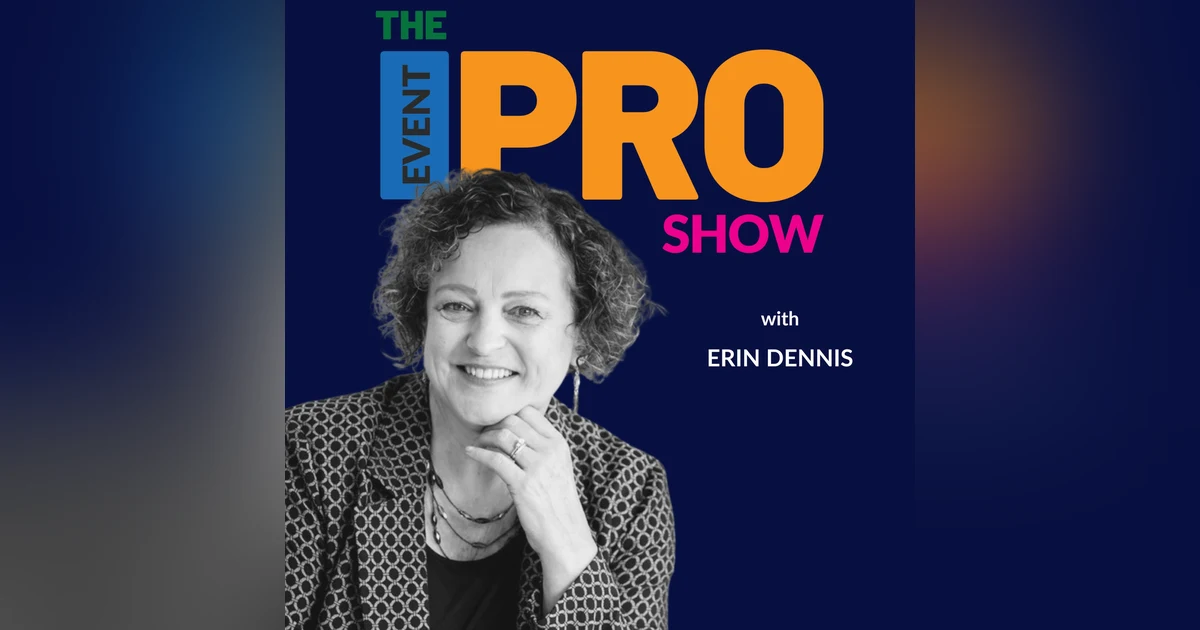

Welcome to another inspiring edition of The Event Pro Show! This week, host Seth Macchi is joined by Erin Dennis, founder of Evergreen Hospitality Solutions and a true trailblazer in corporate events and hospitality. She brings decades of experience across catering, sales, marketing, and leadership, along with a career filled with recognition, and shares what she has learned about building teams, mentoring rising talent, and shaping the future of the industry.
Erin reflects on her early experiences in events, the challenges and rewards of guiding the next generation, and her belief that strong relationships and genuine connections are the foundation of lasting success. She also opens up about her entrepreneurial journey, describing what inspired her to create Evergreen Hospitality Solutions and how it is helping venues and hospitality teams address critical needs.
This engaging conversation offers practical guidance, heartfelt stories, and thoughtful strategies that highlight the importance of mentorship, collaboration, and asking for help. Tune in to hear Erin’s perspective on the role of industry associations and the lasting impact of creating meaningful experiences.
Resources:
Evergreen Hospitality Solutions
The Event Pro Show is a production of LEMG.
LEMG is a leading event production company known for delivering exceptional experiences. From site planning and event design to technical production, staging, lighting, sound, and more—we do it all. As a second-generation company, we’re proud of our rich history and commitment to innovation. Whether it’s a corporate meeting, conference, convention, or live event, we’re the team our clients trust to execute their vision flawlessly.
https://lemg.live/
0:00 Welcome to the Event Pro show, your ultimate guide to the world of corporate events. Whether you're a corporate event planner, experiential marketing pro, producer, technician, or anyone involved in creating exceptional events, this podcast is your go to resource for valuable insights, expert tips, and inspiring stories from the industry's leading professionals. Well, thank you for joining us on this episode of the Event Pro Show. I am your host, Seth Macchi. I'm the CEO, CEO of lemg. We're an event production company based in Charlotte, North Carolina. And we focus primarily on producing corporate events all over the country. And as you know, I like to have guests on the show that in some way shape or form touch corporate events. And I'm very excited about. Today's guest was one of the. I don't know if she remembers this. One of the first people I met when I moved to Charlotte. And when I met her, she was winning an award. And it seems like every event that I go to, where Erin is, she's winning some sort of an award for. For hospitality or something in events.
1:02 And it's. It's pretty awesome. So I feel honored that you're here today. Well, thank you. Thanks for having me, yo. Absolutely. And for those of you that don't know. Erin. Erin, I'm just gonna just talk through your bio really quick to introduce you. Erin is the founder of Evergreen Hospitality Solutions, a consulting and coaching company that supports hospitality sales and events teams with marketing strategies, team development, and professional management. With more than 30 years of experience in catering, sales, marketing and leadership, she. What. What haven't you done? Is basically what it's saying. She's taught at Central Piedmont Community College and mentored countless professionals in the industry. A dedicated leader and connector, Erin is also an active member of multiple industry associations, including nace, where she is a certified professional in catering and events.
1:50 I'd like to welcome to the Event Pro Show, Erin Dennis. Welcome. Thank you. Excited to be here? Yes. It's gonna be fun. It will be fun. And I. I'm super excited. You are the quintessential event professional. So you're the one. You're the prototype of the guest here. So thank you. Thank you. And I like to kick off with every guest with kind of a baseline question. Okay. Because I think it's kind of fun to hear people's. People's thoughts about this. But what is the first event that you can remember attending? And I'm looking for, like, your earliest memory as. As a kid. So I will say that when. When I was growing up, we were very active in our local church.
2:32 And my mom was on the planning team for a festival that they would have every year at the church. And she was in charge of all the booths that had candy and sweets and the bake sale area. And that's really what I remember the most. I remember helping her decorate gingerbread houses to use as decorations at the event. I remember walking, going with her and walking through the, like, the flow of how things would go. And. And then she did that for many, many years. So I just. I. That's really my first event that I remember. Yeah. Yeah. I think you're not alone in that. I was having some memories while you were talking of my own childhood, of my mom doing stuff like that, too. Yeah, that's. That's a great memory. Do you think that gave you a positive feeling about events? It did, it did. I enjoyed being in the booth with her and greeting people and trying to talk them into or getting certain items from the tables. And I would go even to tables that weren't mine and my mom's and, you know, and just. I just. You're a natural.
3:44 I was. Yes. Very much the social butterfly and. Right. I can't see that. I can see that. So in that context, fast forward, when was the first time you can remember wanting to be involved with events, like, as a career? I mean, that's a big jump from being a kid there, but yes. So I did start my career off in the hotel industry working. Actually, my first job was as a lifeguard in a hotel. And I grew up in Chicago suburbs, so these were hotels out near o' Hare Airport. And I then worked my way through hotels. But it wasn't until I moved here into Charlotte in 1992 that I started working at a hotel, which actually is no longer in existence, but it was the original Hyatt South Park. Okay. And I worked in accounting there. And then I moved into the role as general manager's assistant.
4:44 Glorified babysitter. Yes. But that's when I started to be more in the office and see things. What was happening with the salespeople, and they would come to the desk and get, you know, keys and be showing around and. And then the events would be going on. And as a manager, I was required to be at some events, especially the New Year's Eve events. And so that's when I was like, oh, this looks like a lot more fun and a little bit better schedule. So. Right. That's when I decided to start pursuing something in the sales and events side of things. Right, right. Once you peeled it back a little bit and saw what was happening back there.
5:25 Yeah, absolutely. And you also have taught a lot. I think I keep running into people that have been taught by you. There's people all over the place that have learned from you. So as an educator, what have you learned as you've taught the next generation of event professionals? I think right now there's, there's definitely been an exodus of talent post Covid. Right. And so I think it's a really important time to think about that, like who's coming in, but what, what are lessons you've learned as you've taught, you know, these young professionals. I, I have learned that a lot of things, especially in the industry, they learn more outside of the classroom. It's very important what they learn in the classroom. More of your systems and processes you learn. I know that a lot of students, I have to teach them professionalism. We would have a lot of guest speakers and I would take them on field trips, but I would tell them what they could wear. Mainly I told them what they couldn't wear and what they needed to bring with them and to be prepared and required questions that they had to ask and things like that. So, you know, I'm learning that and I learned because I taught for 18 years at CPCC, I'm recently back and teaching a new program which I'll share in a little bit. But it's
6:57 the, the, the generation today. There's a couple things, especially with COVID that has happened. They're not, they're very socially awkward, I guess is the best way to put it. Yeah. You know you noticed a difference? Oh, absolutely, yes, I've even noticed it. Even when they are working, a lot of folks start, I think a lot of it has to do with that they were learning behind a computer. Yeah, for sure. And learning or communicating behind a phone and not necessarily learning to have those one on one conversations with people. And I think that the greatest thing I can do right now is teach them how to come out from behind those barriers. Right. Don't be afraid to get out from behind.
7:51 But they are, they're terrified. You know, I remember even my own children and at the age of 15 and now they're in their 20s, didn't even want to call and order pizza. Yeah. So I think some of that is even before COVID but I think it just got worse because they were learning online and they were at home and they weren't socializing. And so I think it definitely has, has definitely hurt them a little bit. Yeah, Yeah, I, I could see that too, with my kids going through it too. That, that whole period, I had one graduate then going to college during that time period. And it is just different. There's been pros and cons. I think as a technology person, there's a lot of cool stuff that's been adopted, but we're also losing some hard skills of like, how to interact. So in that context though, what do you think is the type of advice that you find yourself giving most often to young professionals as they're learning and growing into a career? I always recommend that they get connected within some type of an association where they can practice those skills without it being tied to an evaluation of their job performance. I know for me, I have been a member of nace for 30 years, and so I started pretty very early on. I literally started in my career in
9:22 catering sales in 1995, and then later that, that year is when the NACE chapter started in Charlotte. So I was able to learn how to be a leader, how to communicate, networking, how to build a group of friends and coworkers and folks that I could lean on through that process. And so I think that for students, if they could get involved with anything, any type of organization, it doesn't have to necessarily be a hospitality driven, but something that's gonna give them that presentation skills, communication skills, leadership skills, getting involved on the board of whatever that is. Right.
10:16 It's, it's literally, you don't have to pay for that education. Right. Right. I think that's incredible. And I, I, I'm involved a lot with mpi. Same thing. I've been to a lot of NACE meetings too. We, I was just talking with a group of planners and, and people that are involved with MPI about kind of trying to define what are you getting out of this. And I think it does, it does kind of land in. It's not necessarily a one for one like so from a vendor perspective, it's not like you're going, you get a sale or you know, from a planner perspective, you find a vendor or it's not like transactional. It's that, that your concept that you're laying out, that you're building your network, your group in that community and taking it one step further that I didn't see you talking about how we're. If, if skills are getting dropped off on one end of being able to interact with people, you have to kind of work a little harder to do that, to build those skills. And what better place than pick a group NACE Aah, mp. I mean, there's tons of them. Right. Pick one. A lot of times you'll see a lot of crossovers. Same group anyways, if you're in a mid market city, you know, but you need that, you need that group. And you'll find over the. Sometimes you're working for them, sometimes they're working for you, sometimes not at all. But you're recommending or they're recommending or. Referring, you know, or you're just helping each other study for something or hey, what did you do with this thing? And it's
11:47 literally someone that you can, you know, in the age of AI, there's still relationships trump a lot of things. Absolutely there is. We will not be without those personal relationships ever in our industry. Yeah, I agree. It's such a people business. I mean, we get people together. Right. So it would make sense that we know how to be around people. Exactly. You got to build that skill. You do, you really do. Yes, absolutely. That was literally the question I was going to ask. I didn't mean to talk about that, but I'm going to move past that because I, I do believe in networking in associations, but putting some thought around, like what, what is the value of that? And that's, that's for me, I think one of the things that we had talked about was, you know, what has your network done for you? For me and my man association and I, I have to give it everything. I mean, I would not have, would I have grown?
12:51 Sure. But I would have had to work a lot harder. Like I had some great recommendations. Me, you know, put the work in at an association and recommended me for some great jobs. I had some great opportunities to do some traveling and seeing firsthand what trends are out there because I was able to go to nace, national conferences and things like that. But I. Literally every job I had teaching at CPCC was kind of a bizarre thing that happened. But I went and took a meeting and event planning class which ended up being the class I taught for 18 years.
13:33 And the teacher, I took it because I came from the hotel side and I wanted to learn more about the meeting planning side. So that's really was for me it was self education. Yeah. And I walked in the first night and the instructor is one of my clients who's in meeting planning. Oh, cool. Cool. And so, you know, that I knew through nace and so it just all came together and then, then she asked me at the end if I wanted to take over the class. So it just, all of those connections have happened through that, through association. And I would encourage anybody that has. There's times when you go to these meetings and you're like, why am I going? I would encourage you to push through because there's these moments like that where you're like, oh, yeah, that's why. And it's not all the time, but it does. It's like these milestones in your career.
14:24 Right. That it was like, I, I wouldn't have done that without. Without. And gone are the days of just handing out business cards and taking business cards and tallying those up. Right. Those sales teams that are. And leaders that are asking for those. Probably not the best fit for the industry at this time. Yeah, it's changed. Yep. So you heard it here first. It has changed. Yep. How do you think this idea, you know, you, you teaching for 18 years, you're doing it again. So there's definitely a mentorship relationship that you develop. How do you think sharing your knowledge has changed the way you approach your own work? Because, you know, you're, you're teaching and obviously a professional teacher, but you're also doing professional work over here about what you're teaching. How does it change your approach? Yeah, it's. I think that it's all about learning the experience through experience. And so sometimes for me, when I'm teaching, I'm using past experience as examples. Yeah. But also when I'm working and helping like a venue put together their systems and processes for booking their event space, let's say. And what does their sales team structure look like? I'm always encouraging companies to reach out and get interns because every single one of the students at CPCC who goes through this hospitality program
15:55 is required to do an internship. And so I'm always. When I'm. When I'm working, I'm always looking for where are some opportunities where students could fill the gap of some things that are needed. Right. So that they could help with that process, but then also be learning at the same time. Time. Yeah. Does that make sense? Yeah, it totally makes sense. And you've got my wheels spinning about what we do and what we should be thinking about. So. Yeah, that's what happens when you talk to smart people. Oh, my gosh. I love it. So you have worked in many different areas. You know, you've. Your education, obviously, but also in on the event side, on the hospitality side, what inspired you to finally launch Evergreen Hospitality Solutions? You know you're an entrepreneur, right? You're an entrepreneur now. That's like the big word. Crazy, right? Yeah. And my husband is, too.
16:52 So now we're a dual family. You're. You're in this thing together. Yeah. And. And also second question is, you know, what inspired you to launch it? But what gap in the industry are you hoping to fill? Yeah. You know, with this company. So, for me, I have always been the type of person that believes that it's my responsibility to give back and to train the future of our industry. And I loved opening the new hotel in the south park area. It was fantastic experience because, again, I was developing and building a new team. We were developing from ground zero all those systems and processes, working between the sales and event teams as well as the banquet team at the hotel, and then bringing on our different vendors and people that we wanted to partner with and things like that. So that was really fun to grow that. But about two and a half years in, I'm sitting there typing up banquet event orders of details with pots of coffee, and I'm like, this is not doing anyone else any good. Right. I have so much more to give. Yeah. There was a moment. Yeah. It was. I remember it very clearly, and I thought, this is not for me anymore. Right. You've done this. Right. It's time to move on. Yeah.
18:14 I have. I have, you know, a good few more years and, you know, available to me to work your best years. Yeah. And I want to be able to do that by inspiring other people and training other people to take on these other. These responsibilities. So I was like, okay, it's time for a change. Yeah. And so I launched my company, Evergreen, and I have been having a ball. It's been great. It seems like it. Yeah. It seems like it's a lot of fun, and I've been dabbling in a lot of different things, but I have come to find that. And it's interesting. Early on, when I was talking about making this change, to a few people that knew about it before I shared it with my employer and anyone else were some event planners, corporate and social.
19:06 And they said, aaron, these venues, they need your help. They don't have any systems in place. They don't have processes for certain parameters of what decor can come in, what can't. What are the hours of setup? What are the. They don't really know what to do. And so I was like, okay, well, that's interesting. I hadn't really thought of that. My thought my path would be more in the hotels, but what I'm finding is hotels a lot of times think that they can just do it themselves. Yeah. So. But the venues, independent venues, a lot of them are commercial real estate investors.
19:51 They don't have the hospitality experience. Right. And so it's really been a great partnership for me to go in with these folks that own these locations and want to run successful, you know, venues and partner with some really good people. And for me to be able to bring everybody together to do that, so. To make it a win for everybody, I could totally see that they're trying to maximize their investment, but they have no experience. Like, they find themselves new owners of a wonderful venue that. How do you do this? And it looks really easy when you attend venues. Right. You know, at some event or something. And I got to peek behind the curtain on a project you were working on, which I won't talk about, but it was so well done. Like, it was just such a great experience to come and be a part of that.
20:39 So I think you're doing a great job. From my little view that I got to see, I'm like, oh, this is really cool. Very cool. I love it. So as far as you're now talking about helping restructure and manage hospitality teams, how do you approach restructuring hospitality teams differently than other consultants might? So what. Maybe this. This might be better. What sets you apart in this world of there are consultants out there, but you bring something unique, which is you. Yes. So what do you bring that you feel is different and how you approach venues or maybe hotels? I kind of lean on that a little bit. You know, my experience, my reputation.
21:21 But my mother always taught me that you get the best out of people when you ask for help or when you help others. Yeah, it sounds simple, but that's pretty powerful. It's very, very, very powerful. And I look at this as you need some help. You may or may not know that you need help, or you don't know what help you need, but let's sit down and have a conversation. So I'm also not the type that's going to go in and say, well, you have to do it this way, this way, this way, this way. Because that system doesn't work for everyone. So I listen.
22:01 That's really. I think one of the keys for what I do is, number one, I'm here to help you and figure out what path you need to go on. And then also I listen to what are some of your struggles or what are your goals. And. And then we come together and kind of put some ideas together. So if I'm hearing you correctly, you listen. I do. And then you don't. You have a Toolbox over here called your experience. Right. And you plug in what you feel they need. It's not like you come in with already assuming, like, I got. Don't worry. I don't even need to hear anything. I know what you guys need. It's just like a customer solution for every client. Yeah, custom's great. And also, it's not even just my experience, but it's the experience of the meeting and event planners that I have worked with in the past and what their expectations have been. I, you know, I am not an event planner. I don't want to be an event planner. But I have worked with quite a few, and so I understand how different the needs are of corporate versus social can be.
23:12 And the pressures are a little different, too. For sure. You know, the corporate side, it's a little more cut and dry. Most of the time, the budget is already set, and they understand their budget. They know what that looks like. They have a little bit better plan. Whereas on the social side, a lot of times they don't. They think they have a budget, but then, you know, the planners kind of nicely tell them that their budget's too. Low and they find out what things actually cost. Right, Exactly. And they want, you know, this grandiose thing, but then they have to kind of bring it back down. But I think my experience with working with a lot of planners, I bring that in as part of my experience. Okay, well, then, nice segue.
23:54 So if. If you could give one piece of advice to corporate event planners about working with AV or hospitality teams. Yeah. What would that be? Well, I. I am a true believer in that you cannot be the expert of all things. And AV for me has. I mean, can I plug in a projector and bring a screen in? Yes, I can do that. But as far as that, I'm done. I. I learned everything I learned, I learned from the professionals in the AV world. And so I always say, just by bring in the experts, don't try to pretend that you know all the things that they need, because that could really get you into a tight bond when you're a planner of. Well, you said we didn't need, you know, a mixer.
24:44 You know, we have three mics. You didn't. You said we didn't need a mixer. Well, Mike's, from what I've always been taught is once you go past one, you need a mixer. So I say lean on them. That's a pro tip. That's a good one. And two. But bring people in as your partners. Yeah. You know, as. As an event planner. You're not just, it's not just you. It's the AV team, it's the decor team, it's the catering team. So it, it's your team and you want to look at it that way. Yeah. Versus these vendors work for me. No, we're going to come together and we're going to make this work. But why not lean on the expert side that they are. Yeah. To help you with that. Whether that's planning or executing.
25:33 I 100% agree. And thank you for saying it. I, I, I there, you know, there is a need for, for writing RFPs, but I think there's a lot of pressure on planners to feel like they need to know how to write it before they know what it is. And, and that seems pretty ridiculous. Right. And so if you can build, and it takes a while, but if you can build a team of professionals around you in whatever discipline and like your mom said, ask for help. Yes. Then you can create stronger events. And it is pretty powerful. Sitting around a table with a bunch of experts and they just bouncing ideas. Because sometimes, you know, the caterer might have a really cool AV idea or, you know, the AV company might have a cool food idea or something, you know, and like, that kind of a thing, because we're all doing it all the time. Time. But at the end, you get a better product. And so I, I just want to say, like, just no pressure on writing a great rfp. Let's just develop a relationship here. Right. And that speaks too, to, like, another reason to get out, talk to people, meet people, ask other people who they're using, what their experience has been. You know, you need to have these relationships. And that's true. I feel like from NACE and other mpi, other, you know, you get the perspective of other people. You.
26:51 There's been so many times early on in my, my career that we would set up the room, set up the buffet, the food and everything, and then the AV folks would come in and be like, I need room for a stage. Right? Yeah, there's a stage on this order. Right. And am I looking at the same drawing? Right. Exactly. So again, it's, you know, respecting and seeing other people's perspective on how to make this event be successful for everyone. For the best outcome for everybody. Absolutely. I love it. I wish we could talk all day. And I really appreciate you having this conversation. We'll have to have you back. Maybe we can have you back on an expert panel or something. I love that. But if people want to learn more about you or what you're up to. What should they do? Where should they go? So I do have a website, evergreenhospitalitysolutions.com you can learn a little bit about me and my background and what I provide and what I do and there's ways to connect with me from there.
27:56 Fantastic. Fantastic. Or come and join me at a NACE meeting. Yeah, plug in NACE right here. Right. I'll introduce you to people. Join your local NACE branch. I think you should. Yes, yes. And. Or mpi, you know, if you want. But. But NACE first. Try NACE first. But no, I think anything. And you probably will see me at any event. Them. Yeah, I see you know, all the things. So there's a good chance that you'll find me at one of them. I love it. Well, thank you so much for joining us. And thank you for joining us on another episode of the Event Pro Show. Every week we put out episodes. We have awesome guests like Erin every other week. And then on the alternate weeks I'll give tips on AB that might help a planner produce a better event. You can find all of our backlog of episodes on the Event Pro show or any any podcast platform like Spotify or Apple. And we hope to see you on the next one. Thank you for joining us this time. Have a wonderful day. The Event Pro show is a production of LEMG video by Nick Barrett, audio and post production by Prince Thompson. You can learn more about us at LEMG.