

 Spotify

 Apple Podcasts

 YouTube
Transforming Blank Spaces: Christa Hovis Talks Event Process, Creativity, and Client Wins
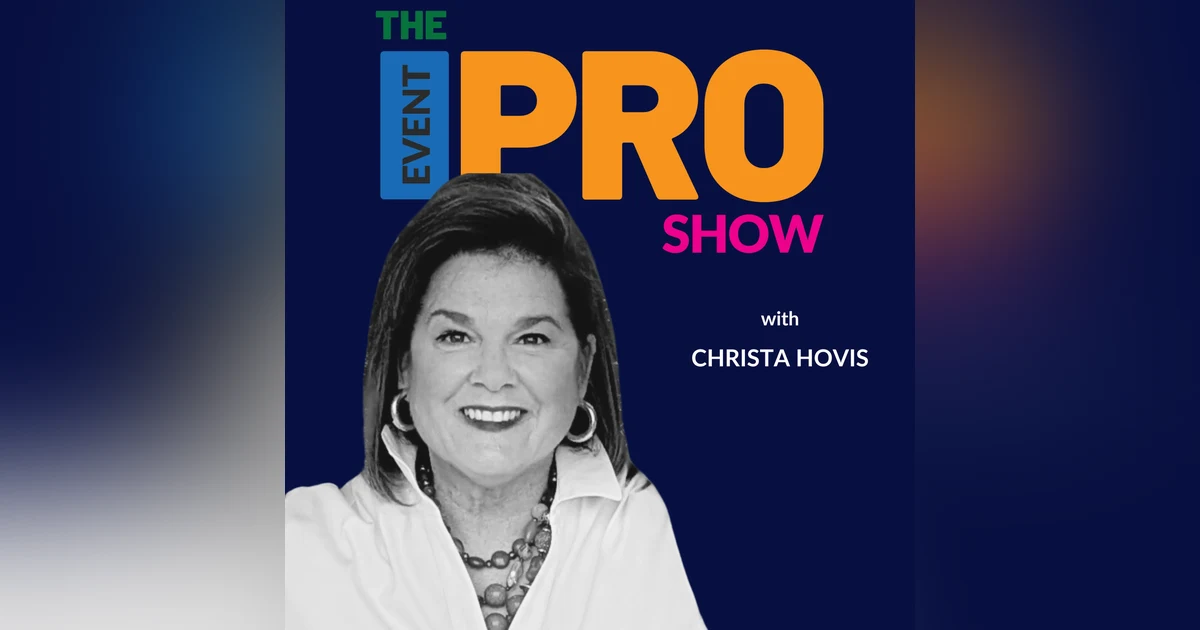

Welcome back! In this episode, host Seth Macchi chats with Christa Hovis, a force in event planning, design, and production. From a background in industrial engineering to becoming an independent consultant, Christa shares how her creative foundation shaped her approach to large-scale corporate and luxury galas. The conversation explores how creativity and process engineering go hand in hand, what it’s like to teach future event professionals, and how new tech, including AI, is reshaping event execution. Christa also talks through strategies for managing risk, building standout experiences, and collaborating with a wide range of client personalities. No matter where you are in your career, this conversation is full of practical takeaways and real-life stories to help you level up. Let’s get started!
Resources:
https://www.linkedin.com/in/christa-hovis-the-event-diva-mice-5936a610/
The Event Pro Show is a production of LEMG.
LEMG is a leading event production company known for delivering exceptional experiences. From site planning and event design to technical production, staging, lighting, sound, and more—we do it all. As a second-generation company, we’re proud of our rich history and commitment to innovation. Whether it’s a corporate meeting, conference, convention, or live event, we’re the team our clients trust to execute their vision flawlessly.
https://lemg.live/
0:00 Welcome to the Event Pro show, your ultimate guide to the world of corporate events. Whether you're a corporate event planner, experiential marketing pro, producer, technician, or anyone involved in creating exceptional events, this podcast is your go to resource for valuable insights, expert tips and inspiring stories from the industry's leading professionals. Well, thank you for joining us on another episode of the Event Pro Show. I am here with a fantastic, fantastic events professional and we're kind of on a run right now with talking to highly creative people. And it. I've said this before, but it is so funny to me that in corporate events, that's the world that I kind of play in. I run an event production company, kind of play in that world. And so many people are creative. They were former writers or, or actors or singers or musicians, and it's just so many creative people in our space. And I have another wonderful creative person today. Chris, I'm going to read your bio. Really, it's fine.
1:08 Y. Okay. So our guest today is a seasoned event professional with a wealth of experience in planning, design and producing high profile corporate and social events. Over her extensive career, she's held leadership roles managing large teams and departments across industries, specializing in large scale events program management and process engineering. In 2002, Krista transitioned from the corporate world to entrepreneurship, founding Kristohova Special Events, and has become a trusted consultant for luxury events, galas and corporate clients worldwide. A passionate educator, she's developed an event planning and certification program at Greenville Technical College and among other things too, in helping inspire planners and entrepreneurs navigating the event industry. All right, I got through it, but welcome to the show, Krista Hobos. Thank you.
2:03 Thank you. Glad to be here. Yeah. You've been on the list for a while. I told you before. You didn't know it. No, you were on the list for a while. You're a person that I, I knew we needed to talk to in the show. So thank you for being here. Yeah, thank you for having me again. It's great. So speaking of creativity, you. You are a creative person. Do you think that is one of the reasons why the corporate event space or events in general kind of spoke to you because of the creativity in you? Like, you saw that, that was an. Outlet for that, right? Absolutely. You mentioned process engineering and my background, my foundation is actually in industrial engineering and process engineering. And so in those worlds where you're trying to determine things, processes that need to be automated or to be manual, you have to be creative. You have to think, to use the terminology outside the bo and so that creativity in a very mundane way just overflowed when I had the opportunity to begin getting into events. So walking into a convention center where somebody would say, oh, I see. All I see is cement and, you know, poles that distract or columns that distract, you know, where I see a blank canvas. Right. You know, and so just meshing that together to be able to understand the logistics and the process and the creative side all just kind of happened for me as I started getting more and more into working on events. It's the creative part that I usually always start with and then, you know, roll it all up with the whole planning and production and logistical part of it.
3:34 Right. I love that. I love that you start from that place because that's really, from an attendee standpoint, that's kind of what they walk away with. Right. They feel that creative energy that you put into it at the beginning. And I think a lot of times we jump ahead to like, okay, what's the. The budget? Yeah, let's go down all the lines. Exactly. And we can't do this, we can't do that. Everything's a checkbox. Right. That kind of kills the creativity in it. Exactly. And that's why I'm not always, I'll be honest, it's not like I want to do every event that's out there because there's plenty for us. But that's why sometimes I'm not a fit for everyone because some are just down the road, you know, how much is it, you know, what's it going to, you know, what's it going to take? Whatever. Versus truly exploring the possibilities of what the event can be. Right. And starting creatively and then scale as you need to, to get to that budget. So. So, you know, but that happens, you know, fewer times than often. But just sometimes there's just not.
4:24 There may not be a fit. Right. For that opportunity project. Okay, well, I'm going to back up. I'm going to go way back. Okay. I'm going to ask you a question I like to ask everybody, but what is the first event that you can remember attending way back? It could be like as a child. Yeah. So I mean, yeah, that's the way back time machine for me. And I guess it's not so much an event, but an experience for me that really, I guess probably resonated. And it may sound corny now, but back then was actually going to Walt Disney World for the first time. And it was with the debut of the Tomorrowland and the whole futuristic of things that you Just hadn't even thought of and seeing it and the whole production and the lighting and the theming of the whole park. I think that stayed with me from.
5:07 From a child and kind of came back as I got older and started getting involved in adults and. And branding and creativity and lighting and all that. Yeah. I grew up in Orlando, and so, like, no kid that I grew up with ever paid for tickets. It was back in the day when you had. You. If you knew someone, you could get walked in. Right, right. But heavy creative and execution. Yes. Over time, like, every day was executed perfectly. And so a lot of those people, as we grew up, ended up working, you know, at Walt Disney or becoming an imagineer or something like that. Right. Incredible place for creativity, for sure. Right. Hate I ruined that with knowing that or not knowing that you were in Orlando, but it. It was at the time. Yeah. I mean, again, they think of everything from the time you get there to the time you end, which is the life cycle of a, you know, of an event. It's the perfect event.
5:57 Yes. Every day. Yes. From the time that you drive onto the property, like, and. And leave. It's. It's amazing. It is an amazing experience. So that. That was pretty impactful, huh? Yeah, yeah, absolutely. Yes. So from that. What was the first time that you. You went to something and you were like, I want to do this. This is what I want to do is a. Because there was. You had your pre. You had a career before this, and there was a transition that happened. Yeah. So I was very fortunate. We're recording today in Charlotte, North Carolina. And so if for people whether. Where you're listening, but we have a team called the Carolina Panthers here. Well, that. That dream for the Carolina Panthers started with Jerry Richardson. And Jerry Richardson was, I guess you could say, my first professional boss.
6:37 My first job out of college was working with his company at the time, which had been Spartan Foods, then became TW Services, and then became Flagstar, which people may not know was based in Spartanburg, South Carolina, and was the headquarters for five global divisions. Hardee's one of the big buildings, the only big building. Hardee's, Denny's, Quincy's, El Pollo Loco Canteen and Volume Services, all those divisions. So you say, well, what does that have to do with anything? Well, for the first time, that one little town was the center point for all these huge general sessions, all these huge breakout meetings, all these huge product launches with Coca Cola. And so you were dealing with, like, infrastructure issues and stuff like, where am I going to put everybody where are. We going to do this? Well, but they were doing them and then. And if we didn't happen to Spartanburg, it would happen some other location. But this is when a, when an organization had their own internal travel department with buses, fleets, they had their own photography team, they had their own in house AV team. Here I am coming in, like, what is all this? And seeing these huge productions, not knowing at the time, and from everything from, you know, stockholder meetings to multi day corporate retreats with all these different divisions, that's what I got a taste of, that's what I got to experience. And then when it came time for me to go on my own down this path of entrepreneurship, what do I want to do? I want to do what I was a part of in that organization. And seeing all that and doing things like that. You caught the bug. Yeah. You caught the bug. Yes.
8:09 And you have to love it. We have to love that bug for sure. Yeah. Yeah, you do. And I think there is this like this point in time that this story is a little similar to other people I've talked to where they're at a large org and they're having to figure out what hasn't been done before. They have to walk through that fire. And at the other end people either quit or they're like, I think I like this. Yeah. You know? Yeah. And it's just a personality type I think is what it comes down to. Yeah, yeah. You seem to be really passionate about education, the next generation people coming up in the industry, which is interesting to me because you had to kind of teach yourself a lot of these skills or do it do like a translation from skills you had. Yeah. To. To this industry, but now you're the one that can actually formalize some of that. So as an educator, what have you learned as you've taught the next generation of event professionals? What type of lessons have you learned? Oh, lessons, good. Well, I mean, I would say, you know, one of the biggest lessons I try to convey is, you know, you've got to always stay ahead of the game and keep yourself knowledgeable about what's going on within the industry that you want to work in. So knowing things such as back in the day when you said I had to learn things on my own, that's back when, you know, organizations such as iah, International Live Events Associations was just starting, MPI Carolinas or MPI was not that long, you know, in its duration. So we didn't have a lot of that foundation to go on. So we had to use what was there for that. And so it's always, you know,
9:43 always be communicating or networking with those that do things either better than you do or do things in a way that you want to surround yourself and make them part of your. Your team, but also do the research. Often finds a lot of my students in the past, or even those that I mentor today, may not have done a lot of the necessary research in terms of what it takes to. To be in the business either on your own or just working as a. An event planner. You know, there's a lot of serious side to this. We're talking about, you know, emergency security, risk, risk management, and all those types of things. It's not just, you know, having people over to your house, but you still have to think about those things too.
10:27 But it's just, you know, always making yourself, educating yourself, taking the time to do that for what it is, your passion or your professional job. Right. Y. So that's part of. In when you teach people, just showing that side of it too. Like, it's not just the fun side you can see, but there's another part of taking. You're. You're a steward of these attendees for the hours that they're there. It's up to you to make sure they're safe. Yeah. Yeah, that is a good point. I think that's something that you wouldn't naturally think about. No, absolutely. So it's kind of like you start seeing that. Yeah, one. One good emergency, and then you're like, oh, yeah, what is that? What's that plan? You're also very creative, though. So you and I were on a panel last year, and I remember.
11:11 I don't remember the exact question. I wish I did, but I remember looking down going, oh, that was really creative. Like, your answer was like, really good. So that might have been the first time. Like, okay, she goes on the list. I want to. Want to talk to her a little bit more. But when you begin with. With designing an event for a client, maybe a new client, where do you start? Like, what are the questions that you're asking? Well, so a lot of times, again, there's. In this industry, there's a lot of a type personalities, which I'm one of those. So I have to really challenge myself to sit and listen to the client. But I really make it a per. Make it very purposeful to listen. And so I don't really have to ask a lot of questions. It's usually open to new questions about. You think about this event that you're wanting.
11:54 Myself or My team and all of my vendor partners to help with. What do you see? How do you envision that, that running? How do you envision that working? And usually from there I'm picking up on, you know, what is their baseline of their expectations for, you know, decor, what their expectations are for, you know, the type of food, you know, I'm just listening to them, listen to them and I'm taking notes and usually that helps me know, like, you know, how much they know about the planning process, how much they know about maybe how things cost or don't cost, you know, which, you know, there's a level setting that I have to do there, but it's really trying to just listen and pick up on those cues that lets me know which direction I need to go to next in my questioning to help make sure that I have identified the key requirements to making that event successful for that client. Does that make sense?
12:46 Yep. What if there was an example in your past of an event that you just, you feel like it checked all the boxes for you from creativity, where you, you did this with a client, you heard them and then you got, you were able to execute something and they were ecstatic about it. The guests loved it. It's just one of your favorite experiences. Oh, I thought you were going to trip me up and ask me when it didn't work. Well, that'll be next. Yeah. Well, I can give you a two for one then, because I'm going to come off a recent ex. I had the opportunity to work on several multiple projects here a couple months ago, and the output of the project was extraordinary. It was like, this is the first. I mean, these were the recurring themes. This is the first time we've ever had an event like this that was this great. This is the first time we've ever had, you know, this is the first. This is the best of all time we've been doing, you know, so you love hearing that. However, to get to that end point, it was a hard start at the beginning in terms of understanding requirements and understanding the gap. In terms of the internal team and teams that I was working with, there was different levels of understanding of what the event planning process is, how what your lead time needs to be in order to have a quality program, and then the impact of not having timely decisions and how that impacts your timeline from pricing, from planning, from staffing.
14:17 So that part was I had to really, really take myself to a very new beginning or new level. Like, I hadn't been this, you know, I didn't realize how far of a gap in their understanding of the process for some of the team members was I had to really, you know, I was ready to jump in and just go versus not realizing I was gonna have to crank it down and stop and pause and really have to level set and educate of the impacts of. Of the project line. So it was a kind of bumpy start. So. But the outcome was tremendous and tremendous home runs on multiple levels that we did. So hopefully that was a two for one. Yeah. I mean, it sounds like that was uncomfortable.
14:59 Yes. Yes. But there is a certain tolerance between the way that we want a client to be and the way that the reality it actually is. And I think the trick sometimes is figuring out when it's a true red flag. Exactly. Or it's just a new client relationship that you're trying to work through and how they work. Right. Because I don't know if they're. It's not always like this is right or wrong. Yes. You're just feeling how that's. That relationship is going to work. And so that can be challenging. Yes. And it's, it is hard to know when it's like when you put your foot down and say, like, hey, we can't. I can't. I can't do it. Now this is the line. Yeah. So that's a tough one. I'm glad that. Yes, it did. It did, it did. But that was the first time really. And the real. I pointed out as a. Because at first I was, I was questioning what am I doing wrong? Why, what. What am I. How am I impacting? And not that I wasn't, but what I did do wrong is, you know, realize that there was, there was a gap in understanding and I wasn't communicating that because I thought that the, the level set understanding of the team was, you know, up to the. I don't want to say up to the level in terms of where I was, but understood the.
16:07 All the what happens next part. And I hadn't stopped. I hadn't stopped to explain that. And so again, so it was just much as my part as it was on the, on the team's, you know, side of. But we overcame. And again, like I said, multiple, multiple hits, multiple home runs on that. That's really interesting. I, I feel like a lot of times stopping and realizing that all, all service providers, I think in events especially a lot of service providers are consultants. You know, you're not. We're not used car sales people here. We're not trying to upsell you. Nope. We're Trying to be a consultant and having to pull people through a process, you're educating them along the way.
16:52 Right. And so it's a constant, like, we need to do it, but I also need to be your guide in this, you know, and that's, that's. Yeah. And that's, that's the title. When my counter asks what my title is as chief Event Consultant, I work with a lot of companies, either don't have an existing event base or they need more tenured expert and experience. So, yeah, I've been a consultant my entire career before events, and now I just continued on that pathway. Because you're. You're exactly right. We're providing counsel and consult on what, what the best practices are for the event. Okay. I'm going to ask you. Okay. Because I've seen this happen over and over. So as a client, if somebody's listening right now, they're like, look, we have our first event, we're bringing in 200 people from wherever, and we're going to go to Phoenix and my assistant is just going to plan the whole thing. They don't ever do events, but they're pretty organized. They're going to do a great job.
17:49 What would you say to that person? How would you counsel them? So my counsel would be when your assistant is booking that flight to go, well, first of all, is she doing a site visit? And if she is, if you're wanting to contract me to do that, I'll. I'll pay for my own ticket to go with her on that site visit to make sure that we have everything that we need to. That there's eyes and ears on the ground when you're citing that location to make sure that it's going to work for. From an AV perspective, from an F and B perspective, that would be my initial response because I, I want to be able to be in there to see it from the beginning to the end before they contract as well. If that's not the opportunity, then I would say, well, my counsel would be for something as important as this event for you in a destination where it's not here in your, in your city where you're based, I would recommend you probably would want to bring somebody in that has the knowledge level that you need to match the investment level that you're going to invest for an event to this caliber. Right. And so.
18:52 And the reason why you say that is, is talk about what you've seen where people have decided not to hire a consultant like yourself and they have just used an employee that's day job is something totally different. And they're already over taxed out the gate. You know that that's number one. But how have you seen that kind of that. That train go down the tracks? Yeah. So unfortunately it still happens so much right now today. I've had many recent projects that I've worked on where that is exactly the case. And so again, being the consultant that I am and obviously being the professional and, and what you guys do, you always tend to give a little bit more to that you work on even though you may not charge them because you know in the end it's about the end product and the relationship that you build with that client. So something that I recently did because it was that very scenario where there were multiple people that were not responsible for events, that had to plan events.
19:48 It was not their forte at all. They didn't know they hadn't. They, you know, they don't know about vetting vendors, they don't know who are the best to reach out to, but they're doing what they're supposed to do just to check it off the list. So those events went ahead and were executed and they were fine. But at the end of my project that I was working on, when I didn't get to get those other events, I just wrote up kind of like as a nice thank you. Here's a kind of overview from what I saw of how, whether it's me helping you in the future or your own team, of how you need to best streamline and think about these events that you're assigning to people that are not experts and how they. Here are some best practices and here are some cheat sheets that you can share with the team on how they can.
20:31 If they're going to have to do these events and you're not going to bring in somebody else to do them that knows how to do them, then here are some things that they need to be aware of so that you guys aren't leaving anything on the table as far as money and you also aren't bringing in folks that may jeopardize or impact your business in a negative way. So, so that's how I handled it when I didn't get the project. But fortunately in this case I was working another one. But. And even the times when I, when I don't have a project that I'm working on, I still try to provide some feedback to say, hey, if they're going to do it, here's some things they need to keep in mind. And then now I have had situations where they say, okay, bye Krista, we're going to get, you know, Sally or Joe to start working on this. And then about six weeks later, I get a phone call or a text and they say, you know, Krista, could we have you come back in? You know, so I've had that situation too, you know, so. But my thing is, you know, if I see a train wreck happening in the midst as it's being described, I try to put offer, you know, consulting advice to help their organization. Right. I just have seen it so often and I'm like, I really wish you would just hire someone like Krista. Yeah. Because this would be so much smoother and the apparent savings that you're doing, actually they will probably save you money. In the long run. I will tell you one thing that I am seeing more and more and I don't know about in Charlotte. I do travel a lot, but I am seeing in other cities is where particularly venues. And you may see this for the venues that y' all do. More and more are providing that you have a professional planner in the mix before they will book your event. So I've been glad to see that, that part of
22:05 it. So I'm seeing that more and more when I go to other cities. Right. Because they're tired of having events that. Aren'T exactly and don't know what they're doing. So that, that's a good trend to have. All right, I'm going to switch gears here. I'm gonna ask you a few random questions here. Are there any emerging technologies in the event space that you're excited about and that could be on. Not just, you know, I think of AV all the time. There's other technologies as far as registration, ticket managing people through the space data, all sorts of stuff. So is there anything that you're seeing right now that is interesting to you? Yeah, I mean, so, you know, everybody's talking about AI and in some cases people are tired of it. I'm, you know, I get kind of nauseated. Listen, not, not hearing about it, but it's sometimes when it's the only thing. But it is a good tool. I, I, I use it for my event design. I actually was using it yesterday, an event design concept that I'm going to be presenting tomorrow.
23:07 So for, so for some of the chat, GTP or some of the other where you have to have a subscription to purchase. So I don't see that going away. I had another. Someone asked me the other day and said, well, do you see the event industry Being impacted by AI, I said, if anything, I only see the technology helping all of us, you know, from a vetting contracts, I use it to help either improve contracts when I'm sourcing locations and venues or F and B. So I see it helping. I haven't seen it hindering that much unless it gets into the back, back of the house and the, the catering side where it's, you know, maybe taking jobs that way. Right. So I only see it being positive. So to answer your question, I see that for the, the distance technology has made as it relates to events in the last, say 10 years to now with customization with applications, with, you know, AI, I only see that magnifying, amplifying and just growing so fast, but in a much smaller time.
24:13 So what you see today are applications, you know, that used to be just for registration, but now the registrations are getting to where you can do so much more customization with them. Different platforms for booking flights. I don't book flights for my clients, but I have to, I try to stay in the mix of platforms that are out there when they don't have their own travel department to book their flights. So the ease, easiness of some of these platforms that are out there, I'll introduce them to the, to the, to the product and then, you know, create conversations with the vendor and supplier to help because that only helps them, but it helps me to help streamline the rest of the production for the event. Right.
24:53 So everything is getting better. And, and the good news is, is like I won't name any names, but there's some big platforms out there that used to be the only one out there and now they're not the only one out there because. And so what that's forced the big players to do is to then create their own little subcategory products that. Now you may not want to spend all this money, but we may have a, an event in a day box type product that we can give you for things. So it's making things a little bit more affordable for clients that don't want to purchase a whole license to have this platform of this application. Does that make sense? You know, for there and only getting better is what I see it, I see happening from that. It's a little bit of a wild west right now, especially in the software space, AI space.
25:36 But I agree, I think that especially referring to AI, it comes up a lot, but really it's just being integrated in a lot of creative ways people are finding how to actually take the novelty of it and have useful applications. And where I've seen it lately be really cool is you already like your creative person. You have maybe a structure and then you can use AI to kind of flesh it out. So it's not like, you know, you're do my job like that, it's that it, it just kind of takes what you're doing and fleshes it out. Exactly. And that's really cool to me because it speeds things up. It is an original concept, but it's helping you do your job faster. Yeah. Well, and also technology as it relates to and I'm sure you could talk for volumes on how it's impacted, you know, the products that you can offer from an AV perspective. I mean what used to be, you know, this big in, you know, you know, footprint that it takes up is, you know, smaller and you get way more out of it. You know, those types of things have just been incredible and only see that just getting faster and bigger and better as well.
26:37 That's right. Yeah. More efficient. You can do more with less. Yes. Which is great for everybody. I believe it's great for everybody because I think in the, in the world that is so social media connected, there's still the reason why we do what we do. People still need to get together. Yeah. Like that's why we do this. Yes. But I think things are becoming niches where like you can talk to everyone in the world at the same time. Yes. But that's. Nobody will listen. But you can create events for smaller and smaller specialties and kind of find your community, find your people and because of that you need to do it really efficiently as a planner and you can do it with these tools. I mean you could be a one person shop and you could put together a whole beautiful event. That's cool. That's really cool for everybody. Everybody.
27:24 So as far as creative event ideas, you know, you would be the person I call, you'd be the person I text, whatever. Hey, I need some creative ideas like what are some cool things you've seen lately or you've done that are like, that you're excited about in your events. Creative. That's a good question. I hate to be specific, but my mind creatively is in a, in a. Where I'm focused on one project I'm about to present tomorrow and I don't. Want to take any secrets. No, no, it's not secrets, but it's like it may not be applicable to, to others. But what I'm trying to do in this particular scenario, again I do stay rather out in the, in the industry networking and keeping myself abreast of what other companies and organizations are doing for their conventions and their conferences. So I'm actually working with.
28:14 So what I'm excited about because that's the thing as a creative, you have to get excited. And if you're excited when you deliver those creative ideas, the end client that picks up on that and they get excited. You know, they see the vision. So right now I have a client that you were talking about. You know, since COVID you were talking about live events and in person events. Well, since COVID probably all of my events now are all live. I don't even, I have maybe rarely any that are hybrid anymore. All of them are in person. And so each client like the one I'm getting ready to present to some creative ideas on this is their first time really doing a larger scale conference. And so I'm like, I'm trying to introduce. Just because you've always done a conference this way, there's new and newer things and new concepts for you to do when you start thinking about bringing in 500 people for five days or four days. So I'm excited about introducing them to.
29:14 Nothing against general sessions. I love a general sessions as much as you do. But for me it's, it's those creating those smaller micro sessions that they've never done in a creative and branded way to think about their delivery that's short and concise because their attendees are at a different age, attendees want different things. And so creating those different concepts as well as unique experiences that they've never done. So for example, this is something that I'm proposing for them is that when their attendees land, they're mostly all female. They will be picked up and they'll be greeted. Ah, not so, not so different.
29:56 But when they get on the bus, the bus will be branded. They'll have their little welcome branded snack so that they. Because if they've just gotten off where they can includes their wipe and their, you know, everything that they can do. But then when they land at the hotel, they're going to go into a. They'll check, they don't have to go to the front desk. They'll go straight to a gifting lounge where there'll be someone that will offer a massage chair. Massage fresh, you know, champagne popped for them and they'll get to pick out the gift that they want to be able to take back with them. And then once they get up to the room, there'll be flowers beside their bed. Those don't sound like new, new things, but it's new things that those clients have never done before that, that you can then take and expand upon. So those are just some touches. But then there's other ideas that I love it I can add on to that as well. But those are just from a conference perspective. My brain is there at the moment. Moment. So you got to follow me on my little logic here. So when I've always thought that like, okay, so if you hear a song, if it's a well written song, no people connect with it. No one's thinking of what that, what microphone they used or what technology they use to record it with. It's just a good song. And with your idea, like you can talk about high tech and low tech ideas. I think conversation right now is a lot of like we were just talking about AI software, latest gear, blah, blah, blah. But using a low tech. And what I mean by that is this is just using creativity and delivering something with the same tools in a different way. Right. It's the same thing as like a good song is a good song,
31:29 a good idea is a good idea. It's not about the tech every time. So there's still such a need when you're planning an event or doing events to just use creativity. Exactly. And then take the risk, you know, take the risk and do it, put it out there. I think people connect with. There's something magical when people just get in a room and you can just have like a new way of formatting. And I like your idea of the micro session. Such a cool idea. Again, it's just creativity. Yeah. There's no, there's nothing different. Like technology didn't just come out where you're like, we can do micro events. Yes. We could have done that a long time ago. You're just reformatting it in a creative way. And I love that. I think that's, that that's part of like the magic of what you do. Right. Technology is a tool. Yeah. But it's not everything. Well, and I'll just finish by saying the second phase of that is their theme is yesterday, today and tomorrow. But the other second theme that I'm having to work off of is today is tomorrow. So their opening night event is all going to be about the future. They're going to experience the future with all different types of futuristic experiences, activations.
32:35 Their next day it's going to be about yesterday where we're going to take them back to an old event off premise that's all about old, where it was maybe done in the 1800s and did things certain ways and then they come back and then it's about today and we'll be doing an event that's all around the current times. But you know, so we're tying all that in together, back to their brand, telling their story and then doing all these little nuances with AV and, and entertainment and food and beverage to tie all those events together. Right? Yeah. Love it. So very high level. Well, I'd buy it, I'd buy it. I'd buy the plan. Well, real quick, you, you talked a little bit at the beginning about risk mitigation. So if you were explaining to someone or teaching, mentoring someone, what would be the first steps to developing a great risk mitigation plan for an event? Right.
33:27 So again, I think we talked off, off camera and off radio about my certifications and so as project management, certified project management, you know, you need to know how to make a project plan. There's a lot of I, I try to tell people that I am mentoring or former students that if you can go and you know, take become a csep, they have a whole section on risk mitigation. You know, what are the best practices that you should, you should do. In my old days, we did it in quality assurance and process control and how to mitigate. So I merged all those together. So for me, you know, I try to explain, you have to start from the very beginning. Whatever type of event it is, you have to start. The fun stuff's there, the pretty stuff's there. But seriously, you have to always be thinking about the safe safety and risk that can happen with your event. Yeah. So for me, I just came off of doing an incentive that was in another country. So from the very beginning, before I started that project, I'm already having to work with the state departments to see if there are any travel alerts for that destination before we select that destination.
34:32 And then once we're getting close to that, how soon are there anything impacting that we need to make our travelers aware of once they get there? And then coming back to an on site event, you know, general sessions, if I'm looking at that convention center, you know, I'm part of my, my pre meetings, my site meetings that I'm meeting at the convention center, I'm meeting with the, the head of security, I'm meeting with the head that works interacts with the city to understand if there's anything that's going on or anything that we need to be aware of from our programs, anything that we need to mitigate in terms of setup, you know, how many making sure that we have for any impaired or physically challenged folks with, you know, when we're setting up things. So those are just some very tiny, tiny examples. But the point is you have to always be thinking about it in the background as well as incorporating the what if scenarios as part of your project plan. Once you're on site, from your production schedule to your run of shows of what you would do, who are you going to contact?
35:31 Who's your first point of contact when you need to communicate, whatever that may be. And is this, once you develop that, do you deliver it to the client? It's like an actual deliverable. You say this is, this is the strategy for risk mitigation or how do you make it known to the team? Yeah, so. Well, so that's two things there. Sometimes the client does not ask for it and usually they don't. They're assuming that if they're contracting you and your vendors and your suppliers that, you know, you've been vetted and you know how to operate that. So if it's on site at a convention, you know, you're working that infrastructure as it goes from the procedure internally between your team and them. If you're at a hotel, same thing. You're working with operations and security and things like that. So you know what the level is. You communicate it and then you communicate it with your team prior to and on site. So in case of emergency, you know, we've contact this person or whatever that it is on site, the client. I've only had a few probably in the pharma industry, it depends maybe on industry, where or where it is that we're doing something where they actually may want to see an actual security alert process that, that I would work with the vendor on to present that to them. But, but you have to always account for it and, and plan for it. And then as far as communicating again with the team, usually on site at your convention centers where you're further apart. I mean, everything from apps to, you know, cell phones or, you know, we're on the headset and we've got a different channel that, you know, channel three is for emergency only. And it goes straight to security, it goes straight to this person or this person.
37:01 And usually we've communicated that before the event and then if there's anything we need to be aware of as we're getting ready to execute for the day. So that's such a big, that's such a big topic, even on a, I mean Even on a social note, I'll just elaborate for those that are maybe listening that maybe just plan social events, you know, to tell you it's real. Some of my colleagues know this, but unfortunately never want it happened to anybody else. But I had a very large high profile wedding that I had planned, was planning and producing for 600 people destination and literally less than 24 hours before the actual wedding event was to take place on this property, a large portion of the wedding party were killed in a car rash car crash less than 100 yards from the event location. As we were doing the sound check with AV and the sound check with the van and had turned down, done a final check with the lighting, we were informed and so literally our event site site turned into a triage and a collection site for items from the crash. So you talk about having a plan and communicating and having to communicate to 600 people that were showing up that didn't know that this had happened when they're showing up for the wedding. So again, it's not just corporate events, it's not just conventions. Things can happen and you have to have that. What do you do in case of always in the back of your mind as well as some type of documented plan that you can share with your team before you do an event event. Anytime you have a large group of people together. Exactly. Right. Yeah.
38:35 Well, that's awful. I know. And then things happen. But you were prepared. Yeah, yeah. And, and a lot of that came into play with the project planning and, and com head and then having the right vendors that you can communicate and talk to that have been part of your, your team and coming up with a plan and working with, you know, of course in that case was the officials and the, you know, highway patrol and everything like that for the event. So they ended up being a long time client of mine that I've been in touch with since then. So. So, but yeah, so. But again, social, corporate or whatever, large crowds or even small crowds, you have to be prepared and have that in the back of your mind. Very. So that's the downer part. But it's, it's the important part. Right? It's the downer part. Accepting that that kind of stuff happens. If you don't have a plan. That would be the real downer part. Yes. Yeah.
39:22 And I'm sure that's why you have a long term client there. So a question that comes up often or you know, there. There are some challenging venues in the country geographically. There's some places that are kind of known as like challenging places to be. But how do you create win wins in venues with challenging rules? So like for example in house AV or food and beverage minimums or load in time restrictions or union expectations, you know, these types of things. So how do you, how do you manage that and how do you create win wins instead of just telling your client we're avoiding it. So now Seth, remember you're talking to a creative person. So having limitations is really hard for a creative person to have to deal with. So, so I say that in Jess, but at the same time oftentimes that's why when I propose event, full service event production, not in the sense of av, but from soup to nuts, I always try to request that I'm the one selecting the location for the client because I want to go cite that to see what are those things that may make us make the decision that we're not going to go there. So that's first and foremost. So if, if I'm identifying those things because we know what union can impact budget, you know, and we know when there's minimums that are, you know, beyond budget. So as soon as you can notify that then that's going to help take that off the list. So sight unseen is not a best practice and I discourage that from, from clients. So being able to get into that and take that one off the list, that's easy. But when you're hand and you have that,
40:56 if the contract hasn't been negotiated yet on all those different elements because you know, like for a convention it's you're dealing with not usually most cases, not just one, you're dealing with multiple including AV and everybody else security, there's a contract. So for the fmb, when they're not, when their minimums are higher, you know, that's where, if there's still room for negotiations where you can, you know, know, cut this, minimize that, you know, before you go to contract, you know, that's, that's one way to create a win win where they're still making money and you're still trying to, to please the the client. You know, when there's load in restrictions, you know, you're trying to work with all of your vendors that have the box trucks that need the same slots to get in and working with the dock manager and working with them with what those solutions are. So maybe they're like, well, you know, again and that's where you got to treat people equal and make them your friend because they're are part, all a part of your event. When you're working event. So, so that Dockmaster who's there every day, he may say, hey Krista, I can't get all of your, your slots in at 6 o', clock, but I can stage them over there and they can cart over, you know, start carting over the smaller stuff, you know, so try to make it a win win to where it's still meeting my timeline and it's still helping to meet the vendors timeline when those things come up.
42:11 So, and then the decorations and things like that. So that's where you know, when you're limited and they have like, you can't, you can't do the confetti cannons, you know, and the client really wanted the confetti cannons last cue when they announce, you know, well, what are the other, you know, what are the other alternatives that they'll go with? And so normally that's where I get with my AV partners and say, okay, we can't do the confetti, but what can you do? And lo and behold, they're going to come up with a wonderful solution to, you know, project something on the screens or do something there. So that's where you can make it a win win for, you know, in those, in those scenarios. But otherwise just try to avoid those and identify those things in the site. So exciting process. So if you can't do that, you're, you're getting in there trying to work on the. Yes. Contract. You're treating people like people. Yes. Shocking. I know.
42:57 And you have good partners. Yeah. And hopefully maybe long term partners that you just have relationships, you help each other long term. That's the key in treating everybody as part of the team. I, I agree, I agree. That's the, that's the key to all of this. And I, I think that every success, the more successful events I see, the, the better the relationships. You know, you, it is a relationship business business. I don't think that's just unique to North Carolina. I agree. I think that's just how humans work. They buy things from people that they like and that help. And so that goes back to you said, you know, a lot of us will give even more even if a client's not gonna. That, that comes from like this intuitive thing of like, you know, sometimes it comes back to you, but either way you just kind of wish people success, you know, and, and you're not out to get as much as you can. You, you give, you give too. So. Yeah. I have really enjoyed our conversation. Same here. Yeah, thank you so much. If people want to learn more about you. What should they do? Where should they go? Yeah. So obviously from a professional. Well, they're all professional elements, but platform at Christo Hovis on LinkedIn, @Christa Hovis on Insta and then Facebook. If you want to see the things that I post for my 9094 year old grandmother at Krista Hovis Harris is where you can find me. Okay. Well, thank you for being a guest. It's been a great conversation.
44:14 Absolutely. And thank you for joining us. I've been Seth Mackey. I am your host of the Event Pro show and you can find our episodes just about once a week on your preferred podcast platform. Thank you for joining us today and we'll see you on the next one. The Event Pro show is a production of LEMG video by Nick Barrett, audio and post production by Prince Thompson. You can learn more about us at LEMG Live.