

 Spotify

 Apple Podcasts

 YouTube
The Art of Asking the Right Questions in Event Production with Julie Leithoff
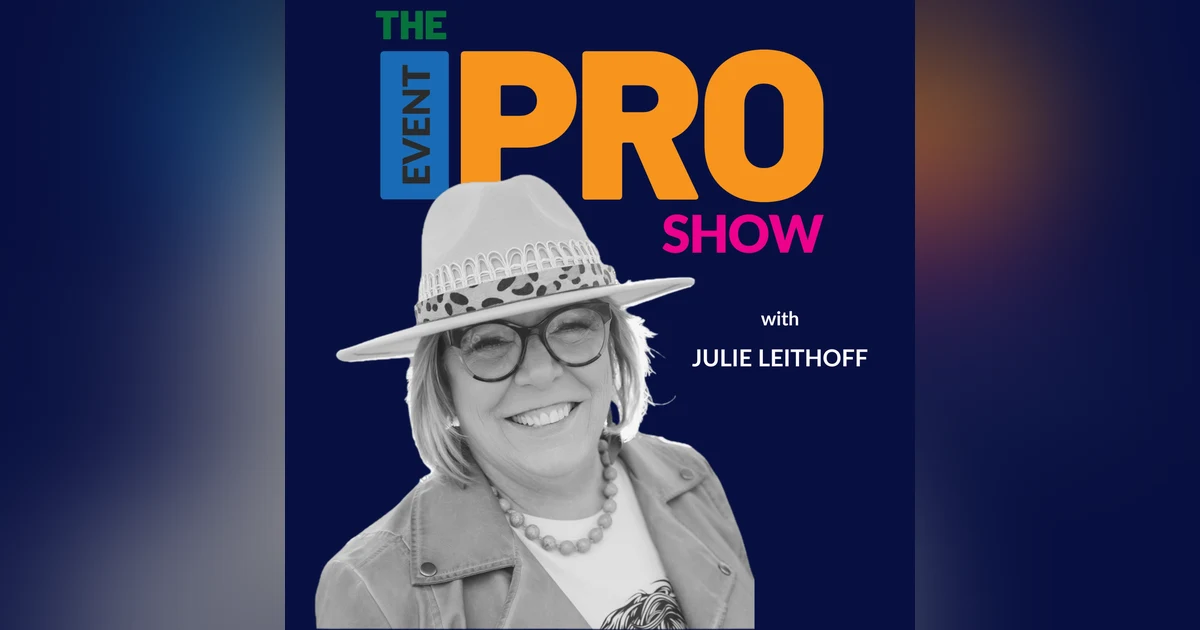

On this episode of The Event Pro Show, host Seth Macchi sits down with one of his production favorites, Julie Leithoff. With nearly 30 years of experience in live events and an impressive track record managing audiovisual components for corporate gatherings nationwide, Julie has seen and solved it all. From her beginnings at Vista Productions in Kansas City to her years of freelance work, Julie shares how her unique ability to bridge the worlds of event planning and AV brings every project to life and keeps budgets on track. Together, Seth and Julie dive into her early memories that sparked her passion for events, the lessons learned from “school of hard knocks” moments, and why building transparent, respectful partnerships is key to success. If you want expert tips, real-world stories, and a behind-the-scenes look at what it takes to produce seamless events, you won’t want to miss this episode!
Resources:
https://www.linkedin.com/in/julie-leithoff-83baaa5/
The Event Pro Show is a production of LEMG.
LEMG is a leading event production company known for delivering exceptional experiences. From site planning and event design to technical production, staging, lighting, sound, and more—we do it all. As a second-generation company, we’re proud of our rich history and commitment to innovation. Whether it’s a corporate meeting, conference, convention, or live event, we’re the team our clients trust to execute their vision flawlessly.
https://lemg.live/
0:00 Welcome to the Event Pro show, your ultimate guide to the world of corporate events. Whether you're a corporate event planner, experiential marketing pro, producer, technician, or anyone involved in creating exceptional events, this podcast is your go to resource for valuable insights, expert tips and inspiring stories from the industry's leading professionals. Well, thank you for joining us on this episode of the Event Pro Show. And guys, I have one of my favorites, one of my absolute production favorites with us today. So I'm excited to introduce Julie. And Julie, if you don't mind. Mind. I'm going to try to, to do justice to your bio here as we kick. As we kick it off. So today I have Julie Lydoff. She has nearly 30 years experience in live events, starting in Kansas City where she rose to Vice President at Vista Productions. And that's where Julie and I's path met at that point. But for the last 18 years she's been based in Omaha, Nebraska, managing audiovisual components for events nationwide. She's known for staying on budget while focusing on details. Julie's calm demeanor and creative problem solving make her an in demand show producer and a strong leader for the event team. So her vast knowledge in all aspects of event planning, event production, event roi, and her ability to manage production budgets from, I don't know, 50,000 to 2 million, put all her venues, vendors and clients or all her stakeholders at ease. Building long term relationships is her top priority and she cares about the people
1:32 who she works for and the people that work for her. Please welcome to the show, Julie Lightoff. Thank you, Julie, for being here. Hey, thanks for having me. Okay. I think somebody else wrote that for me. I don't know. It's pretty cool. Thank you. Yeah, but it's all, it's all true. Your skill set is unique as I come across people because a lot of, a lot of times people will focus on maybe just planning or just av. You're one of the rare people that could speak both languages, which I think makes you, that's like your competitive advantage out there that you can kind of see both sides of it because not everybody can.
2:14 Yeah. And I, I mean I just like to know the whys and how comes so that I can be, I'm not an expert in the details. I trust the teams that I'm going to put together or the information that I'm going to pass along from the clients to the engineers and to the people doing it. How do I know enough about it to make it all seamless for everyone? You know, the right questions to get Answered and you know the right people to ask. Yep. And I also believe, Seth, sorry, get off it. I also believe that sometimes you may not ask the question the way the client understands it initially, and then it's up to me to say, okay, I don't think they really understood. An example someone else had asked, had advised a client about pixels in an LED wall. And, well, you're not going to do big graphics or anything. Right. Get on site. Their presentation that was on an LED wall. And this is many years ago, so, you know, not the mills that we're talking about nowadays, the anything. And it was like, well, I told her, making sure that she wasn't doing. I was like. But she didn't understand why you were asking that. So maybe you have to be a really, really good listener and go, well, I don't think they still understood my question. I'm going to ask it
3:45 in another way to clarify. And I, I, I've literally sat in meetings with you while you're talking to your client, and you have a way of asking the right questions at the right time, kind of getting to the heart of what they're trying to do. I think, again, that's just such a skill that you learn over time. Uh, some of that's just like school of hard knocks, but you learn over time how to get to the heart of like, what are you asking for here? Mm. Yep. I. Okay, so before I get too deep into your story here, I want to go way back. I want to go way back, Julie. Way back. What was the first event that you can remember attending? Just, like, maybe as a kid or just way back. So, you know, it was like the state fair, and it was a concert at our, you know, little Douglas County State Fair. And I'm sure no one listening probably even knows who this artist was, but it was Ray Stevens and he was famous for the song the Streak and all of it. I have four, four sisters. I'm the oldest, and we were, you know, in front of the stage, just in awe of watching a concert.
4:50 I love it. I love. You're the second state fair in this podcast series. So, yeah, it's like state fairs and church and those. It's very similar themes, you know, that people have, people have done. That's awesome. So that it's like one of those magical moments when you're a kid. And I. My similar moment for me, it was, you know, early on, I went to school as an audio engineer and I wanted to do recording, but I remember being really little and in my grandparents house. We'd walk down the block and they'd point at this house on the corner and be like, they have a recording studio in there. I had no idea what that meant, but I knew it was magical, you know, and it's like, that's that moment as a kid where you're like, I don't know what's going on up there, but I like it. It's a cool thing. That's cool. So, like, if you fast forward a little bit, when's the first time, when was the first time that you can remember that you wanted to be involved in events as a career? You know, the interesting part is I didn't know that it was a career in. And it kind of goes into a process, probably another area. But my first stuff was doing employee events and stuff at my. Well, my second or third employer as a young person. I. I worked there at Clarkson Hospital from 16 to 27.
6:13 And when I. After like three years when I was in the medical side of some things, then I moved into personnel and marketing and I helped corporate coordinate their employee annual events, a couple of their medical conferences and. But there wasn't a position, you know, but wherever I went in a couple of positions that work, those, those couple of events annually followed me. And I've always loved it. So. Right. I'm the. Or you were, you were making up. Yeah. You were making it up as you went. Yeah, absolutely. You know, just I think it's attention to details, people, places and things is what I say that, you know, and making sure that all the T's are crossed and the I's are dotted and you're taking care of all the people along the way.
7:09 Yeah. That's awesome. So that, that ended up kind of being one of your first jobs in events. You just didn't know it. Yep. It was happening. It was happening. You didn't even know it was happening. Yeah. I think Steve Jobs says something like, you can connect the dots going backwards. Like, it's hard to do it going forwards, but you can kind of see how your path came to this point, you know. Absolutely. You have a really unique approach, like I mentioned, but you have a unique approach to event planning because of your deep knowledge of av. And, and when I say that to your point before, you have a deep knowledge of how AV flows in and out of venues, what on site personnel need, what it takes to set up an AV team successfully. I think, you know, it's not, it's not like I'm calling you to like do deep tech work like Operate a complicated switcher. But you understand what that video group of people need to be successful in, you know, production technology. So how do you think that affects your workflow when you're planning an event?
8:20 Hopefully positive with my clients, you know, some people are. May wonder why are you asking so many questions or why do you need to know that? But I am here to partner with them, whether the clients, the, the venue, the vendors, all of the above. And the more that I can help with additional knowledge of when do we get the venue, what are their rules and regulations, when does the event start? And so you, you kind of backtrack on. Here's the, here's when we start and here's what we need to get to that point. And understanding everyone, every, every part of it has to work together to make it happen.
9:09 When are the tables and chairs being set and not letting. Encouraging the venues not to do it before we load in per se, because then we're going to move things and then they're going to have to redo them. I don't like making people have to redo things that we could if we schedule it right and communicate properly, you don't have to do things more than once. Yeah. So I liked. I just like to know what others need to do their jobs well and then we're all on the same common goal. And a lot of that would you say? I mean that just comes from experience. Right. Because you experience an event where the venue comes in and puts in tables and chairs before were done working on lighting and all of a sudden now you got to move a bunch of stuff to get the lift in and yeah, I'll. Can I share a story about my first big osh factor similar to that? I would love for you to share a story.
10:11 It was a. You know, so Vista had done Sam's and Walmart for many, many years. It was my first go to Sam's as the, you know, the client account manager. And everybody was like, oh, we've been there every year for whatever. We're in the Tampa Convention Center. It's real simple. Well, the challenge was that we're in an exhibit hall that's set up like the Sam's Club with all their merchandise and stuff. But then the general session area is just separated with bleachers and then floor seating and then the stage. And come to find out all those bleachers and chairs are stored behind where our stage is set up. So we have stage setup, we have cable runs, we have all sorts of things and then they're like, oh, we got to get all this stuff out backstage.
11:03 And so what that path was going to be. And it just became a challenge. So again, so to be clear, for listeners that are. That are following along, those cables, sensitive cables are run out either side of the stage, but you've got tons, literally of material that has to be rolled out onto the main floor. How are you going to get that over that sensitive cable if you didn't think about that? Yeah. And it was also a lot of it was with forklift, so it was even more sensitive of the type. So, yeah, the next year it was like, all right, let's have the bleachers staged. And they're just going to be together, not pulled out where they're going to go on the drawing again, drawings and all those things are imperative to have those plans ahead of time and just. Yeah. Learning all those things. But then after that it was like, nope, I'm going to learn all those things ahead of time. Right. You ask better and better questions every time. Yeah, yeah.
12:03 I would say any young planner or producer listening, find yourself a Julie to follow around for a year or two and you'll probably save yourself a few years or decades of learning really hard lessons if you just listen to how Julie approaches site surveys and clients and show prep. I would love that. Yeah. So if you, when. If I say the term, I'm gonna ask you for another story, because I like the stories. The. That might have been an example of one. But when I say staying calm under pressure, that concept, you know, because I think that you do do that, what's the first story that pops in your mind? It was the.
12:44 It was the following year at that same venue where we went with all the plans and, and then, you know, the bleachers, I think the bleachers didn't have the seats in them. It was like you pulled them out, they were raked seating and then they put regular folding chairs on top of them again. So it's a schedule and it's like, all right, so at 6 o'clock when we leave today, I need you guys to the venue, the house to pull the bleachers and get the seating done. So then the next day we can focus lights, we can make sure the sound is covering all the seating appropriately and blah, blah, blah. And I get there at, you know, 4:00 in the morning and it's not done.
13:27 It was like, what? And I think that might have even been the second time that it wasn't done. And on original schedule, like the first one was Kind of a combination like, okay, we overestimated our time to do this, so can we, Whatever. And the lovely person in charge of pulling those bleachers, the overnight person, was kind of not as friendly, not as fun, but some single case was in his way in one small segment that was on wheels, nothing hard to move. And so therefore they didn't move it.
14:12 They didn't call me. They just didn't do it. So. So then you're left with a then what, now what. Yeah. And honestly, it just also, that created. Again, this isn't my first 12 to 18 months of doing live events with not experience prior to me walking in that door. Learn to know who those individuals are though, too, and respect them for who they are and make friends with them, because if you treat them with kindness, they will do things for you. I mean, I'm not asking them to do things that they aren't supposed to do.
14:53 I'm just asking them to do their job and being kind, respectful for who they are. Yeah. And so, yeah, it just got better from there on out. It was like, okay, and you were better for it. Yeah, that's one of them here. Those were the early ones. So you. One thing I didn't mention before, Julie just took a position with Stratum. They're an event production company based in Lincoln, Nebraska. They're a growing production company. So congratulations on that. Thank you. That job. But on that note, I think just such a great, great hire for them, and they look like a wonderful company. So on that note of what you're doing right now, how can event planners set up their AV partners for. So you're approaching an event. What. What type of things should you be providing so that your Ava partners can do their job and your event ultimately goes smoother and it's a better experience, transparent partnership. You know, we. Me, yes, I.
15:58 I could. I plan the event side of things potentially. I certainly am not an expert, don't know all the details and great things that the event planners know. But I'm there to be a partner with them and we need to be in it together. Common goal. Let us be the experts in that component of the event. It's not a matter of what's more important or less important. It's all equal importance and it all needs to work together. And information and sharing is so valuable. There's a lot of times where I've been invited to be on, you know, most of my clients calls, I'm like, on everything.
16:48 Even though it's like, I don't know that you need to be there. But I call it catching butterflies because maybe someone else on the team might say, oh, we're going to bring a horse on stage, which, you know, horse or a motorcycle. And you're like, well, the what you. Because not that we can't do it. I am not an. I don't say no, but you have to be a solution provider. And what's it mean physically, logistically, safely to do those things? And that's all of the, you know, even finding out, like, okay, you're in a ballroom with multiple sections, and that's what we're told is we're in the ballroom, but then down the road they decide they want to break off a section of the ballroom that they just didn't think we needed. It didn't affect us.
17:44 But the challenge is finding out where that airwall storage comes from, because you may think it's coming from here, and so it should be an easy shot, but it's not. It's coming from somewhere else. And that's where we've got cabling and tech world or whatever. So again, those are just being teammates. Absolute teammates. Transparency teammates. I think I know how you're going to answer this, but would do you. Are you an advocate of providing your a budget range when you're putting a project out to rfp? As an event planner, I think it's very helpful. At least a range. You know, there's a huge difference between, you know, a $10,000 show and $100,000 show. And it's just, it's being. We can help you better if we do have a range.
18:40 I will not share exact numbers or past. Sure. With. I won't share past vendors informations because I just. That's integrity. Yeah. I think as you know, being the producer, hiring the vendors for the last 18 years, that's also a goal is to be transparent. You know, that I wanted to work, I was the nucleus for client and vendor, and one side isn't more right than the other or more wrong than the other. You know, if there's a change, I think we equally need to recognize who's responsible for the cost associated to that change, whether plus or minus. And just being, again, very detailed on and aware of those things. So, you know, finding out the budget includes. Yeah, that's a good one. You just. That little thing at the end there. Yeah. Defining what it includes, making sure that you're, when you're comparing it's apples to apples comparison from one vendor to the next. But I, I, I do agree I think a range gives any vendor, it doesn't matter if it's AV or food and beverage or whatever, whatever you're, you need. It gives you a target, you know and you can do most, most vendors, most service providers in this, this industry that I know that are, that are worth working with. They, they will design to your, your budget range. They're not trying to upsell you in a way that's like we're trying to get as much money out of you as
20:12 possible. We're trying to actually create the best experience that you can afford, you know, within this, in this budget range. Yep. I, I have another. I'm going to keep keep going on with challenging questions for you. I would only ask someone that I believe has great answers. So here you go. So you know, venues in house issues it comes up, you know, I speak at different places, I'm in different networking things. It just seems to come up in a lot of environment in house expenses in house, av, food and beverage minimums, load in time, union expectations, these types of things. How, how do you create win wins and venues with challenging rules? Because I mean you, you, you know, you would. I don't think the answer is just avoiding a region.
21:05 I think there's another answer. So what are your thoughts on that? Yeah, I mean so I had the pleasure and have for of number of different clients over my tenure is being a part of a selection site selection committee like before it was decided. And the one thing I would tell venues is don't try to sell me on what you think I want to hear so that you'll get our business. Like I mean I literally had one venue say oh yeah we have a union rule but oh we won't make, we'll make sure it doesn't work need to happen for you. That's not true. That's like a used car salesman trying to tell me no, that's not going to happen. So I, anytime I am on site visits and doing my due diligence to find out all those questions is just tell me the rules, regulations and we will. It's my job to inform the client of what those costs may be and how we may have to work differently in you know, certain cities, certain venues and just be aware again, it's putting then an apples to apples comparison together. Not just this cost, but it's all of the above.
22:24 That would be related to audio, visual and production. Right. Right now Julie might get a little frustrated if somebody changes the rules of engagement on her and like oh well you can't Use that doc. It has to be this or whatever it's like. And I also document. So there's lots of things in writing to detail those things. Because also changing the guards happen at venues. So it's, it's doing your due diligence, creating a relationship with them to know that you're there to follow the rules. At least that's my guidelines. I'm an ask for permission person. I know there's some people out there that are like, well, ask for forgiveness, Julie. Forgiveness.
23:08 Yeah, yeah. I'm not really that person. Have, has your documentation saved you before? Like you. I have seen how you document a lot. Yeah, yeah. Again, someone tries to change the rules, you can go back to your documentation. Well, I think the first time working with your team last year, they experienced Julie is what I would say the wrath of Julie for a moment with the venue. Just because they weren't following very detailed things that we were talking about, had planned, had had many conversations with teams. It was, you know, ballrooms being three together separated into three separate ballrooms back together where the cable paths and things were with the main stage and the side stages. And they weren't following it. It was just leadership. Had not passed it down to all the, the staff. And then they got the gruff of me for a moment. But then they were also.
24:09 Again, I don't want them to have to do their job twice or three times. I don't want you to have to move your, the those tax chairs multiple times. Right, right. So, yeah, just again, pulling back from experience and like, you know, I'm doing, I'm asking these questions for a reason and that's how I, it seems to be, you know. What's your approach to a site survey? I think a lot of these things are that. But when you go into a site survey to venue that you've never worked in, what's your approach when you're, when you walk in, you know, walk me through your, your thinking. For the most part, I do have to tell them a little bit about me so that they know my, my level of understanding and the deep of who I am and what I know. And then what I'm looking for.
25:03 I don't know if it's sadly or ironically. I, I'm, I say I need the meat and potatoes. I'm not a fluff girl and I just, I want to know the details and if it's challenging or not challenging, you know, tell me the real stuff. Right. And most everyone respects that and appreciates that because they're, they hopefully know for me then that I'm going to be on the lookout for them, not just myself or our team. That it's. Again, those teams work together. Right. So I get the impression you just don't like to be sold to. It's like, can you cut the BS and just tell me how it is one way or the other? Just tell me what it is transparently. So that pretty much go through. I don't need the marketing material. I need to know the facts about this thing. Yep. And you know, that's probably a similar approach that I have to selling.
26:02 Right. It's actually a very refreshing approach to selling. I'm gonna be honest with you. I'm not going to sell you something that we can't do. I've had to say no, we can't do that to high end CEOs. You know, I'm sorry I met you at, you know, I, I picked up this golf cart in the middle of your exhibit floor at 3:00 in the morning to drive it through the path that you want to take it onto stage while 3,500 people are cheering and dancing in the aisles while the band is playing. And I can't safely even turn the corners with it when there aren't people on the aisles. I would suggest this path and it was like, okay, you know, but isn't. That ultimately like that's the relationship you want with a client because you're the consultant, like that's why they're hiring you? You know, I think people respect that, that you can come and you can say it and communicate well, articulate why they would want to know that that is the goal. Yeah, that's my purpose again. And none of this is about me. None of it's about me. It is about their event being successful, not having any challenge, whether that's safety first, of course, and what the experience is for their attendees. Budget, all of the
27:32 above. What's best for them. Okay, so you've talked about events and your process, but just one last question. What's. What's the favorite event you've ever been involved with? What's your favorite? I don't know. It's a tough one, right? It's a. I mean, because I've, it's very humbling. I have, I've had a great, great life with this. You know, I came into this without a single bit of knowledge about live events. I think I was hired just again, because I, I was known for taking care of people in the video production side of the world in Kansas City for a couple years. And, you know, there was people that are like, blah, blah, blah. And I'm like, I'm not here to change your life. I am here to hopefully make your life better by giving client crew, everybody the tools, information, resources to do their job good.
28:42 So having. Being welcomed in all of those in this world and that those relationships are just huge. The client relationships that I've had, I mean, my past 18 years of being on my own. Seth, I made one phone call and the rest was referrals. It's amazing. It's just. Yeah, it's, you know, I have, I. Have a, some insight into this. And you, you, you've talked about that before with me, like, it's a mystery, but I think I figured it out. Okay, so I'm going to tell. I'm gonna share a little story about you. So Julie has in the past and a client and on an event, I was not on site, I was told this by some leadership on site that one of the young guys that was there had talked to Julie about wanting to be, I think, in, in like it or, or some field. And Julie knew that one of the speakers at the event, like one of the main stage people, was in that field and a leader in that space. So she went out of her way to set up a, a meeting between the two of them, let the young guy know, hey, you're going to meet with this person. Go back, get ready in your hotel, and you're going to meet with them. Set up a meeting. Just so the only. There was no reason to do that other than Julie cares about people. And I think what happens is, like, people that are like, that don't understand, but people love that. You know, that's, that's why people keep calling you, because you care
30:12 about people and it really doesn't matter, matter who, you know, like, you treat CEOs the same as you treat anyone else in the building, and you treat them with that respect. And I think that's a big secret of your success, is just treating people, fellow humans, with respect. It can go a really long way. So that's one thing I appreciate about you. Thank you very much. I thank you. Yeah, I appreciate that. Oh, absolutely. Okay. So if someone wants to, if our listeners want to find out more about you, how can they do that? I know they can connect with you on LinkedIn. Yeah, LinkedIn. Julie Lightoff.
30:53 L E I T H O F F Not like we used to tell the pizza guy. L I G H T O F F Because it was just easier when you ordered pizza. Yeah. I mean, I've not been good at promoting myself or doing anything, so this is a little awkward for me, but I love it. I mean, I still love sharing all the experiences and, and goodness that my life has had because of this business. So. And then. Yeah. All right, well, thank you, Julie. And like, this has been an episode I. I've been really looking forward to having, so I don't want to breeze past. Thank you. Really, thank you for taking the time with us. And congratulations on the new job with Stratum. Thank you very much. It's always a pleasure to talk with you and share information and I know that's going to continue as well. You know, Seth, at lemg, you guys have a great team and I know our paths are going to continue to work together as well. So thank you, Julie.
31:56 It is. It's all about we're in a people business and listener at home. Thank you for joining us. Be sure to follow us on your preferred podcast platform. I think we're on them all and if we're not, let us know. We're trying to get on all of them and we will see you next time. Thanks so much. The Event Pro show is a production of LEMG video by Nick Barrett, audio and post production by Prince Thompson. You can learn more about us at LEMG Live.