

 Spotify

 Apple Podcasts

 YouTube
Strengthening Planner-Project Manager Partnerships with Joy Harley
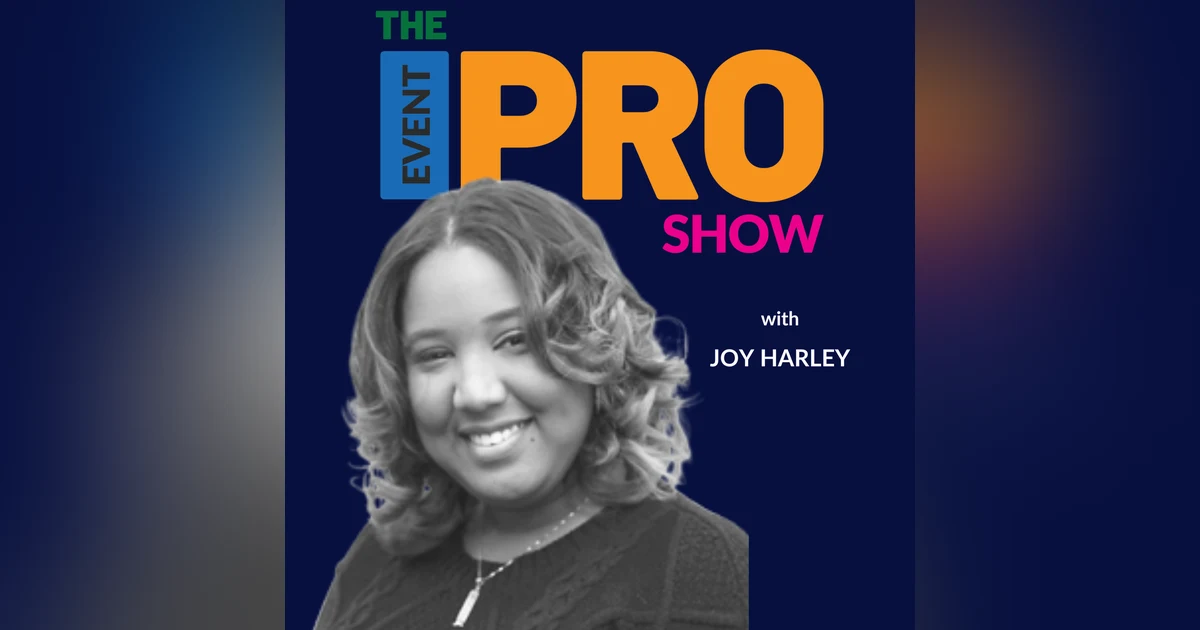

Welcome to The Event Pro Show, where today, our host Seth Macchi engages in an insightful conversation with Joy Harley, a senior project manager at LEMG. Joy shares her expertise on building successful relationships with event planners, emphasizing...
Welcome to The Event Pro Show, where today, our host Seth Macchi engages in an insightful conversation with Joy Harley, a senior project manager at LEMG. Joy shares her expertise on building successful relationships with event planners, emphasizing the importance of understanding their unique needs and goals for each event. Throughout the episode, Joy reveals her approach to creating meaningful and memorable event experiences by focusing on content as the core around which everything else revolves. Whether you're an event planner or part of an AV production team, this episode offers valuable tips and perspectives on how to transform your events into unforgettable experiences. Tune in to discover why Joy is highly sought after in the industry and how her ability to seamlessly pull information from planners ensures the success of any event she touches.
The Event Pro Show is a production of LEMG.
LEMG is a leading event production company known for delivering exceptional experiences. From site planning and event design to technical production, staging, lighting, sound, and more—we do it all. As a second-generation company, we’re proud of our rich history and commitment to innovation. Whether it’s a corporate meeting, conference, convention, or live event, we’re the team our clients trust to execute their vision flawlessly.
0:00 So how does the relationship between a meeting planner and a project manager for an AV production team work? Well, thank goodness. Today we've got Joy Harley, senior Project Manager with LEMG here to discuss just that very subject. Welcome to the Event Pro show, your ultimate guide to the world of corporate events. Whether you're a corporate event planner, experiential marketing pro, producer, technician, or anyone involved in creating exceptional events, this podcast is your go to resource for valuable insights, expert tips and inspiring stories from the industry's leading professionals about not eating breakfast. The truth is I didn't make my breakfast either. Someone else did. So breakfast is a lot.
0:40 Yeah, I mean, yeah, no, I'd rather take the extra few winks of sleep before I get up to commit breakfast. Few winks? Yeah, a few winks, few more. Wins. Are you a snoozer? Do you use a snooze alarm? Yeah, I am the person who has like 18 alarms for the morning. Yeah, yeah. Like the, the main alarm. Yeah, your main alarm, your second main. Alarm and then the snooze is in between. Yeah. And then it gets crazy. Yeah, yeah. Like on show days I don't even need an alarm. I'm just, I'm up, I'm ready. The first day of a show is like if I'm on the road doing a show, it's a multi day show. The first night like you travel in and shows next day load in. I don't sleep well at all and then after that I sleep like a baby. But I guess it's like once I see everything in the room, then I'm good. When I see everything in the room, that's the first, like I sleep a little bit better. But then when I see the first day of show go off, I sleep a lot better.
1:45 Yeah, yeah. I wanna. I want to ask you a couple questions because you have as. So you're a senior project manager at lemg, one of our finest senior project managers and you work with event planners all the time. And the problem with putting you on shows is, I'll tell you the number one problem, Joy, with scheduling you is that everybody wants you back. And so then it becomes a struggle of like, oh, everybody's gotta have Joy on their show. And it's a problem really when you do your job too well. But I wanted to ask you like, okay, so there's a relationship that you build with planners and you work with all different personality types and it seems like you're doing another show or two or three or four every week. What is the common denominator for you about like building that initial relationship with a planner and how come from my perspective, you are really successful at it and you are able to. It really doesn't matter who you work with, you always walk away with a good relationship. So what do you think? How do you approach like a new client, new event, new planner? I think my first question to any planner is just what do they want out of this event? Like how do you want people to feel?
3:18 Are you doing this because this is your event? Are you doing this because you have a boss who's like down your neck and this is part of your everyday? And then that usually just to me that's the root that answers so many other questions. Like if this is something that's dear, if this is their baby, like you know, Wake Forest for example, then yeah, you just know how to talk to them about it. If it's something that they're just doing because their boss wants them to, then, you know, I try to get to know more about them because I'm not going to say they don't like necessarily care about the event, but it's just, it's something different when it's, you're doing this because this is your job versus you're doing this because this was the idea you had in your head too.
4:02 And then from there it just kind of goes to multiple conversations on why they came up with this event or what do they want people to take from it. Yeah. And it just grows. What do you, you know, when you think about what you do as a project manager of an AV services company, we work with planners. What are the things that you think people might find surprising? Like so much conversation pre show revolves around this. Like what do you end up talking about? Mostly pre show content. Content is always important because in today's time you can just. Everything is so quick and so people get wrapped up in that. Like, oh, I can just give this to you, you know, like right before the event. And so it's an important conversation to have that while you can do that, we would like, you know, a basis to go off of. Like I understand a last minute change, but if you just give us a base and you can see how it's in your, how it's going to show on your show. Like you can see it on the screens, you can see it everywhere. You can just see what you need to do. Content always starts a lot of other conversations too. I think it just is a reminder of what people forget. Like lower thirds might be a thing. Like you want people to know who's speaking.
5:26 Or I ran into, like, oh, I actually didn't want that to happen right then and there. Let's change it to where. So content. I start with content and looks. How do you want it to look? Like, what do you want people to walk in the room and see and. Yeah, yeah, I. I love that. Like, everything drives from content. Like, we spend a lot of time, especially in our world, we think about the actual stuff going in the room, the people there that we need to run it. But if attendees come in and, you know, there's. It's not compelling. They're bored, you know, and so starting from, like, this is the core of, like, what we're delivering. We're delivering an experience, and it's gotta have some kind of meaningful content. And that's the most important thing. I think that's such a great place to start that conversation. Because even like you were saying, then you go to looks and all that. Yeah, that's secondary.
6:17 Like, what is. What are you trying to communicate and how are you doing it in a way that people can remember. Otherwise, it's just kind of white noise. Cause there's just so much content hitting people from other places. So you better have that on point, your content on point, or it's just a waste of time, waste of money for everybody. No matter how. How much gear you have in the room, you know, how much money you spent on it, quite frankly, answer your question. And then to me, you're thinking about how your attendees are. But now I'm getting more of the technical aspects that you don't even know I'm getting from this conversational content. Right? Oh, yeah. I want this to be showing when we have this panel. And then my mind then goes to, all right, panel, how many people are on the panel? How many chairs are you going to need? How many microphones? And then now we went from. Okay, this slide would be shown with them. But you're right, I do need chairs and I do want everyone to be mic'd up. But right then I immediately want to go to a video. So then that's another conversation. It's just so many questions getting answered. Like, so do you want the chairs to stay? Are they going to come right back up? Is someone going to talk about this video? So we just. It's just so many different conversations just related around content and. Thank you.
7:28 Yeah, you're like, your screen's not big enough or, you know, actually, this is super content heavy. You should maybe decide on a DSM or, you know, Just so many different conversations starting. I love it. That's such an important, important thing. And so, like, it almost takes the pressure off of the planner. Like, I don't have to think of every aspect. What I have to focus on is what I'm trying to do. And if you're working with like a trusted partner like you, you're in the back of your mind doing all the math of like, okay, well, they, they're doing a panel, they're doing this. That means this technically. But the planner doesn't even know half the time that you're doing that, you know, so that you, you've got their back on that side and that you're pulling that information out of them through the relationship, which is a really cool way of approaching it.
8:15 Instead of just like spreadsheet, you know, five mics here, we need three TVs here, whatever. You're just like, what are you trying to do? Yeah, because in my mind, while you're saying all that, I'm building out this spreadsheet in my head of production, a production schedule. So right after we talk, like, well, hey, based on our conversation, this is how the day looked like it's gonna go. I made a quick schedule, check it out, let me know if you need to change. And then we go into whole different conversations. But we have that structure there, so love it. My little takeaway from you today is content. That's what everything drives from. And I, I totally believe that. I think, you know, the kind of knowledge that you have is what separates us or a great AV provider from just commodities. Like anybody can buy speakers or monitors or projectors, LED walls, whatever. But having relationship with someone that can pull out of you, what are you trying to accomplish? And then create a vision from that and then execute on that. I think you touched on. So you answered it. That's why people keep coming back to you, Joy, because you keep doing a good job. People. Why do I like Joy so much? He just gets me.
9:33 Yeah. Well, thank you for, for spending a couple minutes with me and, man, I'll, I'll just do my best to just make sure that you're not over scheduled over this next next year, man. Bring it on. I'm ready for it. All right, well, thank you for joining us on the Event Pro Show. If you'd like to learn more about us, you can go to LEMG Live and be sure to tune in just about once a week where we'll be releasing new podcast episodes. Thank you. The Event Pro show is a production of lemg video by Nick Barrett Audio and post production by Prince Thompson. You can learn more about us at LEMG Live.