

 Spotify

 Apple Podcasts

 YouTube
Small Business Empowerment and Creativity in Events with Rah-mah Pelzer-Elue
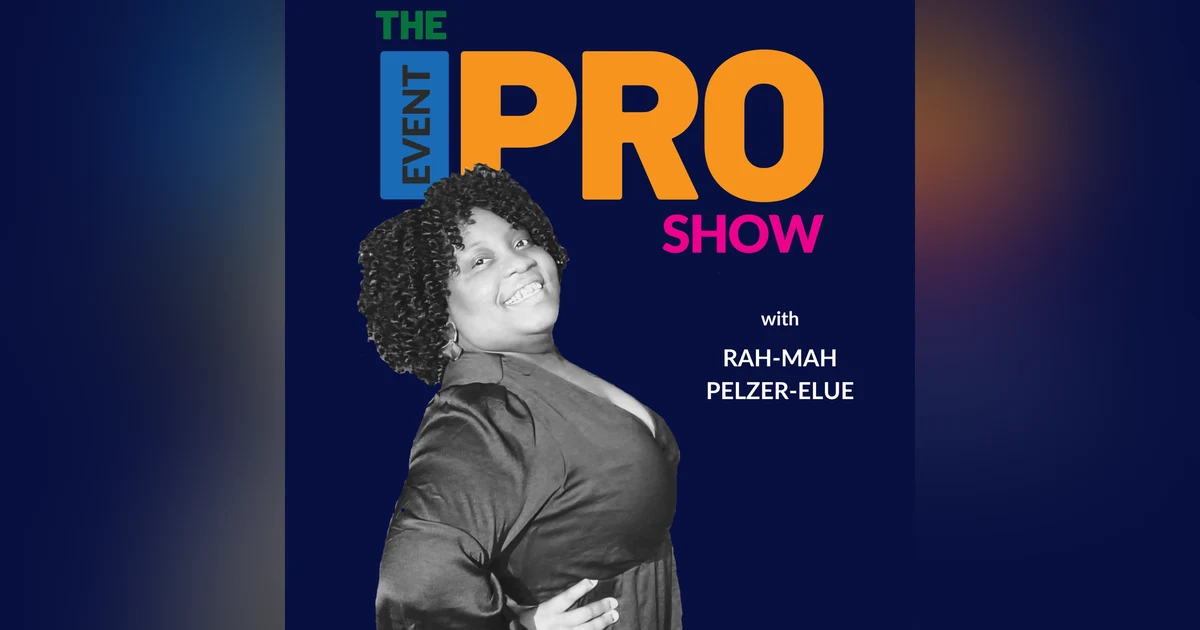

Welcome back to The Event Pro Show- your trusted podcast for all things corporate events, experiential marketing, and the creative craftsmanship that brings gatherings to life. This week, host Seth Macchi chats with the dynamic Rah-mah Pelzer-Elue: a Nigerian American entrepreneur, award-winning poet, playwright, spoken word performer, and fierce advocate for creativity and small business growth.
From her formative years at the Duke Ellington School of the Arts to performing at the Kennedy Center and the US Black Caucus, Rah-mah’s story is both powerful and uplifting. She shares how her artistic background paved the way for a thriving career in events, founding S.H.I.F.T. Performance Staffing Agency and S.H.I.F.T. Event Rentals, while building spaces that spotlight underrepresented voices in entrepreneurship.
In this episode, Rah-mah opens up about her approach to event production, how creative disciplines translate into business success, and her take on connecting across generational and technological lines in today’s fast-changing industry. You'll also hear about a childhood event she'll never forget (hint: Rosa Parks makes an appearance), defining moments that shaped her leadership, and her bold outlook on where corporate events are headed in the years to come.
Whether you’re just getting started or a longtime industry pro, this conversation is filled with practical takeaways, authentic storytelling, and fresh energy to fuel your passion for impactful experiences.
Resources:
https://www.linkedin.com/in/rahmahzahrah/
The Event Pro Show is a production of LEMG.
LEMG is a leading event production company known for delivering exceptional experiences. From site planning and event design to technical production, staging, lighting, sound, and more—we do it all. As a second-generation company, we’re proud of our rich history and commitment to innovation. Whether it’s a corporate meeting, conference, convention, or live event, we’re the team our clients trust to execute their vision flawlessly.
https://lemg.live/
0:00 Welcome to the Event Pro show, your. Ultimate guide to the world of corporate events. Whether you're a corporate event planner, experiential marketing pro, producer, technician or anyone involved in creating exceptional events, this podcast is. Your go to resource for valuable insights. Expert tips and inspiring stories from the industry's leading professionals. Well, thank you for joining us for another episode of the Event Pro Show. I'm your host Seth Macchi and this episode is, is a super exciting episode for me because I've always felt that in events and the world that, that I get to play in a lot is corporate events. A lot of the people in it that actually produce a lot of the behind the scenes people that you might never see are highly creative people. Many of them have other stories, they have other branches of creativity that they come from to bring you that corporate event. And so our guest today is just like that. I'm going to get into your bio right away before we get get started. So our guest today is a Nigerian American entrepreneur and award winning poet, playwright, spoken word performer with a passion for creativity, business and community advocacy. Through her company, Our Stop Shop, we'll address that a little bit. She created a platform for black economic empowerment and hosted a historic Black Business Expo at NC State FER Fairgrounds. Her artistic achievements
1:30 include performances at the US Black Caucus and Kennedy center, inspiring and advocating for underrepresented entrepreneurs and artists. She's also the founder of SHIFT Performances Staffing Agency and SHIFT Event Rentals which provide high level staffing and event solutions for corporate and experiential events. Please welcome to the show. Rama Pelzer, ilu. Yep, thank you. So good to have you here. I, Rama and I met just a few weeks ago at an event but right away I was like, hey, this is a creative soul. This is a person that I really want to get to know and looking into her businesses and what she's accomplished. It's just you have such an, a compelling story so I have to get into it with you. So before we jump into anything, because this is an event centric show, I ask everybody at the beginning what is your earliest or your first event memory that you can, you can remember? Like the first event you can remember attending?
2:32 Attending? Yeah, yeah, like as a, as a kid, like I, I remember that one. Time we went okay, so my very first event I remember attending is a Little Bow Wow concert. Little, Little Wayne opened up for, I mean Lil Zane. Well, Zane opened up for him Snoop Dogg. This is back when Bow Wow was like Snoop Dogg's nephew and my uncle Food Took us like it was me and some of my cousins and one of my sisters. And yeah, it was. It was game changing. I want to say I was like 8 or 9. And that's exactly what I'm talking about.
3:12 It's so crazy. And hands down. So Bow has me for a couple of years, not by much. So I'm eight or nine. So he's like. And this is back when the Bow wow little Romeo bible is going on in the music industry. So it's like you gotta choose the side. Kind of like the Tar Heel situation. Yeah. But they were surprise tickets. I didn't know what concert we were going to until we got there. Yeah. So, yeah, it was. It was fun. It was really, really fun. Yeah, I. I love when I ask people those questions. A lot of time it is involved with family, you know, and it's like a solid memory that they have. And most people, I don't even know if you remember the specifics. It's just like you remember what you felt like when you were there. And it was just like this impactful experience in your life, you know, like this positive kind of life changing thing, you know? And that's kind of what events do for people, you know? And I don't know if you like me. That was kind of what drew me in. At the beginning of any type of events, there's like this magic thing that happens.
4:21 And when you're little, you're just so tuned into that. So I'm about to one up you. Okay. So my most impactful event, I was actually younger. Oh, okay. Okay. I was in kindergarten. Okay. But I was six. So it was like post Martin Luther King Day. And we were doing the Martin Luther King Day, like, presentation that they have the elementary school kids do. And after that, my grandma brought Rosa Parks to our neighborhood for us to meet her. Really? Like, literally, like, that's a way cooler. That's what I'm saying. Like at 6 years old and that. And even at that time she was older, she was a lot more like they didn't even let her get out the car. So all these, like, young kids are surrounding borderline looking like we're mobbing a car. Yeah. Because Rosa Parks is in it. And it was like humbling. But it was also like one of those things where something you just learned and you were presenting, but you didn't really understand the magnitude of it.
5:25 Yes. And then the person you're even like talking about in this, like, theatrical. And this is at a time where tv, like, we were all watching the same stuff all the time. There was one TV lineup, there was cable. Wasn't really even that big of a thing yet. So it's like we're all in uniformity with what we consume. And so to go from it being like something taught to you to it being tangible where you can touch it, you can smell it, you can see it, you can like history, a piece. Of history right there. That's amazing. Yeah, that's an amazing experience. That's pretty powerful. And shout out to my grandma because she, I don't know how she pulled that off in any sense of the word.
6:08 Just one. The little kid event memory of everybody so far. Yeah. Yours is like super significant. Okay, so fast forward from that. I know you have an artistic history, but what was the first time you could remember wanting to be involved with events as a career? And not everybody has this moment in time. So it's interesting to me just to hear. Do you have a moment where you were like, I want to be involved in events? Or did it come to you over time? It kind of was a life journey, if we're being honest. Like, the art saved my life.
6:54 It did. However, making the transition to being the service provider side of naturally happened. Right. Because like I said, the art saved my life. So I was, I got introduced to the arts, which I haven't even told you this, but I'm. I'm not, you know, I'm Nigerian. But what you don't know is that my dad was deported while I was in middle school. And it was kind of one of those things where my mom kind of prepped me for it a little bit. But I have a lot of siblings by my dad, so I was the only one prepped. Everybody else was kinda trying to keep the optimism alive that it wouldn't happen. Yeah. And so while navigating that, you know, those middle school years is also one of the most emotional and life altering times because of hormones and everything. And so to navigate my dad getting divorced when I'm around 11 and 12 was over. It was, it was all consuming in certain ways. And my mom was like, listen, you're acting out player. Like, and. And so her, her thing was, right, just write, just write or something. Journal, whatever. I was, I was never a person that like had a diary. I wasn't one of those girls where I had like the secret diary that I would just jot down and
8:26 stuff that I like, she would, she gave me these journals and at some point it was a way to rewrite the story. It was a way to tell the story unapologetically. It was a way to navigate big emotional feelings that, one, you're experiencing for the first time, two, you don't even really understand the magnitude of them. And three, you're not really equipped to comprehend the residual, like, more deeply felt impact of it. And so at some point, it went from doing it to just deal with it to doing it, because I genuinely have something to say, right? I genuinely want this to.
9:17 I want my voice to be understood from a different perspective because I'm not the only one, right? And so to have gone through this even amongst my siblings, and the only one to have even been kind of cemented or kind of leveled a little bit or grounded a little bit to prepare for the impact, it was like my version of the story is based on, like, even though I knew the plane was going to crash, right? I didn't understand the residual impact it was going to have until it started, right? And I didn't understand the other things that were coming up the pipeline, like puberty and this and being given extra freedoms and stuff that comes with those getting older. And, you know, so I can't imagine. I can't imagine. So this was you working through that pain, and this was you walking into spoken word. I assume this is like kind of a walking into that part of your life, or was it just a I'm writing out my feelings and it was therapeutic to you. So it rapidly changed from writing on my feelings to writing out stories to now at this time, which is so funny about the bow, I think something that was also going crazy via email.
10:39 So there, you know, everybody knows about the chain letters, the crazy, like, chainless, with what was also circulating. The emails, like, crazy were like these boy band scripts where it was like somebody creating this whole version of a story that they were writing out with, like, these celebrity boy band artist names as the character names. And they were like. And I don't ask me how they circulated through aol, Yahoo. You melodested. But they did, right? And so at some point, me and my friends, all in middle school, are captivated by it. But then at another point, I'm like, if they can tell that crazy story that we know is not Omarion, is not Bow Wow, it's not Lil Romeo. I can tell my version of a real story that I'm just trying to navigate through with my friends, with my reality, with them. And so it started out as narratives, and then I ended up going to an arts high school, Duke Ellington School of the Arts, same school as Dave Chappelle and a couple of others.
11:39 And, and then there. Duke Ellington doesn't just help you cultivate talent, they equip you to be prepared for professional career and whatever your talent you're pursuing is. So. And then they also give you access, kind of like undergrad and college, where you got to take a couple of preliminary just to see if the major you're thinking about or things like that. And so they make you do that. They take, you make you take music classes, photography classes, script writing classes, theater classes, dance classes. Like you're, you're forced to at least dabble in it all at once. See, this is like I, I knew this existed growing up. I never even knew where those were. And it just sounds like a TV show to me, like some sort of dream TV show scenario where you get to go and be creative in every different direction. So was that an amazing experience? It was. Okay. First and foremost, it was like a four part audition process just to get into school. So, so that's how you know, like, okay, they not play it like. But then the other side to it was it, it transforms you. Right. Because Duke Ellington is dead in the middle of Georgetown. Georgetown is like right across the street from Georgetown University. However, 95% of the population that attends the school is borderline being bussed into this part of D.C. from southeast D.C.
12:55 from Anacostia, from Georgia, from Georgia Avenue, from Columbia Heights, from like parts of the city, Ben and Row, parts of the city where there are minimal resources, where there's minimal avenues for you to even be talented and it be nurtured and be poured into and it be encouraged. So there's, there's already that where you're one year school, you're committed to a longer school day out the gate. Right. The normal school day is, I want to say, to one and a half to two hours shorter. So like they stick another class or two in there. Yeah. And so then the other side to it is, and then you're getting up way early. DC doesn't have public, they don't have school buses like North Carolina. So you're hopping on the metro, you're hopping on buses and trains an hour and a half, two hours just to get there.
13:47 Right. Because everybody's coming in. So you're talking about a school full of kids having to catch the same trains and buses to get from the train station to where the school is and be on time. Yeah. And so it, it kind of laid its own infrastructure where it's like, I earned this spot, but also I can Lose it. Like, you know, it's competitive. Yeah. And. And then the other side to it is they kind of hold you to the same standards collegiates do, where you can get on academic probation, where you can make honor roll, and it be like this huge thing where you can earn access points, where it streamlines a pipeline for you to be able to lean into what you feel like is helping you or nurturing you or is your way out from these circumstances.
14:38 And so that definitely took a role, but them teaching you it as not just a skill set, but a business model that also makes you look at it completely differently than just a person secretly or trying to come up with the supplies to be able to pursue this task. Okay, so they're teaching you how to make a living in the arts. Okay. Yeah. Okay. So you're in this kind of. You're in this environment, this creative bubble for a while. Just like competitive, but I imagine inspiring too. And then you go into this time of performance arts. So post high school, you started doing different types of performing. No. While still in high school. So in high school, so you know how there's a summer school, summer job programs.
15:27 There was a musical theater performing arts program. I don't know how I got in it, but I literally was being paid to be a musical theater artist. And so it was like my high school was playing off of this, but then this was a year round program, so it was like my whole life was being consumed by the arts. So academically, I'm in a school where it's like you have your academic workload, you have your arts workload. And then like my first or second year of just a summer job program, shout out to Marionberry. They roll out this program called Friends of Carter Baron, which is a musical theater arts program as a summer job. And so that created a whole nother pipeline because the beautiful thing about that was they were bringing in celebrity artists to headline these productions that we were working with. So I'm. So I'm. I'm 14 years old, green is all outdoors acting, way too grown. Collaborating on a production with Raheem Devon, who's like a D.C. treasure. Right.
16:39 And trying to do other stuff. Right. Like it's. And so it was, you know, the. That that also opened up so many pathways because now you're actually in rehearsals, you're actually sitting on the side doing social stuff with celebrities that you're used to only seeing on TV or on your radio, not sitting in the back stage with them playing spades and talking casually and, you know, just It's. And so it humanize them, but it also made me realize how attainable, how accessible it was. Right, right. You can see that this person, this is a normal person. Yeah. And they do this really cool thing. Yeah, I think I can do it. Yeah. So it was. So it was both of those. And just hearing people go through regular. I remember one of these celebrities.
17:33 I'm not going to name names, but I remember one of these celebrities back when Sprint was not owned by T Mobile. They were so caught up in rehearsals because our rehearsals were running to like 11 and midnight and they didn't realize they didn't make it to the Sprint store to pay their bill. And so they came back to rehearsal the next day. Their phone was disconnected. Like, what? Wait a minute, I thought that was a me probably, you know, and she was like, no, it's not that I don't have it. It was. I literally had to physically go handle it. Yeah. And time gotta wait. That's a total like human. Yeah, it was like stuff like that. You deal with that too. Yeah. It's just like, oh, okay. Way to, way to humble me into realizing like it's not this far fetched out of reach. And this is pre social Instagram. And you know, you've been able to see a whole celebrity. There's a lot sort of transparency now. Yeah. Where you can kind of follow along. Okay. So you had this, this creative beginning. Yeah. And you have a lot of really cool stuff in between. But now you find yourself, you're running an event company and so, you know, reverse engineer that a little bit.
18:48 What was your first job in kind of this type of event space? So, you know, the direction I come from is like corporate events, but just any, you know, social events or just events that aren't maybe theater based. How did you transition into that? So my first corporate event. Am I connecting the dots? Because technically we did event marketing staffing before I did back of the house servicing. Got it. Okay. Okay. So my very first corporate event was after I relocated to North Carolina. Okay. In 20. 2013. It was in 2013.
19:30 And it was Chevy. It was a event marketing campaign where Chevy was sponsoring like a little league baseball team. And a part of the event marketing campaign was a fundraiser for the team, but it was to get the event attendees at the baseball game to do test drives. For every test drive they did, a donation was made to the little league team directly from Chevy. So it was a. So it was a kind of cross collaboration event marketing campaign. And it was in Lillington, North Carolina. And I had no idea that this was an area that allow for all of the background I had to be transferable. Right. Okay. So was that a moment where you're like, oh, and it paid way more skill set? Yeah, yeah, I can, I can, you know, do more things. I can get paid more and have like a better life doing? Yeah. Like, my first time learning what minimum wage was, was moving to North Carolina.
20:33 Like, even doing the stuff as a teenager, I was making somewhere between 18 and 20 an hour. Right. So as an adult, like, almost done through undergrad is the first time I realized people actually make $7 an hour. People actually make $8 an hour, and they're surviving out here as adults. And. And so that opened up a pipeline. Like, my resume was super long. And when I would apply, like for what seemed like transferable skill jobs, I wasn't getting a response despite, you know. And then this opened up that pipeline from. It was like, oh, I can actually show you better than I can tell you. Right. Like, I can actually show you how these skills are transferable to what your goal is. And then the more we did that, the more I did that, the more I realized how their supply chain for what they needed from me or my team or my staff to do was a problem with the service provider side. Like, stuff was we, we. We pretty much was like, your unspoken job requirement is MacGyverin equipment because it's gonna fall apart during the job at some point, and you need to learn how this stuff works and figure out how to. Yeah. And figure out how to put it back together. You can meet these quotas that the client wants on the front end. And then we realized they didn't have a great supply chain. They only knew this one source, and so they
22:04 always use this one source. And so then we started giving them alternative options and we became their back of the house supply chain as well as their front of their house gold and quota meter. And. And then from there I realized other people have no idea that this is how these huge corporations are doing it. And they have no idea what it's called. They have no idea that it's in their backyard. And so we realized we had to go front facing because the people who even needed us closest to home were oblivious. What we were right. What the name was, what the title was, what the job description was, what the service was that was going unmet, creating that bottleneck for whatever their business was. Right.
22:58 Do you think that's what kind of inspired you into it? Seems like you have a lot of passion for small businesses, small business owners, people who are out there hustling to do it for themselves. Do you think that's kind of a beginning of that too? Or were you kind of always aware of that? Because you, you seem to have, you seem to be committed to making an impact in that space, in the small business space in general. Yeah. Like if you hit on the, if you hit on the arts, if you hit on events, if you hit on talent pools. Everybody's not like, they pretty much say prepare for 80 rejection. Prepare for, you know, only 1 to 5% of you are going to make it. So what are the other 95% of people supposed to do? Yeah. Right. What are like, you've trained your whole life. You've been taught your whole. For this job. Yeah. That you may never get.
23:53 And you, you know, you, you see those scenes and movies or documentaries, they were like, this is all I know. Right. But they have no idea that that skill is even more valuable in this more conventional space in this more traditional way. This skill is 100% transferable and even. And able to afford you even more. Yeah. You, you seem to have a knack for seeing how people can unlock their skills in other places. Yeah. Like find their value elsewhere. I love that. I love that. I think a lot of people have these, these skills that things are good at that other people would be more than happy to pay twice as much as you're earning now. You're just not valued and you're not in the right place. Place. Exactly. You don't know how to package it. Right. And because you don't know how to package it, they don't understand how it benefits them. And so the disconnect. Isn't that what you have the ability to do can't fill this role? It's. You don't understand what language or what verbiage or with terminology or what the descriptions role written out looks like for them to understand. Oh wow.
25:08 You run circles around. And your resume of having to have done this this long actually makes you the ideal candidate over this entry level person that just heard this phase. Good money, got a degree, but has no idea how to actually do the job. So funny how some people just need to hear that and just know that they can. And you just don't know what you don't know also. Right. That's. That's the other side to it. Like you see the setup, but you have no idea who implemented. Not in the room. Yeah. By the time you see the setup. Right. So it's like oh, you could do it if you knew. Yeah. And so, and that's my thing. My thing is you don't know what you don't know. But I'm gonna make it even harder for you to remain ignorant. That's always my goal. Like put the puzzle pieces together so anybody can at least, even if the puzzle gets this disheveled or something, you at least have all the pieces there to reassemble. Versus you're like, wait a minute, half the puzzle pieces ain't even in the room. Right.
26:12 I don't even know what I'm supposed to be looking at. Well, on your day to day now, like your current with shift event rentals, what type of problems are you helping to solve for your clients today? So post Covet world clients kind of have a couple of the same ones. Right. People have a desire. They, everybody is now realizing how much they value relationships or connections or community of some sort, whether it's social, professional, political, societal. Another one is people want to hold on to any dollar they have as long as they have it. Even if they know it's something they got to spend the money on, they will wait until the very last second.
27:00 Yeah. To have to give up that coin. And then the third one is people have done the same thing for so long, they're trying to figure out why there's a, such a huge gap between who they're dealing with and who they're trying to reach. And for us, we exist dead in the middle where it's like we get the old school way. We understand this is how we was raised, this is how. But it was like. But we also understand that this made it way easier. This is making it, this is making it way more tolerable. This is making it way more palatable. This is so for us on the day to day, we're ultimately allowing for the things that appease as a bridge to be transferable, to allow for them to understand how it solves a real problem for them. Right.
27:53 Like your, your worry is I can't make a commitment until I know what these numbers look like. But I don't know what these numbers look like until this last minute. And then this is adding, making these numbers go higher. So it's like, okay, well these things actually appease to this because they're used to you doing the same old thing. So you incorporate this. They're like, wait a minute, it's, it's catching me off guard. I wasn't expecting that. Yeah. You know, so now they want to take actionable steps because they don't want to miss out, they don't, they can't, they can only imagine what's next if that's what you did. And that was completely far left field. But then the other side to it is there's now ways to collect data, actual, traceable, trackable, fact based information that you now can make an informed decision intentionally and preventatively versus reactionary. We're trying to take as much of the reaction out of our clients problem solving process as much as possible to avail for them to have the freedom to make decisions proactively instead of reactionarily. And we're trying to bridge that gap. We're like, listen, this is the transfer of everything is happening. The person you're used to serving has retired.
29:07 This is the next person in line. So you need to understand that these are the things that they can't be a piece to. You can't just say, oh well, you got to do it. Well, if I got to do it, I'm gonna do it. When I have no other option, I'm do it after the license expires, I, I'm gonna do it. When you tell me I run the risk of not making no money no more, then I'm spend this little bit of money to reinvest. Ve it's like you create those things that they desire. They desire community, they desire like minded individuals. They, they want to be in those spaces, but they want to be in those spaces with people that they know that they can find that with. So you create this, this is what appease to them. This is what gives you what you need to have the data or the analytics or the facts.
29:53 This is what speaks their language, the, the language of your new audience instead of the culture of your old audience. Right. And so ultimately we're serving as a bridge in a lot of ways, but we're doing, but we're passionate in ways where you can see how it works and you can measure the efficacy in solving the problems. Do you think your history in the arts helps you approach things differently than like you see you were talking about, you guys have been doing it the same old way for a long time and you approach it and you're just like, I have to see this creatively, I have to see this in a different way. Do you think that inspires you to do that or is that just your personality or the personality of your company? I think is some of the arts allows for us to do it in innovative ways, but the development of technological investment, people that were inaccessible or people that you could only reach in isolated ways or through a very specific pipeline are now available at the drop of your head. Heck, we could be talking about something. If I say the right verbiage, my algorithm is going to start feeding it to me through ads through. Right. And so it's like now I have to be aware that anybody can reach me and vice versa, I can reach anybody that wants me or needs me. I just have to be intentional in what I'm conveying
31:24 for that to make it a. Open to remove the bottleneck. Yeah. Right. And so both. Right. Anything is accessible at the, at the literally in the palm of your hand. And so because it's accessible, I have to be even more intentional in what I want to give access to, but also in what I want to remain accessible to me. Right. And so both of those coexist and it's like, well, how do you do that when you can be drowned out by the masses? Because everybody has the same open pipeline now. Yeah, I think there's definitely a move towards niche.
32:04 Like that's. You can see it in fashion brands, you can see it in events, you can see it in communities. But because everything is available, it's almost like from a consumer standpoint, it's. I can't make a choice, but I can specialize. I can find that special, special thing that I really attach to. I think that's where a lot of meaningful experiences get created because you kind of niche down to focus, hyper focus on that one group and do it really well instead of you can't serve everyone everything. And I think some clients need that. They need that hand holding of like you could, you could do everything. But what would make it really special is this. And we're gonna, let's do this direction, you know, and getting them to see that, educating them, that's pretty cool. It's a gift. I think that's a gift to be able to do that. When you begin working on an event for a new client, what are the. Your first initial questions for them?
33:00 You know, when you're just trying to get a feel, someone comes out of left field and they, they come and they're like there's a thing we want your help help on. What are your questions? Your initial questions to try to understand. So the beautiful part about our business model is not just every client is coming to our doorstep. People are looking for something one they have something level of. It's what's been the case is no longer working or who the same old source we've been using is no Longer viable either because of quality control, because of, they're, they're just, they're not advancing with the times that we're moving like exactly. They, they, they were so used to you being their customer base for the last two generations that they didn't actually hold themselves accountable of moving into the modern day. Yeah.
34:03 With reality. And so for us, that is our niche. Our niche is realizing that a change, a generational gap exists. The things that we grew up with are no longer the social norms today. Right. We don't all watch the same Monday, 8 to 10 o' clock lineup of television shows. We don't all only see this media representation. We don't all only read this paper or know this information. We now have the ability to possess anything anywhere in the world we want to. And so the things that we are now doing is we are conveying how this is a solution to stuff. And so more often than not, that's what's happening.
34:50 We're, we're being introduced to clients in less conventional ways than oh, I'm just looking to book something. It's more so, hey, do you know anybody that can do this? Or hey, we're having this problem. What are some, we're trying to come up with a new way to solve it. That because what we're, we're tired of this being just a problem we've always had. And so our clients are meeting us in one or two spaces where they're getting introduced to us in a social space where our SEO, our visuals are the same types of captivating the visuals that they're used to on Pinterest or Instagram or whatever. However, the language is nothing like what they expect to go with. That is, that is not a YOLO type caption. It's a, this is, it's talking to pain points, it's talking to data based solutions, it's talking to how this avails this problem to be dismantled. Right. Is speaking to our, the psychographic of our target audience.
36:01 But then two, the other thing that's happening is we're getting into community with the people who align with our niches. And instead of saying, oh, we do A, B, C and D, we're showing it, we're showing it and then we're explaining it. So now you grasp instead of us trying to be like, oh yeah, in some super long infographic that you're not going to read past the first or second, second section, we're now like, okay, this is, what does this, this is what does this, this is. And they're like wait a minute, she just hit on 12 different problems. We know we've always had. And we didn't realize there was a super like this was just trendy as somebody's wedding. But I never reimagined it right for it to serve this purpose. And that's where the, the creative innovation or industry disrupting part avails for. And then even in our quote intake process we know what you're used to. We know you're used to calling and people just asking three generic questions.
36:56 We're going down logistics questions before you can even ask us for a price. Because you need to understand the things that you don't know. That we have to master understanding to get your job done the way you want the first time. But we gonna charge you what the value tied to that actually is. So now you understand. You're like oh huh. This is something nobody's ever asked me for. Yeah. But it really makes a huge weight. And in the back of the room we've just normalized so we're being disrupted even on the. In the back of the house with how we are moving. Having a meaningful. More meaningful conversation at the front. Yeah. Intentionality. It's a lot more intentionality going into. What do you.
37:39 What do you think that corporate event specifically will look like in like 10 years? We've seen so much change over the last five that I, I really have a hard time seeing that far. But in your mind like what. What do you think it'll look like? It. It's no longer gonna be as. Oh yeah. We've just. It's. The traditional model is going away. Right. Like the, the really cute. Some certain things are going to be necessary. Being able to. A person being able to see you, the thousandth person in the back room needing to see you from stuff. It's still going to have to be able to see it because you can only be in one place. But the accessibility is evolving quickly through technological advancements. Whether that's like holographic orbs flying throughout the room, drones, you know the just technology is evolving so much to allow for it to be a personalized experience which is what people are willing to pay for. They're willing to pay a premium for that. So as prices go up, I definitely believe the technological side of events is drastically gonna evolve. Right. The other side to it is I genuinely believe it's gonna be about you know how people save for weeks or months at a time for a vacation that's short lived. Yeah.
39:09 I believe that the event industry is. Is transitioning Quickly to that where people are willing to pay a premium, but they want of experience that they can only get here. They will. The price is going to go up, but so is something that they leave with that only being there granted them access to. Right. So it's going to be the type of chair like you'll pay 500 a night to sleep in a bed with 5,000 thread count sheets. Right. Meanwhile, your sheets at the house are from wherever. Yeah, Ross, maybe you know, you'll pay for the once in a lifetime meal, the gold stakes and the. Because you're like, well, I now have experienced it. I now know what that feels like. I now have been able to go through new arrays of emotions, thoughts, inspiration, aspirations, goals, and I kind of tying.
40:02 Lifestyle experiences with work experiences a little. Bit more and been able to do it with people that you share some type of commonalities in community. Which it goes back to. Yeah, your community. Like one of the biggest things that people didn't talk about. Well, they did because I heard about it. Like some of the biggest things that happened at the height of COVID lockdowns were people, single people acquired pets. Right. Companionship or divorces. They realized the social connection they had to the person that they were relating to. Once you pulled away all the distractions wasn't at the quality that they wanted to actually have to sustain for extended terrain. Like the survival mindset of this is my only option.
40:46 People will go with the one that may not get them as much accreditation or certifications just because it's accompanied by the type of environment they want to exist in. Whether it's socially gender based, religious based. Just acceptability like being able to show up authentically as their whole self in that space. So maybe more. More personal identity attached to live events. Yeah. And being aware of your audience like the psychographic thing, you're not just going to be able to say, okay, well all of you guys are doctors, right. So this is a doctor event. Like you're actually gonna have to talk to people's motivations or triggers. Everybody has a why. And now. And we're now transitioning to a state of reality where even events have to comprehend the why instead of the what. Yep.
41:37 And the whys require for you to actually understand, to want to hear from your audience, not just get a check from them. That's a lot of cool thoughts. I love the idea of what will it look like with the statement, you know, personalizing each everybody's experience. You know, you go to these events and it's. It's Unique to you. And it'll be interesting how technology plays a part in that. But some things are low tech that can play a part of that too. Not necessarily, but just the, like, push notifications. Like something that I loved this one guy did at a trade show two, three years ago, and he had a team. His team literally did it as the lead generation. And he positioned his booth by the entryway where everybody ended up in his bubble, so to speak, for where he did airdrops to every single person that came and write. And. But it was a premium giveaway. So instead of having this super elaborate thing where you're paying for all these banners, you're actually giving the investment to the. And so there were a couple of different things happening. This spoke to the different types of audience that they appeased to as their target demographic. They were doing custom branded giveaways that could be customized on the spot. Another version of it, they were doing it with denim where you could have something engraved up to four characters right then and there. There was another version of it where it was like, what did they do? They were they.
43:10 Where it was like three of their best selling things, but they had like sample versions of it. And so it was like, is it the touch, the smell, or the sound that motivates you? Oh, the senses. Yeah. Like activating senses in a different way. And it's like. And it. And it turned into a lead generation where it's like, okay, this is just enough for me to now want to tell people about it where we. But it was made in a way where you could only get it here. So it's like you want to be there. Like, wait a minute, y' all did a rollout and it was exclusive like that. And you create the FOMO thing. Yeah. But it's also something that people now don't feel. Feel like they're seeing a return, a tangible return, an investment versus just some generic stuff didn't everybody's going to discard or is going to end up in one of the. One of the kind of running jokes in our house is, you know how many events we've been to based on how big our those vacuum seal storage bags get with stuff that we never use again, like shirts and cups and this and that. Versus right now. If I was to go grab my fanny pack, I literally have one of those battery packs that I got from a lawyer as their premium guy. I said, I literally bought one of these two days before the event because I knew I would need it. And I said, you guys have one I said this was the perfect premium getaway. Yeah. My spouse has said to me at least seven times, you need to take that battery pack out of your fanny pack. There's no space. I was like, I bet I won't. I bet my phone won't be dead nowhere. Like I'll be the one with the phone.
44:43 Exactly. You know, so little stuff like that where it's like, I take it with me and if you intentionally invest in it the right way, when this conversation comes back up, you're going to be the person at the top of mine versus the 12 people that gave me pamphlets or the three people that tried to convert me on the spot but didn't even allow for it to be customized to my problem. That's awesome. That's good. Good thoughts on that. I. If people wanted to learn more about shift event rentals or other projects you're working on, what, what should they do? Where should they go? Go? Well, we're on almost every social platform. Facebook, Instagram, tik, tok, Pinterest, LinkedIn, LinkedIn. All right, yeah, YouTube.
45:30 It's. That's always a great place if you want to just kind of get a feel of how we are. Our personality definitely shines through in the most corniest ways, sometimes through our content, but also in a formed way to allow for you to understand how these things are transferable to your needs. But also our website, we have 24 hour chat support. Our website is very extensively laid out and we are doing a couple of things a little differently where we have transparent pricing and how to make it your own. Okay, fantastic. We'll link to all that in the resources part of the podcast so people can just click on that and find out more about you. And I would highly recommend it. And I thank you for, thank you for being here on the show. You know, we. I only invited you like just a, basically a few days ago and you were like, yeah, I'm ready. Yeah. So thank you for being, being a good sport and coming down here and doing it in person. We were going to do it remote, but you're like, no, I'm going to be there.
46:33 Yeah. Because getting around like minded people is such an intangible but super valuable thing to do in the corporate event space. Like, it can feel so mundane, especially as you just go through your normal workflow. Right. No matter how unique of a project you can be working on. So for me, I'm like, sometimes what's said out loud in front of folks is even more in depth when the cameras or the mics or the inform or the formal part of the interaction ends. So it's one of those things where you're just like, yeah, the like minds add so much value to an encounter or just opens up different avenues that allows for you to fall back in love with what you're doing. Yeah, agreed. This is your reminder to get out there and network. I know that some people love it, some people don't. But every time I do it, I meet somebody new. And I know you do too. And it's just something about we are event people. We do things that bring people together and there's like a magic that happens in any group of people.
47:44 Whether it's the thing you're producing or it's a networking group of event people, you know, there's always something to be learned. Being around other people, we kind of sharpen each other's skills and to learn about other people and it's fantastic. So thank you for joining us on this episode of the Event Pro Show. Be sure to follow us on your preferred podcast platform and we will see you on the next one. Thank you so much. The Event Pro show is a production of LEMG video by Nick Barrett Audio and post production by Prince Thompson. You can learn more about us at LEMG Live.