

 Spotify

 Apple Podcasts

 YouTube
Navigating Event Industry Ebb and Flow with Bluefox’s Michael Collins

The Event Pro Show is a production of LEMG is a leading event production company known for delivering exceptional experiences. From site planning and event design to technical production, staging, lighting, sound, and more—we do it all. As a...
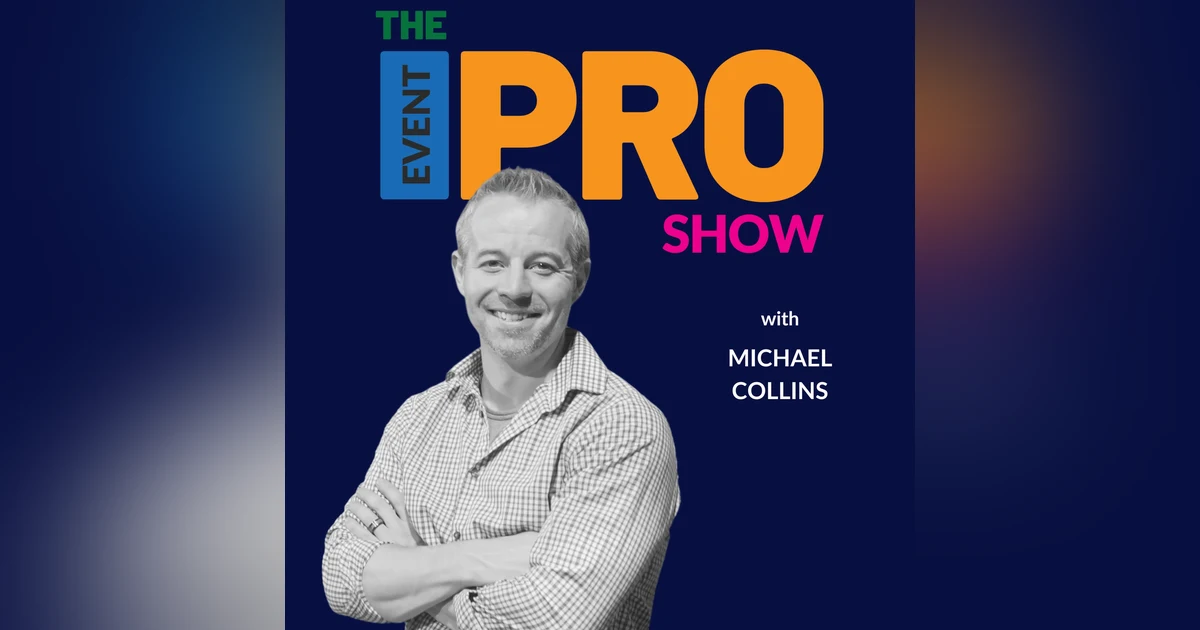
Get ready for another edition of The Event Pro Show, your go-to podcast exploring the world of corporate gatherings. This time, host Seth Macchi chats with Michael Collins, a Kansas City native and co-founder of Bluefox Production. Michael's roots in music, theater, and audio have shaped a thriving AV company known for innovation and impact.
Michael shares how early gigs sparked a lifelong passion, what it takes to grow a production business in a constantly shifting industry, and why mentoring the next generation of talent matters more than ever. He also reflects on the REM concert that first lit the spark. And later in the conversation, breaks down how planners and AV teams can build better, more collaborative relationships.
So, if you're new to the field or just looking to refine your approach, this conversation delivers inspiration, creative ideas, and practical advice from one of the Midwest’s most trusted AV professionals. It’s a lively, honest, and energizing chat that celebrates creativity, resilience, and making work feel like play.
Resources:
The Event Pro Show is a production of LEMG.
LEMG is a leading event production company known for delivering exceptional experiences. From site planning and event design to technical production, staging, lighting, sound, and more—we do it all. As a second-generation company, we’re proud of our rich history and commitment to innovation. Whether it’s a corporate meeting, conference, convention, or live event, we’re the team our clients trust to execute their vision flawlessly.
https://lemg.live/
0:00 Welcome to the Event Pro show, your ultimate guide to the world of corporate events. Whether you're a corporate event planner, experiential marketing pro, producer, technician, or anyone involved in creating exceptional events, this podcast is your go to resource for valuable insights, expert tips, and inspiring stories from the industry's leading professionals. Welcome to the Event Pro Show. I am your host, Seth Macchi. I'm really excited about this conversation in particular because I think in events, the industry as a whole is full of entrepreneurs. And my guest today is a great example of a both highly creative person and highly entrepreneurial person that has put everything into a startup and it's growing and thriving. No longer a startup, Fully full fledged running event production company. I'll read it as Michael. I'm going to read your bio really quick before we get going. Go for it. I'm excited. All right. Michael is a Kansas city native with 20 years of experience in the AV field. Beginning with a background in music and audio, he developed an innate sense of event flow and ambiance working in studio production, broadcast and live events. With a passion for collaborating with clients and events teams, he takes pride in producing creative and cohesive events that brilliantly showcase a client's expertise.
1:22 His dedication to bringing visions to life is matched only by his belief that work, though hard, should be fun. Please welcome to the show, Michael Collins. Michael, welcome. Thanks, man. It's good to see you. Good to be here. I love the bio. I did. Yeah. You know, well, I'm. I'm sure. I'm sure Claude would appreciate that. No, I'm just kidding. I think it's funny. Like, you write a bio like, Danielle at the office sent that over to me and I'm like, oh, wow, we've had this one for a while. I should update it, right? It's awesome. So how's Blue Fox doing? We're doing good, doing good. It's, you know, an interesting year, I think, just with the. The ebb and flow of the industry and whatnot. But I feel it's kind of exciting, slash, you know, I don't know, intimidating, I guess, as you know, we get, you know, when we went into Covid, it was. We were a relatively small company and then. Not that we're not still relatively small in the scheme of things, but we're finally to the point where I feel like we've got like a couple years of, like, this is what normal looks like for us now and, you know, and being able to kind of step back and plan as best you can. Best you can. Best you can nowadays, you know, but. But no doing well. You know, we. I feel like we're really kind of locking in and getting a nice team together that.
2:40 And they'll be like processes and all those sorts of things that really help us kind of get past the day to day minutia into actually looking at shows. Yeah. So we're, we're just, for you, the listener, we're recording this right at the beginning of April 2025. So there's a lot of uncertainty in the economy. And the truth is that Michael's right there with me. But being in production for decades there, there is a natural ebb and flow. And this is normal. And one thing that events professionals should know that first of all, it's going to be okay. Yeah. I don't believe we'll have another event like Covid. Knock on wood Generation. I think that was a generational event. But normal ebb and flow of business is part of it. And it's learning to operate in all economic environments I think is a skill that, you know, is. Is necessary to develop if you're going to have a career in corporate events. That's just part of the game.
3:39 And I, as Michael said, you know, starting right in Covid, kind of on your back foot, kind of. But you thrived through it. So that actually can become an advantage in environments like that. But before I. The business side of things and stuff like that, I do have a question for you. Yeah. What is the first event that you can remember attending? I'm thinking like as far back in your mind as possible. The answers have been varied from different guests so far. All right. Well, it's. It just seems like it would be something else, but this is what sticks out in my head. I think I was eight, maybe something like that. And it was me, my sister and my mom and we drove to St. Louis for an REM show and then drove back that same night. That's a cool show. That was a cool show.
4:32 Yeah. Yeah. Well, it's just. And it was interesting because it's like, I don't know what it was. You know, I'm trying to think of what it was and I think it's the overall. It's everything about that kind of this, you know, we, you know, drove out there and then saw the show, drove back. Like it's all kind of this massive kind of chunk of a memory now. But I just, I just vaguely remember. Hey, it's mean. REM is just kind of a unique. Yeah. Group anyway. But I just remember just kind of like These bold, bold scenic pieces. I can, you know, I couldn't even tell you what any of the set was. Well, I guess I was 8, so I gotta. It's been a few years. Oh, yes. Okay. Random side note on that one. So my, my mom and I. I think she means this in a nice way and maybe I think she said it in a different way than this, but she, I'm paraphrasing, but I think she mentioned that. Well, you know, when you're in elementary school maybe, you know, you do those, you fill out those sheets. So like in third grade you're like, my favorite color is. Yeah, I like pizza. Or I, you know, this other. She said she knew that I was going to be a little bit of a weird kid when my favorite song in third grade was Losing My Religion.
5:30 She's like, oh, that's good. Oh my gosh. Like. Yeah, so I guess this is going to be an interesting, interesting kid. I don't know. Yeah, you were just exposed to art and so I was. Yeah, you had more input than other 8 year olds at that. Exactly. Yeah. So it's a great song. I don't know. It is. Yeah. I mean that's still. It holds true today. It's great. That's so funny, man. That was like the song that I'd listened to as a 16 year old coming home from school and feeling like, like a grown up, you know, it's so emotional. I don't really know why it's emotional. But man, I don't know why this connects to my soul, but, but I got it, you know, detention today. Right now I'm losing my religion. Singing along.
6:15 I love it. Oh, man. So was that the first show? Was that when you thought like, I want to be in events or was there another instance where an event you went to and. Or a time in your life where you're like, this is what I want to do. I want to get into events. Or did it. Was it more like me where. It kind of came to me sideways, you know, I came at it from a different direction. Then all of a sudden it was a career that I was in. I feel, I think it's more the latter. And I think especially for any of us who are in corporate, we tend to find it from the side. We're like, this is actually a. This is a job. I'll be, I'll be darn early. I mean, grew up with music, obviously. I mean, if I'm listening to REM at 8, you know, I'm, you know, listening to Some music. And I played music early on, you know, and band and that sort of thing, but, you know, got into music and rock shows and. Actually, I think part of it was my. My dad taught at a community college out here and they. When I was in high school, they had just kind of started getting this audio program off the ground.
7:14 And. And since he went to. Or since he taught there, like, I could go to classes for free. And this had the other. So it was. It was, you know, somewhat serendipitous, kind of getting me deeper into that because I wasn't super into high school. Go figure. I mean, you know, because some people are. But it wasn't really my jam. And so I started taking some college classes when I was 15 and just really digging deep that. And so I started playing in bands and I was a guy who collected the gear and whatnot. And there was never any intention in that, I guess, outside of doing that. I mean, unless you can include, I guess, being some sort of, you know, rock guy. Rock and roll and go. And, you know. But actually, I mean, I was on a. I was on a military flight path for a while. Like I was going to go into Navy or Air Force, but then little, you know, found rock and roll and drugs. So, you know, they're a little bit. Not as big on that in the military. So I. I took a little bit of a right turn there. But. Say you found your path at that moment. I found my path, yeah. So, yeah, and I just, you know, it was so fun, actually. It's interesting like, you know, then because I'm still in high school doing whatever, and so I go to do some.
8:23 Some tech at the theater and we're in a pretty small school, so it's not, you know, not mega tech or anything like that, but was funny because I go in and it was. I'm just going to talk to him about being like the sound guy or the lighting guy or, you know, whatever tech is involved in the show. And the director's like, why don't you try out? So I'm like. So I was like, I'm always just like somewhere between the backstage and on stage and. And that sort of thing. So did you get a role? I did. I was Charlie Brown. And you're a good man, Charlie Brown. Oh, okay. Yeah. It wasn't just any role. It was. It ended up being the role. So it was. Which was fun. That's my first and only soiree into a theater world. But yeah, that was it. I'm like, okay, so it's all downhill from here. Yeah, I peaked. Yeah. It's like that's as many lines as I can possibly learn in my life. So. But I mean, I don't know, it's. Some of that. I mean, you do actually theater is a great example, I think, of kind of that camaraderie or that, that almost fellowship you get in a. On a team. Like when I was freelancing, for example, it's a very similar thing. Like even though I was freelanc with different companies moving around, somehow the, the, the pool for different companies sort of align.
9:36 So there'll be like two or three companies and all three of those maybe, you know, use the same crew. So I would find that I'd be, you know, like every other week. It was like a reunion with these, these guys and gals who I'd be out on a show with. And it's a very similar sort of mentality and camaraderie that you get with it. It's just. It's true. Yeah. So the thing about theater that I noticed is you have that all the nerves going into a show. Yeah. And then you do the show. There's an execution part of it where you're, it's like you're super focused. There's nothing, everything has to go away. And then there's the post show adrenaline. Yeah. You know, and the letdown kind of thing. It's very much like the theater world and you wouldn't know it, but it has all the elements and it gets kind of like you get a little addicted to that, that, that thing, you know, so. And I did the same, you know, being a freelancer and you have the camaraderie of the same people.
10:27 You're in different. It. What other world do you just like randomly run into the same people in different cities across the country every few weeks, you know? Yeah. It's like so it is that, but you get that like there is an adrenaline to it and like it is fun, you know, like for a time. It's fun. Yeah, exactly. Yeah. It's like, it's like everything else in balance. If you're, if you're out every week non stop, then it gets a little older. It can wear you. It's where you. Like I could, I can't imagine doing like a, like a music touring sort of thing. Like that's brutal. Like that'll eat you up. But, but the corporate side is, you know. Well, and I think, I think there's a lot more to. Well, I. Well, this may be just how I see it too, but like, there's a corporate aspect that is theatrical.
11:11 You know, the. Oh, that's an interesting take on that. Yeah, yeah. Well, because, I mean, every meeting's got some aspect of theatrics to it, and that's just a function of how big is the, the venue, you know, because every, you're not going to produce, you know, a meeting for 50, the same thing you're going to do a meeting for 5,000. It's always going to be different, you know, it's going to be a different level of, of, you know, production or produced value. But, you know, that understanding of how things flow, how it needs to flow to basically just not distract. You know, if, when you're going into theater, you know, they call what's a suspension of disbelief? Yeah, there's, you know, I think of it slightly different when I'm going into a corporate setting, but I ultimately want to design an atmosphere where people can disconnect and more so engage either with whoever's on stage or whatever's, you know, happening around them and, and be able to kind of, I think of it as just kind of setting your baggage at the door so that you can be present in, in what's happening.
12:07 And I mean, how better to do that? Obviously, I mean, it's very much what you do in theater. You're very actively changing that, that environment. But it's also, I mean, I think it's still something you do in the corporate world quite a bit. So you touched on creativity and design. So as a AV services professional, when you're working with a client, that, that's new versus old. So this kind of paradigm is the goal, to kind of get to the point where you're finally just in the ideation phase with them and kind of move beyond the rfp. Like, in my mind, that's a preferred position.
12:48 So they're like, hey, I'm thinking of this next year, and then you can get set up, sit at the table with them and help them design. That's really where we're trying to go, right, with relationships. Oh, absolutely. Yeah. And I mean, and honestly, I, I, I'm not generally just super fond of RFPs. You know, it sits one, you know, one level away from bidding, which I think is probably the best way to get the worst product right. You know, it's like, you know, because, I mean, ultimately what are you doing if, especially if it's literally just numbers on a page, like, okay, well, the only qualifier there is that it's the lowest number and like, okay, well you know, there's not, you know, a whole lot of thought then around the value proposition of that. But, but yes, to answer your question, the goal, and I think I talk about it too, like the, the times when we have the best experience with an event and I think the best outcomes and the happiest clients is when we're, we're effectively functioning as an extension of their team. You know, whether or not that's an event agency and we, the AV partner coming into that or whether we're working directly with a client and you know, they maybe either you know, have an on staff event planner or you know, or just as likely some poor executive assistants getting saddled with an event and Yep. On top of their. That's right. Day to day thing. You know. So I mean part of it for us, especially if we are brought in early is to, to, well, to your, to your point, just like the ideation, the thinking about what is, you know, I like, I mean some of the things I asked you, whether it's a client I know or don'ts, like where's your branding guide? What's, you know, do you have a thought on your theme already? This,
14:18 that, the other. Because integrating all of those aspects into the design allow it to be that, that cohesive nature that we're looking for. You know, because ideally as you're coming and looking at this, you're not just looking at the general session or not just looking at breakouts, you know, these very AV heavy areas. You're thinking about the atmosphere coming into the space. So you know, for us, whether that's digital signage or whether it's saying hey, something that's not AV related at all, it's like, well, some, you know, some sweet window clings here would be cool or you know, where do you need signage and what are those, you know, need to be print versus need to be digital because they're going to change a lot. How, how does your branding affect what we decide to put on the stage? Can we do something creative with, with your logo, with your, you know, your main theme, you know, being able to get in on that and, and help them think about all the aspects. And I just find it interesting too to hear about the things I have nothing to do with. I mean it's, you know, being, having that just kind of broad overarching understanding of the event then allows us to most effectively weed into that, you know, or weave you know, the technology in and out of that so that it makes sense. And yeah, I mean, I mean I Think. Well, like I said, I mean, we've got some events like there. We're looking at 2026. You know, the site visit is this month. You know, those are great relationships and it's a lot of fun. And like I say, we're an extension of that team. It's very much like a reunion family situation again. And you're, you're also talking about
15:48 like the idea of curiosity as a core component of creativity. You have to have time to be curious. Yeah. First of all, you have to have the capacity to be curious, you know, and then have time and, and like, so if you have, if you're looking at event next year, you. That curiosity can go full force for a while and really dig into like, you know what I'm asking you things that really don't have anything to do with av. We just want to know about you, like, about your team as a per. As people like, what, what is the company culture like? And that actually can play into design. And it's not just a technology question. You know, it's not always a high tech question. Sometimes it can be low tech. But you're trying to really get at the core of what they're doing and you need time to do that. And it also speaks to one thing that comes up, you know, in house. AV is a question. I think in house, AV has a place definitely in our ecosystem. It is a quick turnkey solution, typically for overtaxed planners. You know, they're just like, I want to book the venue and I want to get the hotel taken care of, whatever. But when your client is ready, they're like, we have this set budget, we know we're going to spend this much on it, then I would highly suggest your comment about, you know, the worst way to go about it is to get the lowest bid. That's, that's a terrible way to do events. You really want a partner that can bring a lot of creativity to the table and they're not gonna like, try to extract every dollar out of you. They, they, what they might do is extract every bit about
17:19 knowing about you so they can create a great product for you. And it's just such a great. It's a different way of looking at events. Once you start doing that, it no longer becomes about the lowest dollar amount you can spend. Yeah, I mean, I think, and what I try to tell people too is like, if, if you can get away from looking at the, the price or maybe change your metric a little bit, it's like, what is the value you're getting for that price. Right. Because. And also, like, part of just knowing the budget ahead of time is like, I can design, you know, a show for $50,000, probably could design that same show for 15 if that's necessary. I can also probably design that same show for half a million dollars. Like, what is, you know, and that. I think it goes back to your, your point. Well, and another question was like, as you're working with people and you know more about their events, like, also like, who's attending this? Is this a very chill internal meeting where, where it's all your own people coming in? Is this an external thing where you have to put your best foot forward and really give them some flash or give them, you know, just knowing those basic things changes the, the equation and, you know, what's your tolerance for, you know, equipment failure and, you know, like, things like that? Because if it has to be perfect, which I always say perfect with a grain of salt, because I don't think that exists. But to know that you need to plan for a lot of contingencies, you know. Yeah, if we need to plan for a lot of contingencies, then, you know, that's a, that's a different model as well. So just risk profile and with it becomes the appropriate
18:49 budget. But just spending the time to figure out what that is instead of like this. Everything isn't a turnkey solution. You know, it has its place. But when you're ready to take it to the next level, I think is where companies that, the type of companies that we run, that's where we thrive. Yeah, absolutely. If you're looking for the lowest dollar, it's not really. Yeah. A, it's probably not going to be us, and B, it's not going to, at the end of the day, be what you're looking for, most likely. Right. We're not really excelling in that, that world. But with, before starting bluefox with Drake, your, your partner, you had a, your business partner, you had a history of managing both paid and volunteer teams.
19:32 How do you, how do you approach training and mentorship? Because so you've got your, your creativity going on, your business is growing and thriving, and now you're developing people, you're in this phase of like, development that could last for the next 20, 25 years, you know, but you have this unique history of managing volunteer teams and your previous life. So what is your approach to training people in mentorship? That's a great question. Well, I think maybe the universal aspect of it, because it does shift as you move from volunteer and paid groups and the size of that. And what works is doing just for context, my past life was in mega church land. I was an audio director doing that sort of thing. So.
20:23 I think it's like a mega. Wasn't it like the biggest church in, in Kansas City? For sure. Yeah, yeah, yeah, it was really large. You go south and they're, you know, 30,000 member churches are dime a dozen. But you know, this far north, it's a little bit of a. You had a, you had a big team though of people, you know, wanting. Exactly, yeah. And at that time and I was running audio and obviously that we did full on production and broadcast. So we, you know, I forget what year it was. Maybe 2010 maybe. We're building our first kind of web broadcast studio. When it was doing it was doing the remote sites and recordings and we didn't necessarily beam things out so much as far as, you know, do the record and edit and send it off. But anyway. But yes, I mean there's, you know, the overall scheme I think was like 10 or 15 folks per event, like volunteers per.
21:14 I say event per service and there were, yeah, five or more events or services. So. But ultimately, as you're nurturing those folks or as you're developing them, I guess also I had a separate service that I ran midweek too. So that was a whole variety of tech and musicians and speaking and such. But I mean, ultimately it comes down to, well, similar to working with clients, there's an awareness of where are you, what are you interested in, what kind of natural skills do you maybe have already? And then the aspect that's a little more universal and I try to maintain now because, you know, whether I'm working with a new freelancer and getting to know them or you know, a younger staff member coming on, that's kind of newer to the business, whatever that is, or even, you know, people who are a little more seasoned. It's the idea of having the training that's necessary and opportunities to learn that, but then also opportunities with a pretty robust safety net, you know, where you have to have the ability to fail. But I don't want it to destroy things. And especially, you know, obviously running a business like we all have a vested interest in things not sucking.
22:31 Yeah, yeah. So it gets more complex. Obviously, as you know, there's theoretically a little less grace when you're in the, when you're actually in a paid position doing things. But I think the biggest aspect of it is, is kind of knowing people and, and as they Experience and experiment, especially on a volunteer side. Like you see where people are good and what they're interested in and then you try to give them opportunities to move into that and to gain experience and try different things. It's not that much different in, in our corporate setting, like for, for a while, you know, I, I likened our model to kind of a, a teaching hospital, you know, like, yeah, I like that. A surgeon is, that's a pretty high stress, serious job. Like you're cutting into somebody and nobody wants to be the first person that a person is cutting into. Like, right, oh great, this is your first time. Give me the gas, you know. Yeah, it's not, not a super exciting thing. No, everyone's like, who's the best surgeon in my town? That's what I want. Exactly. And so, I mean, I try to think of it that way too because much the same way, like as far as audio is concerned, as far as video concerned, you know, like everybody wants a seasoned, you know, you know, person to be doing that. And so it's, it's having to some level of risk tolerance but just being attentive and intentional about.
23:56 Here's the level of training. Like I want you to go through and do all these things. Like we've got shop time. There's a reason that we don't pack our calendars. It's a, so we've got opportunities to work with the clients and the shows that make best sense for us as a company. But it also gives us time in the shop. Like we test build things. Like, you know, sometimes we'll do designs. Like I'm not entirely sure how that's going to go together. Yeah, we build it ahead of time and so even those. Yeah, exactly. So you have the opportunity to, to get that training and get the, get those reps in before you're on site and then as you're on site, I mean that's where everybody learns that, you know, one way or another. So I think it's just, it's trying to be intentional about. It's making space for people and just having that relationship and that feedback of, you know, some people want to move down this direction and like, you know, ultimately they're going to be a super tech and they want to, you know, know so much about the gear and just be, you know, that geek that never talks to anybody. Some people want to be, you know, have this, you know, bug for the kind of production management, the details and this, that the other and, and there's all sorts of things here and there and in between. And well, actually here's a great example and I'll brag on him for a minute. Like Brian, at our office when we first hired him in, I want to say it was 19, you know, he came on as like our logistics guy, like warehouse manager type, that sort of deal. And he's had some history in town of like he worked at one of the big coffee roaster companies. So he was like the first full time employee there. And so he was with them through all their growth up till, you know, up till he left.
25:28 And when he came over, you know, he's. He's coming in to basically do logistics and get our, get our poop in a groove for us and. But he's got a, you know, an affinity and an interest in technology and you know, engineering, that sort of thing. And especially, you know, fast forward, you know, only like six or eight months and we go into Covid and it's like, well, we got a lot of time on our hands and gear to learn and all this sort of stuff. And he just went deep into it and now, I mean, I put him against anybody in Kansas City as far as like your V1 video engineer, like toss him on an E2, whatever you want to do. And part of it, it's just like, well, and that's the thing. It's like it's providing opportunity. But pretty quickly after you do that, you find the people who have the initiative to go and take advantage of that. That's what I want. Like, I want people to take advantage of the opportunities I provide them. Because at this point, I mean, I'm not the smartest guy in the room by any means. I mean, arguably I would never was. But the. I certainly don't know more about this gear than anybody, but what I can afford people now is the opportunity to come and, and show what they got and to do this and join us in this, you know, path, in this journey of fun events and doing this weird industry that we get to do. So being able to make those opportunities exist and then the joy of seeing people take advantage of that and how they flourish in it. I mean that's, that's where it all kind of comes together. Makes it. Makes it fun. Yes. You know, I think it's such an indicator of a healthy. I look at a lot of service businesses, probably the case for any business, but that there is a good, healthy group of young people learning and growing and thriving
26:59 in your company and you have to make room for it and it is a risk. Quote unquote risk but I think it's also an investment. So I think as you know, people are evaluating who their partners are going to be. Look around when they're delivering their service. Is there a little group of younger people just like in this where it's a working hospital, you know, are they following the surgeon around, you know, who's, who's really good on site and do they have people around them learning? And I think that's a great, great investment for any company to make and important. It's kind of like in finance, cash, cash flow is the lifeblood of the business. But in on the operations side, young people and learning people are kind of the lifeblood of like what's going on in a growing and thriving company. So I always thought that was like an advantage that you have just unique to you because you spent years with people that you had to get to do things that weren't getting paid. Yeah, well that's the end. That's a choice. I mean that's what I really appreciate. When do see that initiative now because like I, like I say these people, not only are they not getting paid most of the time they've got full time jobs. Right. Like they don't. It's not like they have a lack of things to do. Right. Like, and yet they're giving their time and they're coming to serve. In many cases on paper it's the.
28:15 Worst side hustle in the world. But there's, there's a passion component to people. Absolutely. That I think if you can find those people, they would be doing it for free. But they're actually part of our team and they, they're making a living and thriving in that environment. That's really who you're looking for, you know that I would be, I'd be volunteering, doing this. I love this. Yeah, well, you know, that's a really good point. Well, I always tell people like whenever I retire I'm just going to go back to doing audio. Like I'm just gonna go back, I'm not going to be in charge of anything. It's going to be, just gonna be great. I'm gonna be so relaxing. Yeah. Okay. Lightning round question. Will you be mixing albums or, or songs or. We'll be mixing live music. That's the real question. Oh gosh. Oh, I'll have to find some.
28:56 So probably. Oh gosh, that's a really good question. If I had the opportunity, gosh, I'd almost be embarrassed to go and do it at this point in life. Like I haven't mixed music. And so like, so ages ago, like my first kind of real gig, I said, I guess I would say I was the house engineer for the Grand Emporium downtown. Oh, yeah? Yeah. So you probably know they. It doesn't exist more the Beaumont or the Garnastian in Florence. I guess I should say it's Granada is technically. When at the time, I think neither here nor there. But. So, I mean, but I was doing, you know, five, six nights a week. We'd be mixing bands, we'd be mixing, you know, those horrible battle of the band nights and things like that, you know, never ending. Oh, my God, it was horrible. But. But man, that was me. And my ear was the best. My, you know, my technique was probably the best at that point.
29:50 But I mean, I, I enjoy doing. I enjoy the live side and I think it's probably what it ends up being. Yeah, I did some studio work for a while and it's. And it's good. I. Maybe it's right now just because I got young kids. I can't imagine the time and the energy in a studio making us making a song. It's like I've done that before and, and it's great. But you know, ultimately you can never be done. You know, it's hard to have that cut off. That's right. Especially a perfectionist. And. And you could be like, I'm going to start mixing this song and then you look out the window and you're like, when did it turn night? Yeah, exactly. It was morning when I started mixing this. I don't know what happened. Yeah, you used to lose whole days. Yeah. I feel like I'd have. I'd have a better musical sense now, but less musical and technical talent. Yeah, yeah, I agree. I agree. There's this point in time, I think for me too, as a technician, when I was just doing it all the time. Definitely that was a while ago now, you know, like, because I. I moved to other things in the business. But yeah, people. People are definitely passing me. Passing me on the skill level right now. But yeah, maybe that's what I'm going to do though, in retirement. I'll go back to mixing audio too. Do it.
30:58 Do it. Yeah, I made the. Well, my wife and I moved a little while ago, but I had a studio in my old house and like went. Went nutso on it. Like the double walls. Yeah, you did that. Yeah, it was, it was legit. Spoiler alert. It doesn't add to the resale value of your home. Just so. No One's impressed at best, you break even on it. But I do, I miss that quite a bit. And, but it's also like, you know, you gotta, you gotta move on, you gotta, you gotta grieve some of the things you don't get to do anymore to enjoy the things you get now, so. That's right. That's right. Life changes. Exactly. All right, I've got a transition question for you. So there's event planners listening to the show. So how can event planners set up their AV partners for success? Just a straightforward question, like, what are things that stand out to you that maybe when they've been done, or things that you wish planners would do more often that make our job easier and the setup, you know, so that we can actually execute a better, a better service. Yeah, I mean, I find, I mean, there's just a certain level of transparency that, that is helpful, you know, you know, some, I mean, the easiest place to look at that is budget. Like what are we looking at? What is, you know, what's our, what is our, I don't know, bandwidth for shifting and creativity and, you know, and awareness. I mean, the best case scenario is getting on, on calls with the end client and being able to part, you know, having that overall
32:31 conversation, like I say, being extension of the team. Right. That's where I think that's where you find a lot of roadblocks disappear because there's a translation, you know, that doesn't happen super well. As you add in points of communication. It's like playing the whisper game, you know, so your expectation or your thought around what the client wants and then you bring it like, oh, well, you know, a follow up question then bounces back and forth and, and it creates just almost a, a frustration I think, for really everyone involved, including, you know, the end client. So I think me and a level of transparency there is, is great and just the ability to have open conversations.
33:16 For me, it's, I, I love having a brainstorming, you know, with the client, you know, whether or not they're into, you know, creativity or this or that and the other, just having someone there to, to kind of solidify that team mentality of it, you know. And I think, I mean, I think partner is maybe a word that we toss around a lot, you know, and there's a difference between a vendor and a partner. And so to really lean in and be a partner with someone and, and just means that you're also, you know, engaged and committed to this in a way that you're not. If you're a vendor, you know, like, yes, if you're signing a, you know, a PO or something, or it's like, here's three lines that you're sending out. You know, it's a different. It's a different mentality and it's a different vibe than if you're, you know, I'd say maybe commitment. Yeah. You know, knowing ahead of time, it's like, okay, so is this something.
34:11 Are we farming this out? Are you looking at multiple things? Are we committed to this? I think of it almost like if you're building things, like, this is a design build process. Like, like, yes, we're working together because it's going to be so different from now to when it actually happens. Which is also why I, like, I'm always hit or miss with an rfp. It's like, okay, well, you won, great. Let's scrap that and see what we're actually going to do now. And so, you know, obviously, if you're working with a new client, that's difficult to do, but if you're, you know, if it's your. Maybe your second time coming back or you're another show and you can be like, okay, you don't have to work with us on every show, but if we're doing this show together, all right, let's. Let's commit to that. And honestly, further on down the road, you'll know after you work with us, if that's how you want to do it again in the future. And I find as you work that way, you get to feel actually better about that process because you realize that a lot of those things, like the RFPs and the details and all the things that gum up the process are put in there as kind of insurance to just try and get rid of, you know, fluff for, you know, some of the challenges. But really what it does is it. It programs in challenges to the process that makes it inefficient and not so functional and ultimately more of a frustration. So as trying to be a control, it actually ends up causing other problems.
35:31 Yeah, but it's. Sometimes it's a necessary. Yeah, absolutely. Yeah. I do love your concept of, you know, I think in the. When you're in an RFP relationship, you're a vendor, and then when you move beyond it, you're a partner. You know, that's. That's kind of how I'm hearing that. And there's nothing wrong with either face because I think, you know, some clients have PTSD from, like, other past previous relationships, and they do that As a control, you know, like, this is what I need. Don't do this, do this. You know, this is how I want you to bid all that. And usually there's that intro show or intro project and that. It's very formal, but I love it when it moves beyond that and you're like, okay, everybody kind of lets their guard down. And you've. I know you've experienced that before, too. Like, we're like, okay, everybody. Actually, we. You could just text now, you know, like, you could just. You get to a relationship part of it, and that's really where it starts becoming fun. And. And it's all part of it. There's like this natural cycle to it. But I love winning trust. I love when people. I realize in the RFP phase when they. When you win, someone took a risk on you, someone put their job on the line potentially for you. That's a super big point. Yeah. You move past it, though, and then it becomes a relationship. And that's cool. That's cool thing, you know? Yeah. Because, I mean, as you do that, it's. It's a reciprocal sort of situation. Like, they put a risk out for you, and then you'll. Honestly, as you develop and get further along, like, I find that's where everyone is less guarded too. Like. Yeah, you know, we're a little guarded when we go into an rfp. It's like, all right, what is. Right. What is this going to be like? Just at the same way that they are. And then as we
37:03 go in, it's like, you know, we would love to do this, and. But. And you get that level of trust of like, there really just isn't any more money. It's like, okay, what can I squeeze? And actually. And it's kind of nice because then you move into these challenges as. As a team and you get this kind of collaborative. And then, you know, limitations. That's where all the really fun innovation comes out of. You know, that's where you get a fun idea on how can we do this and provide this cool thing or this effect. It's not how we maybe would do it if we had a million dollars, but we can. We can creatively, again, just create that value for. For the client and for the event and for me, just like, to make a cool experience in that is. Is. I mean, that's ultimately why we're doing it in the first place. Right, Right. And if you can make them look great. Yeah. I mean, that's just the way to do it, you know, so your. Your limitations Become our limitations. We're going to figure this out together. Yeah, absolutely. What do you think AV tech will look like in, like, 10 years?
37:59 I mean, you got Bill Gates saying things like this whole sector is going to be irrelevant in 10 years or whatever because of AI and all that. I know all of that, but what do you genuinely think? Like, we were supposed to have flying cars by now, is all I'm saying. I was promised a flying car when I was a kid, and that was a long time ago. So. Yeah. What will AV really look like in 10 years? I don't know. I mean, I think there's. There's. It's. I. I'm less futurist, maybe than some people. You know, if we were to compare it, you know, now, you know, people still enjoy sitting around campfires. You know, 100,000 years ago, that was pretty popular too, so. Right. You.
38:40 I think there's a good point. Yeah. I mean, I think there's. There's a lot, man. I think technology is just going to keep going nuts. Oh, and it's going to be crazy. I think what AV will look like might be different, but I'm not like a. I'm not a person who's thinking like, okay, we're going to plug a, you know, chip into your head so we can beam something to your eyeball. So we don't need projection screens. I'm like. And maybe I'm old, whatever. But I think, I think a lot of the technology, especially like the AI and things like that, it does appear like it's going to streamline and make some things easier. Like, I think things in the creative process will get better. I. As of yet, I'm still, you know, a little sheepish on the idea that anything created entirely by AI is going to get there.
39:32 Right. But I think events as we have now seen kind of coming out of COVID is that they are very important and that gathering together will be big. It's it that that's not going to change. So whether or not, you know, I think economic aspects of. Of life might drive more what events look like and, you know, are they smaller? Are they more boutique? Are they. You know, and that's the thing because, you know, I occasionally laugh a little bit when I see trends and, you know, this is what's hot and what's not. I'm just like, you know, I mean, all of those things still exist and, you know, we still have shows where I need two screens. Black pipe and drape and uplight. Like, that's right there's there's a lot of cool, cool stuff that can happen, you know, and honestly, most of the stuff that I see that's really cool and happening now also happened 10 years ago.
40:29 Just less of it. So more so. I think what I'm excited about, whether it's, you know, what events look like in 10 years or, you know, kind of the direction of technology in general, is that not necessarily that that much will change. I think cool things will continue to come online, but it's more so the accessibility to that example. We just had a, we had a demo in the shop a couple days ago and it's basically just looking at a piece of gear that can just put in and out a whole bunch of pixels. I mean, it's just like gobs and gobs of 4k in to out and all that. And I haven't seen the price point on it yet, but I feel like it's a little bit of a disruptor type.
41:14 So, I mean, which effectively means, you know, it may not do 100% of what I could do on a really fancy high end box, but it gives me the possibility of expanding into a, a market where maybe somebody didn't have, you know, Google money to go and do a crazy big show. Like we can democratize some of this cool gear and cool experience and, and so that aspect of it's good. But I think the bigger thing for me, outside of the trends and outside of what it can look like in 10 years, is more so like, I look at it like a musician, you know, so when you first start learning an instrument, you learn some scales and you go and you learn everybody else's songs, you don't write any of your own yet. And then as you go and you build a repertoire, then suddenly you have these things that you can pull from your own past, your experience, and then you play your own song. And that's kind of what I think of, you know, because we put stardrape on a thing like a week ago or a month ago or something. Like Stardrape's been around for like 20 years and was like, it was the coolest thing, you know, that was so cool. We just had that conversation like last week of like someone proposed that I'm like, star drape something. And I was like, wait, that would look really cool right here. I know.
42:24 And then I'm looking at this old idea. But yeah, but so you got some Star Drape and then you have a couple LED pillars in front of it. So yeah. And again, it's like, you're pulling together these, these items out of your repertoire. Ones, you know, one's a throwback and one's relatively fresh. And so that, that's more so my thing. I don't, you know, I don't get into trends so much, but I think. No. And that's why it's so important to know your client, know the show, because that then inspires what should the set look like? What can I bring in? What can we bring in from our repertoire of all this AV to be like, this is you. It doesn't have to be on trend or not, you know, this, you know, cutting edge. It can be you and your show and how does your brand and your clientele fit into this?
43:06 And that's, that's kind of part of it for me. Sorry. Yeah, there's a real great non answer for you. It's good. I, I think that the bottom line, people have been sitting around campfires long time. They're going to keep sitting around campfires. And it's up to people like you and me to use the tools at our disposal to make it happen. And there's going to be some really cool things that come. Just like probably our entire careers. It's been amazing watching the, the evolution of super expensive things becoming way more accessible to way more people. But at the end of the day, you're still kind of like making sure people can sit around that campfire and have a good discussion and all the things we need as humans, you know, and that's why we do this. You know, this is what corporate events are basically. So I really appreciate your conversation today. But if people want to learn more about you or Blue Fox production, where should they go? What should they do? You can always check us out to bluefoxproduction.com I'm on LinkedIn all over the place. Would love to connect with anybody, but yeah, man, those are the easiest spots. We're out of Kansas City. We love to travel and love to worry out. If you have something in Kansas City, give us a holler. We'd love to work with you too. So awesome. Thank you so much, Michael. And thank you for joining us on this installment of the Event Pro Show. Be sure to follow us on your preferred podcast platform or@the eventproshow.com
44:37 and we will see you on the next one. Thanks so much. The Event Pro show is a production of LEMG video by Nick Barrett, audio and post production by Prince Thompson. You can learn more about us at LEMG Live.