

 Spotify

 Apple Podcasts

 YouTube
Inside Experiential Events: Preeya Patel on Bridging Creativity and Organization for Major Brands
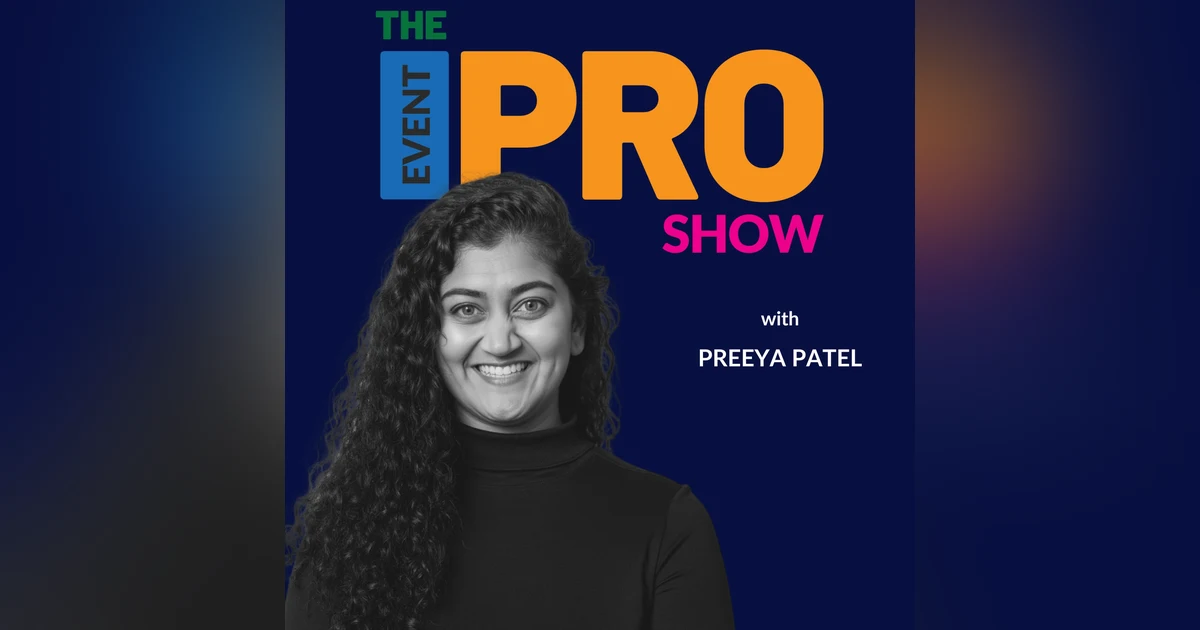

Join our conversation on The Event Pro Show with host Seth Macchi and the inspiring Preeya Patel, powerhouse producer and founder of PreeProduction Events. With over 14 years shaping unforgettable productions for brands like Xbox, Disney, Red Bull, and the LA Lakers, Preeya brings both creativity and precision to every project.
She opens up about her journey, from growing up surrounded by vibrant South Asian festivals produced by her family, to leading large-scale branded activations today. Preeya shares valuable lessons on crafting moments that resonate, translating bold visions into reality, and why every detail matters, from spatial planning to the frontline teams that shape guest impressions.
If you’re passionate about corporate gatherings, brand storytelling, or designing experiences that spark genuine excitement, this conversation is for you! Get ready for a behind-the-scenes look at how true production magic comes together.
Resources:
The Event Pro Show is a production of LEMG.
LEMG is a leading event production company known for delivering exceptional experiences. From site planning and event design to technical production, staging, lighting, sound, and more—we do it all. As a second-generation company, we’re proud of our rich history and commitment to innovation. Whether it’s a corporate meeting, conference, convention, or live event, we’re the team our clients trust to execute their vision flawlessly.
https://lemg.live/
0:00 Welcome to the Event Pro show. Your ultimate guide to the world of corporate events. Whether you're a corporate event planner, experiential marketing pro, producer, technician or anyone involved in creating exceptional events, this podcast is your go to resource for valuable insights, expert tips and inspiring stories from the industry's leading professionals. Well, welcome to the Event Pro Show. I'm your host Seth Macchi. I'm the CEO of lemg. We're an event production company based on based in Charlotte, North Carolina. And today's guest I'm very excited about. I've known Preeya for quite a while. We've worked together before. But I know a lot of people that are highly creative and I know a lot of people that are very organized. But there's a way smaller pool of people that put that those superpowers together and Preeya is one of those people. And Preeya, if you don't mind, I'm going to read your bio to give people a background of who you are. So our guest today comes from pre production events and event production consultancy connecting large scale brands communities through immersive, ambitious experiences. Preeya is one of two children of Gujarati immigrants from India. Her roots in South Asian dance and performance uncover an undeniable knack, coordinating large teams and complex budgets with ease and precision.
1:20 She thrives in the unknown, solving impossible challenges, being infinitely resourceful and doing it all with a smile, which I can attest to. Preeya's 14 plus years of experiential production experience speaks volumes. Working with budgets upwards of $7 million, Preeya has led the development of countless experiential campaign strategies, reaching thousands of event goers. She's delivered unforgettable guest experiences for leading brands like Xbox, Disney, Red Bull, the LA Lakers, DreamWorks, Harley Davidson, Alaska Airlines. You guys get the idea? Her mission really resonates with me. To kindle excitement, stoke wonder and ignite joy for every curious heart. Please welcome to the show. Preeya Patel. Welcome. Thank you. So excited to be here. Yeah, I'm, I'm very glad that you said yes.
2:07 You're a person that I really respect and you have so much good stuff to say. So I'm glad you, you joined our show. Oh, appreciate it. No, it's been great. I love that we had met years ago and I'm excited to be on this podcast now. Where are you talking to me from right now? I'm in Glendale, California. Okay. Close to Los Angeles. For those who don't know the LA suburbs. Okay, cool, cool. Yeah. So you're on the, on the West Coast. I like to start with my guests with just the same question. And I think it's super interesting to hear people's experiences, but what's the first event that you can remember attending? So this would be. It could be an entertainment event. Some people, it's like a church event or of some kind or whatever. But in your, in your mind as a. Is thinking back when you were a kid, what's the first event that you can remember attending?
3:00 Yeah, that is a fun question. Taking us really, really far back. I have a great one. And, you know, you. You brought it up in my background, so great job with the pronunciation there. I have a fun story from kind of my roots, my South Asian roots, growing up. There is a time of year in November in the Gujarati community of a religious spiritual festival called Navratri. I don't need to know the pronunciations here, but in that time period, there's this folk dance kind of festival that happens. It's called Garba. And. And across the globe, obviously in India, but everywhere, people will come together in November, small groups, like in a church or in a gymnasium and do like little folk dance get togethers. And you're just kind of dancing as a group.
3:48 And as a kid, I actually remember my uncle threw one of the biggest ones here in Southern California at the Anaheim Convention Center. I think it was like probably 10,000 people from Southern California coming together to do this huge folk dance. Imagine, like people dancing in circles, vibrant Indian clothes. And we did that every year, every, every November. So as a kid, I'm definitely like, challenge. Like that is the event that I think about so unorthodox. But that's just Garba is in my blood. Love dancing, love doing it. And it was just really fun being part of. Part of it because my uncle produced it. So it was definitely something that I got to do more than just the dancing part of it. But actually see him put together something so cool out of a sheer passion just to do it. Oh, see, so that's unique. It's so funny. I think it's. It's like a common thing with a lot of event people. There's always this experience that we had as a child, child that really, it was impressed on us. And, you know, it. It created some sort of emotion. But you're the first one that had like an actual family member that was producing it. So you were like seeing the other side of it before a lot of us weren't. Didn't even know there was another side of the curtain. But you were Seeing that right away, totally. It wasn't even until later in life that I looked back at that and realized exactly what you just mentioned. Because, you know, my uncle wasn't in the events industry. It's not what he did for a living. He had a, you know, a quite a corporate job in a government sector. But this was just something he
5:20 did as a passion project. And so to me, producing events was a passion project until later in life. I looked back and I said, hey, I was, I was really seated into this world of large scale events and production early on and. And didn't even realize it. Right. You're watching somebody doing it for the joy of it, like from the, from the beginning of your life. That's really cool. Yeah. Okay. So then at some point you started getting paid for doing things in event. What was, what was your first paid experience with events? You know, now it's a job. Yeah, I sure did. Yeah. I didn't know I was gonna go into events as a career that was not kind of planned out. Even going into college, not, not the trajectory, but somewhere within college, I kind of got. I dabbled into some volunteer work. I started producing a stage show through a student organization. It was like a collegiate dance competition. Dance is very much in my blood, as you can now hear. But I started doing that and it became my calling. I kind of said, hey, I'm really good at this. I really thrive in the chaos.
6:29 Fun fact. I was on a pre med track, so I was in the ochem biology classes, but on the side. Loving working with people and loving working in the stage world and calling the show and bringing teams from all these colleges across the US together. And it was really cool. So kind of airing from there. I stepped away from pre med. I said, I do want to explore this as a career. And my first paid job was an unpaid job. I came into the experience. I did one of those too. I was a production intern at an agency called ATTCK Marketing. At the time they were a brand ambassador agency for those familiar with the experiential world. We go to agencies that have amazing brand personalities that come out and represent us. And that's what they did as a corps. But they wanted to be more. They wanted to produce. And. And so I came in as an intern on a team of four people, I think, and that was my first job. I was like, my first memory of that job is being asked to curate uniforms and costumes for a four loco float at the Chicago Pride Parade. Oh, cool. Quite the ask, quite the brand to be Working for. Right? Yeah, my first job. Yeah. Yeah. You had a big ask right out the gate.
7:51 Sounds like events. Hey, so you, you work and have worked a lot in the experiential event space. And why do you, why do you enjoy that, that space? And I'm asking you from the context of I spend a lot of time in corporate events and there is a distinction. There's a difference and a different discipline that goes in those two, those two things. So why do you enjoy working in that space? Yeah, no, I'm glad you called that out. There is such a distinction. I think there is foundational elements to all events, corporate events, experiential events, even personal private events. But with experiential, I, I'm always drawn to the guest emotion side of, of what experiential does. I think we, you know, we work in a space where we're looking to create an experience that emotes a feeling of joy or curiosity or surprise in our guests. And it's, it's often something that's unexpected. They're not looking for this experience there. Maybe they are, maybe they're not. But for the most part it's a kind of a surprise and a delight. And so I really love working in a space where we're designing these moments and these experiences that people are getting to just go feel something. Feel like a kid that's like wandering into a playground and just, whoa, what is this? I'm so surprised. This is so cool. This is so exciting and, and just creating that, that engagement with people, it's what drives me 100% not to say there aren't other cool things. I'm like, I love the
9:24 immersive design of experiential. I love the scenic installations and the builds that you don't typically do in your corporate events. You get really far fetched in, in architectural design. But if you asked me why I'm in it, I'm in it because I'm creating just this surprise and delight for people that they just weren't expecting to, to do that day. Yeah. And I think that if you could always tie that to both sides. So corporate events. And I think you could probably say the same for, for experiential as well. But a traditional planner, meeting planner are thinking, I was just talking to a friend about this like yesterday, but they're thinking of checkboxes. So they're getting everybody there safe and getting everybody home safe. They're getting them fed, they're getting them registered, they're, they're making sure everybody knows where to go, but who's thinking about exactly what you said. The, the surprise and delight in the sessions themselves or whatever, whatever they came there for is somebody thinking about that journey within that event. You know, and I think sometimes events can fall flat because they did everything right and everybody sits down and it's like, this is going to be four hours. So yeah.
10:35 And it's just slide, slide, slide, instead of thinking how can we engage people once they're here for the thing? And I think that's so important. That skill set is you can use that anywhere with events, any type of events. Absolutely. I think that's you, you nailed it. I think that's an ethos coming from the world of production. And yes, experiential has been my background. I think that's the ethos that needs to go into every event. And that's why I'll use as simple as a wedding or a baby shower to a corporate, you know, convention to an experiential. It's, it's. How do we get everyone coming to this event to feel good, to feel excited and walk away being glad that they were a part of that experience as opposed to feeling like, okay, checkbox did that. Going home now and moving on with my day to day.
11:20 Right. They get there and they're thinking about when they got to leave. I did my thing. Yeah, we want to, we want people to change in some way. We want, we want them to take something that changes them in a positive way. So I love that. I love the creative a part of all events and that's why it's so important to have people like you involved. Otherwise it's just another thing. I mean, why are, why are we doing this thing? I love it. So speaking of experience, if you were trying to share with someone like when you're, when you're planning a large scale event, how do you start designing the guest experience? You know, when you're, when you're thinking about that, these things we were just talking about, you're working with a new client, you've worked with many new clients in your career. How do you start thinking about, about that, how do you start designing that? Absolutely. You know, in the experiential world and all events, everything's so different, everything's so nuanced. So there's no template. Templated way to produce, there's no templated way to design. But you kind of nailed on it right now when you talked about the corporate events. My go to is putting myself in the guest shoes. I always start from that Perspective. So if someone comes to me with an idea, this is something we're going to create or this is, is an experience, I immediately put myself into that guest, that attendee, and I say, okay, let me, let me walk through this, let me hypothetically journey through this experience and, and see where I would be looking and going to as a guest. And it's such an interesting way that I like to challenge
12:53 my mind every time that I'm producing an event is, okay, I arrive, this is the first thing I see and hear and feel. I walk into, let's say it's physical room, I walk into the space, space. This is what happens next, here's what's around me. And putting myself at that eye level and putting myself in the guest shoes allows me to think about the little details that are going to make that guest walk away remembering those things. You know, and if I, and if you work any other way from my experience, if you work backwards and you try to bring a guest into something you've created and you're focusing on, you know, just the brand or just the design or just the layout without thinking about the guest, it could land really flat.
13:33 So for me it has always that little trick of, okay, just take a moment, close your eyes, walk through the experience from the guest point of view and then start from there. It's really gonna, it's gonna create more magic than most people expect. I love that kind of reverse engineering from what the guest's experiencing. And I, I, I had this, this was apparent to me. I, I rarely attend events, like multi day events as a guest. I've been to tons as a production person, right. By the time we see guests show up, sometimes you're three, four days in, you know, and you're, you're kind of tired. They're seeing it fresh. And so the experience of walking into a multi day event that I was a guest was so eye opening because the journey, you know, from the hotel into registration and then from registration to where I'm going different places, I'm going to completely different experience. And it makes you think about how things are laid out totally differently than maybe what a production person might want, maybe that might be more convenient. But from the guest experience, it would be better to do it like this and like, it would be way more impactful. I think it, it would be like a cool exercise if you don't often get to just attend events, right, do it, do it once a quarter just to like keep that idea fresh in your head 100%. And I might like A lot of my success in production is driven from that. If I didn't go to the events and experiences that I got to witness, both
15:06 good and bad. Right. I want to see. Right, right. What makes me upset when I leave an event, but what makes me really excited. I. That is something I draw inspiration on quite a bit is how am I, as a guest experiencing this and how, you know, what are the things I want to take from that into the events that we're doing? Even if, like you said, it doesn't make sense from the sheer production logistics, convenience, efficiency angle. I'm all for efficiency, but you're right, there are times where that might not be the most efficient way to do it, but it is the way the guest is going to experience it. Way better than we. We would imagine. Yeah, yeah. And I think that your idea of like this guiding principle, if it's the guest, then your decisions are made off of that, you know, and if it's shifted to production, you know, production people, there's always like 10 ways to do it and it's their way that's the best. Right. Well, our guiding principle isn't you, it's the guest. And it helps shape the whole event into something that's way more palatable for a guest. You've produced events for some of the biggest brands. I mean, I just, I just read them. You know, people are familiar with these brands, brands. How do you make sure they're creative vision actually translates into something that works in the real world? And I say this because I've actually been in meetings with you and your end client and watching how you work with clients, and you have a skill for that.
16:31 And so sometimes it takes a bit of discernment of in the moment. Here's your creative vision client, and how am I going to translate that and do it in a way that we're all I've got. All my bridges are still built at the end of this conversation, you know. So how do you approach that? How do you approach taking their creative vision? That sometimes might be unreasonable, but hearing what they're actually saying, yeah, yeah, you nailed it. It's this. We live in this world where, you know, you, you don't want to say no. You want to be able to say yes. You want to create these beautiful creative visions in real life. But there's production realities to a lot of things that we're doing. So I absolutely, when it comes to clients have dreaming big. I'm prepared for the biggest ideas, I'm prepared for the Grandius and I Wel that I kind of, I work with a lot of creative directors in my experiential world and one of my things is, hey creatives, do what you do best and don't let production limit your original ideas.
17:31 So where I come in into this picture is like you said, reading between the lines. Once I get the creative vision, once I understand what the client's looking for, try to understand again where their, what their end goal is with the guests, with the experience, with their brand objective, like what are they looking to create and make sure you don't lose that in any, in any sense. No matter how hyper realistic realistic we need to get, don't lose the magic that they're trying to create. And ultimately for me, when it comes to creative ideas, I think it's bringing the right people to the table. That has worked for me. Production and you know, you're doing the show and you're talking to all these people. I think we'd all agree, we're. It's not a single person sport, it's not a single person game or as you will, it's a team sport. And you know, I pride myself in being an executive producer, consulting and pulling an event together. But I succeed by bringing all the right people to the mix. And so bringing creative to reality is all about figuring out which players need to be in the game. You know, the skill sets of audio, visual and lighting. As I've worked with LEMG in the past, you know, yeah, I can speak a little bit to that, but I want to bring in the experts. When there's incredible ideas about holograms and holographics and special effects fabrication, you want to bring in amazing design teams. If you're starting to create, create immersive large scale installations. And so it's really about creating that, a team, if you will. That's what's worked for me. It's not saying no, but it's bringing in the experts. It's
19:01 hey, what have we done in the past that has worked or hasn't worked? What do you know from your industry? What do I know from our industry? And aren't we all excited to try to do something that's never been done before? And that's where the magic happens. It's like get people bought in, get the experts at the table and then figure out the way to bring that to life? Yes, I, as you're saying that I'm like, you know what, that, that actually it literally makes me happy introducing clients to people that I know that are experts. Like getting the right people at the table. I want to, I don't want to be the smartest person at the table. I want to be the least smart person at the table and just be smiling that I'm like, hey, I brought. This is the right team. I love that. I love seeing that happen and play out and seeing like a dream happen that a client had. You know, that when you bring the right people there, that does bring these like, certain level of joy, you know? Yeah. So I love that.
19:55 What do you think? Just as far as, like, okay, so you've got your creative going and we've been talking about the guest experience, but what do you think? Some behind the scenes factors that could make or break the guest experience. So just a little bit on the negative side. Yeah, there's so many things behind the scenes. Right. Our guests shouldn't always know all the little intricacies and details that are, that are going into an event that makes it amazing for them. We've got your people calling the show in the back of house. You've got all of the run of shows and the details, make or break. I mean, let's go back to talking about feelings, right? If we're talking about wanting to get people excited, get people happy, get people laughing, those are the things that make an event great. Those emotions can go wrong really, really quickly too.
20:44 People can get really angry, people can get frustrated, people can get bored. You mentioned that earlier, sitting for four hours, I'm over this. And so again, making sure you steer away from bad experiences. One of, one of the things that I think is very behind the scenes or maybe underrated at times, is the people that are guest facing at your events. You know, as a producer, I'm behind the scenes. I'm in show black. I'm on a radio, I'm. I'm in the back making sure everything's running smoothly. But you've got people out there welcoming guests, ushering guests from point A to point B, taking them through in the experiential world, taking them through a photo experience or a customization station, those people are the ones that can make or break an event. And I always say, really think about how you are training your ambassadors, how you're getting them bought into the same ethos and magic that you're trying to create for the guests. Because any one, you know, disgruntled brand ambassador interaction with the consumer that goes wrong, a person's walking away having a horrible experience. And, you know, you see that all the time. And Yelp reviews from a restaurant or A hospital. It's like, hey, it's one engagement, one person makes your entire experience go south. And that's what everyone's talking about. So I, you know, that's one area where I'm always saying, hey, remember when you get to show day, you might have been in this for six months thinking about every little detail, but there's people on the show floor that are just being trained today
22:17 and get them bought in, get them to be part of your team and make sure that they are giving your guests an incredible experience. Because no matter how beautiful your event looks, these people can make or break it. So that frontline team, making sure that they're aligned with the spirit of what's going on. Absolutely. That's a good one. I appreciate that. I think that's true. I think in our world where we deal with it just as an AV company, I'm just trying to think of parallels is there are certain technicians that are just really engineers and they don't do well talking to people. They're just brilliant engineers. But if there's a position where they're going to be interacting with the executives or whatever, just making sure those positions are staffed with people that have good personalities and are aware, have situational awareness. So I think that's a good rule of thumb. Anytime you're interacting with your end client and like you're saying an experiential, your incline is the guest. If the guest isn't happy, they're not buying the tickets for next year and you don't have an event turns out. Absolutely. What do you think?
23:25 Just thinking. I'm just so fascinated by the events, the experiential world, because I, I, I, I love it. I just don't get a chance to play in that world that often. But what's your favorite event you've ever done? Like you, you've or, or a favorite where you sat down with a client and you heard what they were saying and then you were super satisfied with how it turned out like that. That's a good one. That's a good one for, you know, I'll remember that one for the rest of my life. For the rest of my life. There are, there's so many, there's so many in the experiential world. I love it. There is one that, you know, lasts several years, continues to be at the forefront of my mind, and I think it just hits everything that I believe experiential to be, plus everything that drives me as an individual in experiential and production. I had the opportunity to partner with Feld Entertainment and they had got the rights to the trolls IP from DreamWorks and they were going to create an experiential pop up. So semi permanent if you will. In New York. We created the Trolls experience and I got to be part of the pre production design side of things. Valid Entertainment handled kind of the operations for 18 months I believe is how long it was open. And so what it was, it was an entire building in New York, three floors.
24:47 And we, you know, take the Disney approach if you will. We immersed every little square of that building, vinyl wrapped every wall and every pillar, carpeted the floors, built, you know, 10 foot tall troll structures that felt like, felt had all these little like zones and experiences that kids could go through. Yeah, I love experience because it was completely designed from scratch. It was complete. The creative vision was watch the movie and now let's figure out how to create these little rooms for kids to play play in, for parents to engage with their kids in. And for me we got to integrate technology. We did a lot of really cool touchscreen audio, visual projection type technology.
25:31 We integrated a lot of fabrication techniques. I got to play in the world of where I nerd out logistics. We had to think about child safety. Things can be built too hard. Think kids if they fall and hit their heads, you know. So that project was incredible and first time in my career that our installation was a 45 day long installation. Whoa. Really, really enjoyed just being in New York and bunkering down and building this thing that then lasted for 18 months thereafter. Super, super fun to watch. I love it. And that's unique. You know, you do a corporate event and it's a few days build maybe for a larger one. That one. You have to have a lot of faith in your team and know that you're going to execute and you have to stay, you have to have patience. Like it's going to be over a month before we see that this is exactly what we designed. Was that did it turn out how you had in your head when you had initial conversations? Was it satisfying? It was very satisfying. I think the, the amount of pain points in a 45 day long load was probably the unexpected part. You know you just nailed on something where when you know it's hyper focused 2 day, 1 day, 3 days, your team is go to keep, to keep the crew moving for 45 days. The momentum motivated. I think that was the part that was like wow, we're, we're going slower because we have more time and we, we don't have that room. But, yeah, I'm thinking I. I don't have the patience for that. Like, I want to. Come on, come on, let's get this done. Let's get it done. But the end result was beautiful. I think
27:03 exactly how we wanted the kids to feel. I think from render to reality, everything looked exactly. Exactly like we had kind of built the walkthrough videos. And so seeing that magic come to life was incredible. Yeah. I think I look back more at the. The moments of what it took to get it to be reality. The. The amount of reprinting our vinyls to color match. And I don't think I've ever done that much vinyling on walls. Like 15,000 square feet. And so, you know, you're matching colors all. All, you know, two days rep. Reprint come back. But the end result looked exactly like our renderings. And I still watch those videos, those sizzle reels today because the kids laughing and playing and engaging with each of the rooms was exactly how we had envisioned it.
27:47 That's so cool. That's so cool. I love that feeling. I love that feeling where it's like, yeah, we hit it out of the park. We did it. We did it. The whole team did it. And that's a. It sounds like that was a really big team that made that happen. Yeah. Okay, so you have an event like that that seems. I think sometimes guests come to things and they. They think a lot of things are spontaneous that, you know, that just. Oh, wow. That they must have just, you know, just did that and it happened, you know? But what's something guests don't realize is carefully planned but actually makes a huge difference? Yeah. I think this one has parallels across. Right. Experiential and corporate. There's all these little things we talked about, again, behind the scenes that people don't know. I think the one I'll zero in on here is spatial planning.
28:33 And I think this applies to both corporate and experiential. But the level of detail that we all in the production world put to where things are going, how much space there is between pathways wide enough, walkways for people to move around, but it still feels packed and it feels energized and exciting. Are we putting things in a place where if there's a huge line that builds up, is that line gonna go the right way? Are we gonna get in people's ways? And it's just that level of detail that. That I don't think guests naturally realize like that go. A lot of time goes into thinking about why this was placed here. Why that was placed there, why These things are 10ft apart versus, you know, 5ft apart.
29:15 Like, just all that spatial planning and flow and egress, all little producer buzzwords that people hear and say, yeah, those are things that people aren't thinking about. But we are. And we think about it early on because again, it make. That's a make or break, too. It's. I don't want to feel crowded. I don't want to feel like this line is unorganized. I don't want to. But it takes. It takes time and planning and laying out to make sure everything is in its right place for the guest. So that's a lot like being an architect, where if something's designed well by a really talented architect, you walk in and. And you're not a trained architect, I'm assuming you're not. But you're like, yeah, this is right. This feels right. But you walk into another space that maybe wasn't. They're like, I designed my own house. And you're like, well, probably should have hired an architect.
30:07 And it just feels off. Like, the dimensions are off. And I think, like, I can imagine the experience that you. Someone like you brings to the table. There's so many intangible things like that where just from doing it for years and years and years, I'm going to design this so it feels right. And you'll know, because when you walk in, it will feel right. And you'll know if you don't do it right, because it'll feel weird. You won't know. Put your finger on it. There's something off about the spacing and how things are. Yeah. And you do you. In the production world, you come with this experience. You walk into a room sometimes, or you're laying out and you don't realize, oh, when did I acquire that knowledge of just knowing? Yeah, this is how many tables are gonna go in here. This is. This is how many chairs need to go around that table. Like, that's just. It starts to become instinct of just understanding, you know, how many people will fit in this room after we've put all these things in here. And there's numbers and there's magic, you know, behind the numbers that you're crunching there. But it starts to just become instinct for you. But something you should be thinking about very early on in the process, you know, got to make sure the space is right for everyone. Yeah. Yeah.
31:13 Okay. I've been. I could talk about this all day. I've been learning about experiential marketing. Today and experiential events. But I really appreciate you taking your time with us today. It's been a great conversation and I've learned a lot. Thank you, Seth. No, it has been such a great conversation. Incredibly love just chatting with you. Like you said, I could talk all day about the minutiae of events and production. And as fun and exciting as experiential may seem, ultimately all events are just so fun and so exciting to talk about because we all nerd out on it for sure. Absolutely. Absolutely. And I know right now there are some super organized planners that really need creative help with their events. So if somebody needed to reach out to you, where could they get a hold you get a hold of you?
32:01 Where could they find out more about you and your company? Yeah, well, I would love to connect with all those out there. So the best place to reach me is going to be my website, Pre production events. That's pre with two E's, like my name preproduction events.com and also I'm on LinkedIn for anyone who just wants to pop in and say hi. All right. And we'll have that listed in the description of the podcast wherever you're listening to it, either YouTube or Spotify or wherever. So people can link to that as well. But thank you again for being part of the show and we'll have to have you back at some point. I would love to set. Thank you so much for having me on. Absolutely. And thank you for joining us on the Event Pro Show. We put out a podcast once a week. Every other week is a episode with a friend like Preeya, and then the other week is something more AV related. So please follow along.
32:51 Thank you for listening and I hope you have a great day. The Event Pro show is a production of LEMG video by Nick Barrett, audio and post production by Prince Thompson. You can learn more about us at LEMG Live.