

 Spotify

 Apple Podcasts

 YouTube
Finding Your Voice with Mitch Savoie Hill
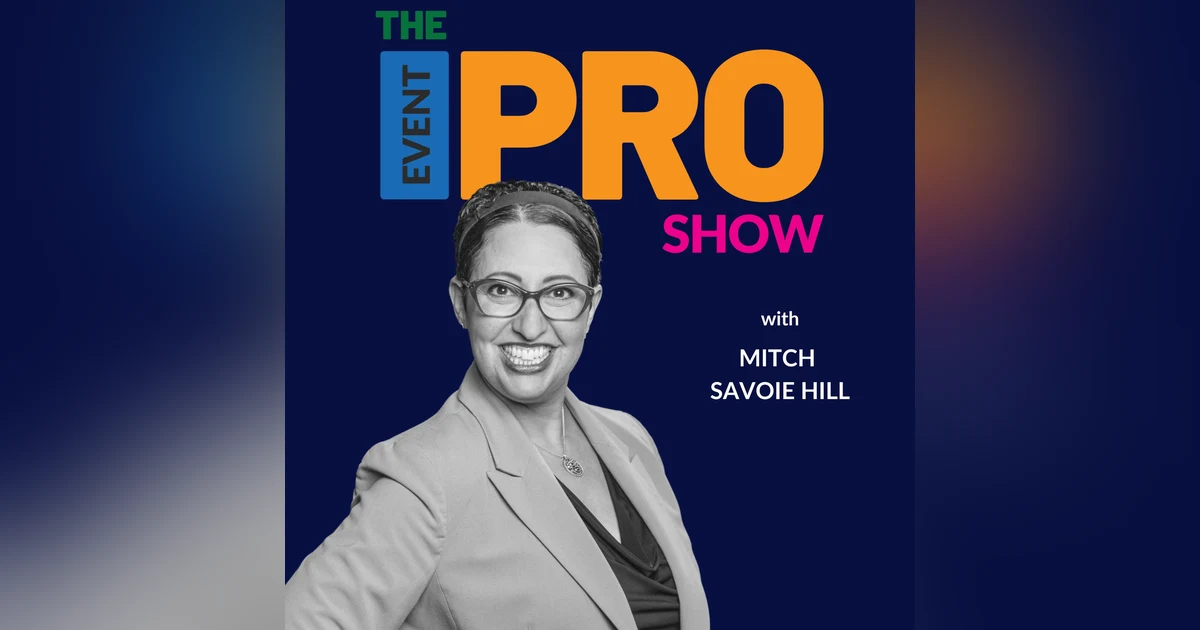

Back on The Event Pro Show, host Seth Macchi sits down with Mitch Savoie Hill. Mitch is a dynamic first-generation Cuban American, CEO, TEDx speaker, published author, and corporate trainer with three decades of leadership experience.
She takes us through her journey from an awe-struck child at her first big concert to a sought-after speaker and leadership coach, sharing actionable strategies for planners and aspiring presenters. From energizing a crowd and thinking on your feet, to selecting the right speaker and tackling imposter syndrome, her stories and advice offer tremendous value for professionals at every stage.
Join Seth and Mitch as they explore what happens when people connect in the same room, the power of interactive presentations, keys to speaker success, and how life’s setbacks can transform into stepping stones. You’ll also hear behind-the-scenes tales from MTV Awards gigs and insights from Mitch’s book Volar: How to Turn Roadblocks Into Runways to Success.
No matter if you’re producing your very first event or your hundredth, this conversation delivers practical guidance, inspiration, and a few laughs you won’t want to miss.
Resources:
The Event Pro Show is a production of LEMG.
LEMG is a leading event production company known for delivering exceptional experiences. From site planning and event design to technical production, staging, lighting, sound, and more—we do it all. As a second-generation company, we’re proud of our rich history and commitment to innovation. Whether it’s a corporate meeting, conference, convention, or live event, we’re the team our clients trust to execute their vision flawlessly.
https://lemg.live/
0:00 Welcome to the Event Pro show, your ultimate guide to the world of corporate events. Whether you're a corporate event planner, experiential marketing pro, producer, technician or anyone involved in creating exceptional events, this podcast is your go to resource for valuable insights, expert tips and inspiring stories from the industry's leading professionals. Well, thanks for joining me on this edition of the Event Pro Show. I'm your host, Seth Macchi. I'm the CEO of LEMG and I am super excited to have our guest today. Mitch has been been a friend of mine for quite a while and before we get into it, I'm just going to read your bio because I want to get that out of the way because I know we're going to have good stuff to talk about. So. Mitch Savoie Hill is a first generation Cuban American, CEO, TEDx speaker, published author and corporate trainer with over 30 years of leadership experience in hospitality, real estate management and construction. She's the founder of Sav Hill Consulting where she provides inclusive leadership coaching and corporate training. Mitch's dynamic career includes roles and as director at five star hotel in Beverly Hills. So swanky. And regional director of business development for Florida construction firm. She's passionate about helping teams engage diverse clients and achieve success. Mitch is also the author of Volar how to Turn Roadblocks into Runways to Success. We'll talk about that in a little bit. And it's a practical toolkit for overcoming obstacles and reaching goals. Welcome to the show today, Mitch Savoy. Hillary.
1:30 Woohoo. Welcome. All right, we don't have a live studio audience, but that's all you're gonna get. I love it. I can feel the energy through the, through the phone lines. Right? The energy, the energy. And you've, you've been on quite a run here. Every time I hear about you, you're at a different event, you're in a different state, you're doing stuff all over the place right now. This is true. Yes. Traveling is part of my life now. See, I always had the vision of being a rock star on tour, so. So it's kind of like that now. Yeah, pretty much the same thing. Yeah. Yeah. That sounds awesome. Well, I like to start with the same question for everybody, so. Good. What? Since we are, you know, I, I come from an event production background.
2:10 It's a, it's an events related question and I know that you are involved with events as well. So what is the first event that you can remember attending way, way back, like at your farthest memory back of the first event that you can Remember? I was 10 years old, and it was 1984 at the Orange bowl for the Jackson 5 Victory Tour, which was technically the Michael Jackson Thriller tour. Okay. And I remember being so overwhelmed, not just by, you know, the lights and the pyrotechnics and the loudness, but. But just overwhelmed with emotion because I loved, loved music. I had followed Jackson 5, Michael Jackson thriller. I knew every single word.
3:04 And to be live in the space with the band right there, I realized what a difference it is to see something and experience something live rather than on a screen or on tv. Because it wasn't just the lights and the sound, but it was the audience around me, the energy, how uplifted and emotional everybody around me was. It was this, like, group wow factor. This, like, I'm here, part of this audience experiencing this, all of us together. And it was so fantastic. I was like, how do I get in on this? How do I do this for a living? Exactly. Yeah, I want to do that.
3:45 I don't know what this is, but I want to do this. Yeah, exactly. I have always felt like there's something magical that happens when people get together in a room. And a lot of my friends now were all involved in one aspect or another of planning events. So you spend a lot of time free, you know, in the pre phase and thinking about how we have. We thought of everything, have we crossed every T and dotted every I. And, you know, people are losing sleep about it and whatever. But once you get in the room and everybody fills in the space or whatever space it is, there's something magical that happens that you forgot about. And if you're not careful, you can plan that right out of it. But there people getting together, there's something magical. And then you go to a cool show like that. Like, that might be one of the coolest memories of any guest so far. So that's a.
4:33 You're in the running. You're in the running for sure. And when. When was the first time you can remember wanting to be involved in events? And I say events, but you come from an artsy and musical background. So do you think that was the moment or was there a moment later on where you're like, I think I want to pursue, you know, being on stage and doing things? Actually, it was probably. I was around three or four years old, and my mom took me to a Cuban supper club in Miami and we saw a Cuban classical dancer. They were doing a show and her name was Michaela. I'll never forget. I was like three years old and I remember. Welcome to the stage, Michaela. And she was so beautiful and graceful and the way she moved with the music and the power of her command over that room. Again, being in this audience and feeling the whole audience like kind of in awe and uplifted. I turned to my mother and I said, mom whispered to her, mommy, I want to do that. And that I wasn't sure if it meant music, dance, I've done all those things.
5:52 But now I realize that that meant being on stage, meant uplifting audiences. That was the moment. Right. And you spend a lot of time on stage right now, right? You. Yes, as a guest here. I'll just. The backdrop is right now you, you have been traveling, speaking to various groups all over the place. And so first of all, just a practical question. How do you keep your energy going? You know, it's. It is. I can see there's very much a performance element to it, meaning a touring, working musician has to get out there and bring the same energy every night because that's what people are paying for.
6:38 Same kind of thing. You're a professional speaker, so you have to get up there and you're presenting something of value and you want to give everybody the same experience. How do you, what do you do to prepare and how do you keep that energy going event after event? That's a great question. And a lot of people ask, especially people who don't either, like to travel as much as I do. My dad the other day said, I couldn't do what you do, I couldn't travel as much as you do. And I said, dad, when you love what you do, you just, it's part of the experience, it's part of the process. But what keeps me going, one is I think that three year old little girl, you know that, that I want to do this. I want to uplift audiences. The feeling that every time I hit the stage, I'm not just uplifting because I'm not just like a motivational rah rah speaker. That's not really the biggest thing I bring. I bring tools, I bring experience and stories that make people go or people connect with and come after stage and say to me, yes, I had a similar experience or your story touched me or you've inspired me to now take the leap and do this thing that I've never had the guts to do before. But I heard your story and that, gosh, that is what fills my coffers, that is the biggest pay for my living is those moments or when I get on stage and everybody is there and they're with me and they're energetic and they're flowing with me. Even if I don't feel
8:10 well, even if I had a rough night of flying and I'm tired and I feel like, let me just get through this. The minute the lights are on and I'm on stage, all that goes out the door and my energy just kicks in and I'm energized. And then afterwards I'll go to my, my room and crash right in the moment. Those interactions, that energy just energizes me so that you gotta love what you do. I think it's knowing that I'm doing what I love energizes me every day to do what I, what I love to do. That's really similar to theater too, isn't it? Yeah, like getting up and doing a play every night. Everybody's tired, but it's like once it's going, it's on and like the adrenaline's going and then the post show feeling and it's, it. There's a lot of similarities, a lot of similarities in a lot of different type of entertainment, education type of things. That's very cool. As an event planner, this is a great question, I think for people that are putting together events and maybe they're trying to figure out how to incorporate good speakers into the mix.
9:19 And you made a good point a minute ago that in my head I've been in my life, I spent a lot of my life being an audio engineer and listening to a lot of speakers. And so I think there's two categories. There's motivational speaker, that that's a category. And then there's speakers that give tools to like improvement type of things. Like, and it could be in many different directions. It could be business, personal, whatever. And you feel that you are more. Of which type of those a combination. Because I am going to come in and motivate and energize the audience. And I feel like you, you have to especially in this day and age when so many people are stuck to their glued to their devices and the attention span is very short. Either your speaker has to be short like bite size, Ted Talk style. Make it 18, 20 minutes if you're gonna speak at an audience.
10:19 Or you have to make it very interactive. And so I have discussion, I have people get up, I have, you know, exercises. I, I make people think and hey, tell your friend your ne. Yeah, that's your friend. Now tell them what you, you know, an example of a time when you. Right. And it's mixing up the learning Styles so that it's experiential. And people, some people are visual learners, some people need to talk it through. Some people need a minute to digest what you just gave them. Right. So I think I'm a, I'm a teacher at heart in my soul. So I look for those different ways to connect and interact with different personality styles and different learning styles. And that's a big thing of what I do when I teach corporate leaders how to lead their team is you have to understand that there's different learning styles and different communication styles. And as a leader, your job is not to focus on just one style. Just because I'm this kind. So I'm just going to focus on that. I'm an extroverter, so I'm only going. To speak to the extrovert.
11:19 And everybody in the company starts looking like that. One person. Yes. So it's like, no. Understand the different personality styles and temper and adapt your style to connect with all those styles and then your message will stick, the vision will stick. You'll get people to go along with you towards that vision. So I'm a combination of motivation, energy and. But let's, let's do something. Let's have you walk away with something that you're actually going to apply immediately. Yeah. Well, okay. So understanding that the different types of speakers and you know, say in the context of the corporate events, as an event planner, how should they vet speakers? Like, how do they determine if this would be a good fit for our program or not? And you know, we just talked about, there's different types and styles. They're all relevant in different circumstances. Absolutely. So if you're, you know, say I'm a planner and I'm, I've never done this before, I never incorporated this and I, I really need it to be a win. So what would be the steps you take to ensure that you're finding the right fit speaker for your event? That's a great question. I think the smartest thing a meeting planner can do is to pay attention to and observe. What kind of questions does the prospective speaker ask them? I think the quality of the question is going to say a lot about the quality of the speaker. What questions is the speaker asking? Because can they adapt? Are they asking you? When I sit down in front of a prospective client, some of the
12:51 things I ask are, well, what is the demographic? What is the culture of your audience? Because then I know I can adapt to the different cultures or the different demographics. What is their, their biggest challenge? Yeah. And now I know okay, so I'm going to speak to that. You know, what is the message you're trying to convey with this? What's the roi? What are you trying to get out of this meeting? Is it business connection? Is it team engagement? Is it more members? Is it sales? You're trying to sell something to this audience because. Okay, good. Now, what's the biggest challenge to that? So now I, as a speaker, can customize to fit that need. If your speaker isn't asking that. If your speaker is just like, hey, this is what I get. This is what you get. You know, if you're a Matthew McConaughey, then, you know, maybe I don't care what he asks. I just want Matthew McConaughey. Right. But if it's somebody that I want a specific ROI or specific theme to be fit, is the speaker asking those questions?
13:51 Right. Because that's important. It would be a red flag if they're like, yeah, this is my motivational book, and I go through my five steps, and that's what I do. That's what I do. Yeah. And I need 27 minutes. And I know, you know, I don't have. They're not asking any questions. Well, you've worked and you've worked with a lot of speakers. So, you know, you've seen the divas. You've talked. We've talked about this, right? The speaker divas, right? The divas that say, well, this is. This is what I do. And I can't. I can't shift. So what happens if things that have happened to me on stage, the lights suddenly go out? That's. That's happened to me where a whole ballroom, the whole power went out in the ballroom. I just kept, you know, kept. Kept going, right? The PowerPoint goes out and they're like, well, speakers that say.
14:40 I guess our AV guys can't figure it out. That has happened. No, you just pretended it was all part of the plan and we're going to keep it moving. Right? Like, that's what a professional would do, and you'd hope that your speakers. And then the other thing I think is important is do you. And I say this often to my clients. Do you have a speaker that has more than one topic? Sometimes you have a speaker that's just expert on one topic, and that's what you want, and you have one, which is why they're there. And that's great. But it's also good to have some speakers on that agenda that have multiple topics. So, you know, I may come in and do three different sessions. One on public speaking, one on, you know, my book and one on, you know, inclusive leadership. And the importance of that is that if something happens, and we know things, things happen. A speaker suddenly bails on you or they get sick or you know, God forbid, have a tragic accident. Right.
15:36 It's good to have some speakers on your agenda that have multiple topics that you can say, hey Mitchell, we just had a speaker bail on us. Can you jump in? And I'm always there to say, hey, you have me for the day, so I will. Yes, absolutely. What, what would you like? What topic do you like? Let's add this in. Right? So if you're doing a multi speaker event, a few can be just very purpose speakers. But like having a few that have a little bit deeper bench to pull from. That's right, that they can jump in because hey, this is live events. That's right. You know that, you know that shift happens. I just saw the adults. It does. And I just saw like somebody saying like I don't know if I've ever seen the perfect event. I've heard the myth of it, but I've never seen it, you know. And it's true. These are live events. Things happen.
16:20 You can prepare, but you set yourself up for success. You know, one thing that we talk about around here a bit is content. Just the idea that you can create the most beautiful looking thing as far as an event. But if your content isn't on point, then you're going to have a really boring program. And it doesn't matter how many lights are flashing and how loud things get. You know, if people are sitting there for an amount of time, the content has to mean something. So I love the questions, the intentionality of like really getting in. And it's not a matter of really are they a good or bad speaker. It's that sometimes you're just not a good fit. And that was great to get to know know you and we'll have you in mind for the next thing. Maybe we'll build somewhere on that.
17:09 But I'm going to go with this other person just because they fit better in this or the cult culture of this what we're trying to do today. Sure. So that's it. That was a great first questions to ask for a planner. I don't think that I could be a speaker like you are and to get in front of people and try to read a room every time. And there is a skill to that too, right. Like you can do your pre, your homework and all that. But when you step on, on there, there's a little bit of reading, you know, kind of like a stand up comedian trying to kind of what's the pace of what I'm gonna have to go and how are people responding? It's a very real organic thing. There's a lot of that, there's a lot of reading in the room. And you know, when I teach, I teach a, a whole program on public speaking and presentation and I say, I remind, like to remind people that public speaking or presentation is still communication. And in communication you need to be an active listener, which means as a speaker, the best speakers are active listeners. Well, how do you do that when you're on stage? If you read the room, you read the body language, you watch, you ask questions straight out and see how they respond, how quick they respond.
18:17 Are people, you know, jumping up and raising their hands? Are they, are they awake and alive yet? Yeah, and if not, let's wake them up. Sometimes they're not and sometimes you're not. And that's where the dynamics come in. Yeah. You know, you change, you shift your dynamic. Have you ever called like a big audible, like mid presentation, you're like, yeah, this isn't working. I gotta wake these people up. I'm gonna try something different. Do you ever do anything like that or do you like to stick to the program? You know, what type of speaker are you. Very much. Again, combination. There's a program and it will shift as needed. Yeah, it will shift as needed. I like to start with music if I can. I like to start with a walk on song that invites people whether they're, stay seated if they'd like. I say, show me your best shoulder. Dance right or get up and dance. And I have spoken to some audiences that at first were, were thinking, she doesn't know who she's speaking to. Like a room full of engineers and an engineer came up to me and said, when you said, I'm inviting you, get up and dance, I thought, she doesn't know who she's speaking to. This isn't going to happen. And you know what? It did happen because all it takes is two or three people to get up and start dancing and get into it. And then everybody felt positive peer pressure. Yes. And everybody got up and danced and they were like, I can't believe you got everybody to do that. Right. But right off the bat, one, you're getting their bodies moving, you're getting them to kind of jar whatever they were doing. If they were sitting there sticking to their phones, now they're like, oh man, I gotta put my phone down. I'm gonna get up and dance.
19:49 Okay, I'm dancing. Okay, but now I'm dancing. Okay, but now this is kind of fun. All right, she's got me. Do you feel that energy shift from the stage like when that happens? Absolutely. Kind of shaken off the like of the meeting and now people are engaged. Absolutely. I only say, I only say to my cl. Give them to me early in the morning or give them to me just right after lunch. And I am going to shake them up, wake them up. Right. So on that note, what is the worst speaking slot right before dinner? Is that right before cocktails? Yes, absolutely. Absolutely. That's one where I say inject something very highly interactive because they're done, a lot of them, they're checked out. Especially if they've had to listen to speakers all day long in sessions or even remember that we have neurodiversity. We have people that are very drained more than normally by constant conversations all day long. And you know that time of day they're like, please get me in a dark cave somewhere. I don't want to talk to people anymore. I'm so exhausted. So that's a difficult slot and you need a very high energy session or a short, like keep it short and sweet. And I wouldn't go highly technical in that slot. Right. My public speaking workshops tend to be put into that slot because people are doing something that's very physical and if it's somebody that's really dry, oh my gosh, don't put them in that slot.
21:22 Yeah, some, some, some topics are just a little bit drier than others. You know, it's not about. As someone who has sat through hundreds of corporate events, please, for the love of God, don't put someone dry at 4 to 5:30. Please don't. Correct. Are you listening planners? All right, so what would you say? Just some tips. I'm just trying to pick your brain of what are some best practices to set your speakers up for success? Your presenters at corporate events, like what can you do? How can you prepare them to walk into that room, feel the best they can feel, feel totally equipped. What are some good best practices? One is as I said that, that pre conference meeting and you should have, even after you've selected your speaker, have a pre conference verbal walkthrough. This is the flow. This is the speaker. After you are the speaker before you. This is so they know how they fit into your agenda. What's the roi? What do you want people to walk Away with, then it's really good if they're not local to fly them in at least the night before, you know, the night before. Because again, shift happens, flights get delayed and you don't want a speaker. It's burnt out and completely just waking up, walking into the room. So if they can be there the night before also it's great if you can invite them to. If there's a pre conference
22:55 social or mixer the night before, great to invite your speaker to that because then the speaker can get a better feel for themselves of the audience. Even meet some people and other people have met the speaker, they feel like, oh, you're speaking tomorrow, I'm going to be at your session. Or if they weren't planning, but they really like the speaker and that meeting, they'll go, well, I think now for sure I'm going to be at your session because now I've met you and I like it. I want to hear what you have to say. Right? Yes. And then make sure that they can get in the space as early as possible. Meet the AV team. I mean, I like to meet my AV team as early as they're the first people. To me, they're the most important person in the room. Not just because I love you and I love what you do. Well, I'm not going to argue with you about that one.
23:39 But you make or break that speaker. The band, you know, even when I was on stages, you know, running my own band, you know, singing on stages, that AV person, the person running the board, they are so important and it's important that they make an emotional connection with you because they're going to want to see you win even more. I mean, they're going to do their job, they're going to be professionals. But if they really like you, they've met you, they've made an emotional connection. Now they're more invested. Yeah, absolutely, absolutely. Because we're all humans, you know, all it takes is just a little bit of respect and seeing each other in anything, in anything. I think that's really good advice. And in your best practices you talk about that that night before. I imagine that's a great time to get some intel too for the speaker. You know, you can read about high impact 2027 will be about driving results and ROI. Like you can read what the conference is, but like when you go and you hang out with the attendees a little bit, you're kind of gathering. Okay, okay. This is the culture of this event. Yes. These are things they're finding important. It might say that in the description. But actually to them, you know, they love the cotton candy machine. That's what they're all about, you know. And then you can have tips that you roll in that connect people too. So I imagine that helps you kind of have like a more cohesive presentation the next day.
25:02 Yes, they're good tips. Well, I'm going to transition a little bit because I had the privilege of reading your book Volar how to Turn Roadblocks into Runways to Success. And you can get this on Amazon because, and I know this because I got it on Amazon and it came. Yeah. Very quickly. I, I have a few questions about. It's a, it's a great toolkit. I like that you call it that. It's a, it's more of a. If you're, if you read a lot and different business books or any types of books, this is a very practical manual for life. That's what I would call it. Like I was going to do a summary. Like I can take things out of this and apply it to something that is relatable. If you're afflicted with the human condition, which pretty much everybody listening is, I would if I was a betting man. So we all have roadblocks and we're all looking for ways through. And what I like about it too is, you know, you can read some things that are like, you know, how I turned a nickel into a billion dollar empire. And that's great. You know, it's, that's cool. But like life isn't like about becoming like a billionaire.
26:20 Life is a series of little adventures. And you know, you have the, the story, it has its tension points and then the resolve and all that. Roadblocks are part of it. And so I thought what was very cool about your book is it's just practical. Like you're going to hit roblox. Here's some of mine and here's some things that, that I did and it helped me and it could help you. And I love it. It's like there's good, there's humility in it and it's just good advice. But there's some things that kind of resonated with me. So you talked a little bit about imposter syndrome. This is not an event related issue. This is again a human issue. Or is it? And I think it is totally innovance in art informants, but even on stage, behind the stage, like, can I do this kind of thing? Should I be here? So many more qualified people than me. And it's all bs but with imposter syndrome, can you talk to me a little bit about, if someone comes to you and says, I'm struggling with imposter syndrome, how would you recommend that they work through, you know, just. Just how you're thinking, what is your thinking on that? And how you would talk somebody through that? Just on a high level, you know, just. That issue is just. It is a big issue. It's a huge issue. It is a human issue, and it almost shouldn't even be called a syndrome, because it is just, as you said, it's part of the game of life. Every time. Even when you're in a platform where you
27:53 feel that you've gone to a place where you feel very confident, the next thing is, if you're really good at what you do is somebody's going to ask you to level up. And in the process of leveling up now, you're starting from scratch again, because now you're in a whole new role. And so back there you are, imposter syndrome. Right. And it's those questions, am I good enough? Am I prepared enough? Did I study enough? Do I have the degree enough? It's the fill in the blank enough. Yes. That we all ask. Yeah, I think that's how you said it in the book. Yeah, fill in the blank. Fill in the blame. I fill in the blank enough. And sometimes, you know, sometimes it's not bull. Sometimes you really are not in the right role, and you probably can't build that bridge. But you can go to engineering school. Well, exactly. Right. Maybe.
28:41 But realistically, you. You are in a role that is scary or you've stepped into something. Like, I'm going to start a new business. Like, as I did. I didn't know anything about starting a new business when I started a new business. The. There are very specific things you can do, and as a leader, there's specific things you can do to help somebody that you have just promoted or you're trying to get them to step into that role. And so one thing is to. I say, you know, study the winners. There's so much at our fingertips now that we can study. There's, you know, you can research it online, you can read books, you can listen to podcasts. If. If you don't know something, then help yourself, fill in that blank. Learn, study. The other thing I say is find mentors and champions and allies. There's a difference. Right? Your mentors are somebody that you're going to say, can, hey, Seth, can we have a coffee? And can I take you out to lunch, my treat. And I'm going to pick your brain about a couple of things. Right. It's not maybe a formal mentorship. A more formal mentorship would be, hey, Seth, can I have coffee with you once a month and pick your brains about a couple of things that I'm doing since I don't want to reinvent the wheel. Why should I reinvent the wheel? You already invented it. I just need you to teach me how to roll it down the hill. Right. All of the.
29:56 It's easy for me to admit. I don't know what I'm doing and you do. So ask. Right. We don't ask because either we don't want to seem like we're not in the right place or we don't want to bother people. I coach a lot of executive women, and I find it more with women than men, the fear of asking for either. Looking like we're not strong enough, tough enough, fill in the blank enough, or fear of asking because we don't want to bother anybody. Yeah. And so to them I say, well, think about when you're in a position to pay it forward. When somebody comes to you later on in life and ask you for help, will you say yes? Oh, of course. Okay, great, Great. So then now you are the one asking for help later on.
30:37 Just think that you're going to pay it forward if that helps you. And it does. And then the other thing is to just be okay with failure, get comfortable with failure, and almost change your mindset about what failure is like. Failure is not a wall. Failure is a teacher. Failure is the greatest teacher. Because if you've failed, quote unquote, you can learn from that by asking, okay, well, what didn't work here? Okay, good. So I know not to do that again. Or what do I need to shift or fail so hard that you know for sure this isn't the thing for you, and that's okay, too. But you wouldn't know unless you failed. So failure is great. And if you can, we can change our relationship with failure and how we think about failure, then we will be so much more successful in life and so much happier. I think for me, most importantly, my highest importance in life is joy. Deriving joy from what I do. So you'll be so much happier. Right. So those are some of the things I think. What is that term? Is it victory bias or winner bias? It's basically the idea that we only hear stories about the winners. And, you know, back when there was an entrepreneur magazine or something, you would read about this person's eight years years old, and they already have. Have sold 12 businesses or something. You read these crazy stories, but for every great story, there's thousands and thousands of failures, as you're calling them. And I. I think that what's great about. You allude to this in your book too,
32:08 about so many successful people. What we consider successful people have all. Almost every single one of them failed multiple times. And big. Some of them big. Some of them have gained and lost fortunes, you know, And I think your idea that if you embrace that instead of struggle with that as like, you're. If. If your identity is in that failure, you allow it to become your identity. You're missing a lot of these great lessons, you know, about what failure is actually teaching you to and. And helping you grow into who you're supposed to be eventually. But it's all this journey. And so this idea of, like, moving through roadblocks as just part of the story, it's just so good. Appreciate that. And that's great advice about imposter syndrome, because I think I've watched it happen. I watched friends, you know, just not because they think they can't. And then I've watched other people that I'm like, are you kidding?
33:06 I know they can't, but they don't know they can't. And they are excelling, you know, so there's got to be a balance there of, like, give yourself a break. You might fail. Okay? That becomes part of your story, and it makes your story richer. You know, you did it, you tried, and you're developing into something more complex and wonderful. So. Yeah. Or you understand that maybe what you thought you wanted once you got close to it, the reason behind the failure. I love that you said not tying our identity to failure because it's not about your identity is just, you know, you're just a living, breathing being. You can be fluid. You can be one thing today and tomorrow you can reinvent yourself. I've done it many times, and I have family members who have done it many times. But it's understanding that success is a string of confidence comes from a string of successes. I always teach confidence comes from a string of successes. When people come to me as a coach and say, I want you to coach me because I want to be more confident, I don't say, oh, great, let me pull out my magic wand. Bibbidi, bobbidi, boop. Now you're confident, right? No, I make them understand. Like, that comes from a string of failures and successes. Yeah. And as you Fail and you succeed, you get a little bit stronger and you go, oh, okay, good. And then you fail and you succeed and you go, oh, okay, now I'm a little bit strong. And that starts to build the confidence.
34:24 You're not going to step into a new role and be confident right away. You're not going to. So you've got to find those successes and build on them. I love that. Success breeds more success. Confidence comes from a string of successes. I love that. Another quote you had in the book, do what you love without concern about who will love it. Can you say more about that concept? Oh, absolutely. So very old concept. I didn't come up with that. That's in the Bhagavad Gita. That is a Hindu concept. And, and maybe even before that. But it's. Yeah, yeah, I'll take a look at. No, not at all, not at all. Read too many books. That's, that's why I'm sharing the wisdom I've learned.
35:04 But tell me how that that phrase is impacted. So do what you love and leave. They say do what you love and leave the gifts up to God. Leave the fruits up to God. Right. And what that means is if we're, if we're always word, I'm gonna do this to make a million dollars. You might do that. You know, you're very mind money minded. It might work for you, but I don't know how much joy you'll get from it. But if you do something that really brings you joy and you know that you're doing it every day and then you start to make money and you start to, maybe you're not making a million dollars, maybe you're, you're making enough to have a nice comfortable life, but you're doing what you love without regard to am I making the million dollars? Am I making, you know, am I getting the five story house like. But no, maybe I don't have the five story house, but I'm doing what I love. Then, then you have a life of joy. You have a life of impact. You're going to be more fulfilled in general than people who are grinding, making money, tons of money, some of them and have all of these emotional issues and are miserable completely unfold.
36:13 I'm sure you've been these people, you see them every day. So it's sometimes it's even if it's your side hustle because you're passionate about it and you, you need that steady job. I'm not saying quit your job and do what you love and become A painter out on the street and starve for money. Like, that's not what I'm saying. Being practical. But if you do what you love, even starting, starting with it as a side hustle, and maybe you'll make money, maybe you don't, but you're going to be happy that you're doing that in whatever way you're doing it. You know, I'm. I'm happy doing what I do, and it brings me great joy. And this, you know, last year, luckily, we grew it to the point that then my husband was able to join the company. And that was such a great dream of ours. And we just kept working. You doubled your staff count? I doubled my staff count last year. Well, it took about four years, but building the business for four years. But yes, last year we doubled the staff count and it was awesome. I love it. I love it. Now you guys are just traveling all over, speaking at all sorts of events. It's amazing. Well, I'm going to wrap this up in a bow with one final event question for you. What is the favorite event that you've. Like, what's your favorite event you've ever been involved with? So I would say it's hard to say a favorite, but I'm going to pick. You know, I don't know if this is the favorite, but it's one of the most memorable and historic ones. When I was
37:44 19 years old in New York City and I was found myself supervising a team that was catering and caring for the backstage and dressing rooms for the MTV Awards, the 1994 MTV Awards. And we were running around with our all access backstage pass, and I had my little walkie talkie. For those of you who don't know that it's a handheld radio and walkie talkies, they still say walkie talkie and say, the Beastie Boys need more gum over here and, and Smashing Pumpkins needs more beer and stat, right? And running around and found myself at one point standing in front of a monitor where they were broadcasting the award show and realized I was standing next to two of the Beastie Boys members and I was a very big Beastie Boys fan. As they were looking at something that was going on and they were, were going like, oh, my God, I can't believe this is. What is he doing? What? And it was MCA from the BC Boys had just bum rushed the stage in a costume, wearing a leader hose and pretending to be his alter ego, saying that, you know, Michael Stipe shouldn't have won this award. This is a part. But it was all in great fun.
38:58 And here I am surrounded by these celebrities and people that I like, rock stars that I love. Like watching this happen with, you know, a 19 year old with way too much responsibility talking about planning for an event. Like all kinds of stuff happened. It was organized and disorganized, chaos, but amazing. I loved it. I was like, event world, this is the last one. Every day is gonna be like, you probably set up there a little bit. So. Yeah, not every day it's been like that. It has been like that. That's amazing. Well, I, I really appreciate you being here, Mitchell. I knew that we'd have a great conversation. We could probably do this five more times and it'd be five different shows about different things. So we'll have to have you back, talk about some more of your advice or maybe you'll have another book at that time. We can talk about working on it.
39:50 And if people want to learn more about you, where should they go? Great question. By the way. I'm so grateful that you asked me to be here. I was so honored to be one of your selected guests because I regard you very highly. And so I thought that this isn't just going to be really great opportunity, but it's going to be so much fun. And I have had a lot of fun, so thank you. Your questions are so deep and you're such a great podcast interviewer. Oh, well, thank you so much. I'm not paying her. It's true. So, yes, if people want to learn more about me, Mitch savoir hill.com and I'm sure you'll put something in the notes. Also, Sav Hill Consulting. That's the actual corporation group.com savhillconsulting.com but I love LinkedIn. I live on LinkedIn. I love, you know, sharing stories and pictures and tips and tricks on LinkedIn, Instagram. I mean, I'm on all of it, but LinkedIn, I really love LinkedIn. So that's kind of. I always say LinkedIn is where I live, but I live on all of it. So just follow me at Mitch Sahil. Okay, awesome. We'll drop all of that in the notes of the podcast episode, including the link to your book Volar and so people can get a copy of that as well.
41:07 And you'll be equipped with resources. Thank you for joining us on this episode of the Event Pro Show. Be sure to follow us on your preferred podcast platform or@the eventproshow.com we do this about once a week and we will see you on the next one. Thanks so much. Yay. Thank you for having me. The Event Pro show is a production of LEMG video by Nick Barrett, audio and post production by Prince Thompson. You can learn more about us at LEMG Live.