

 Spotify

 Apple Podcasts

 YouTube
Enhancing Events Through Thoughtful Food and Beverage Planning with Tracy Stuckrath
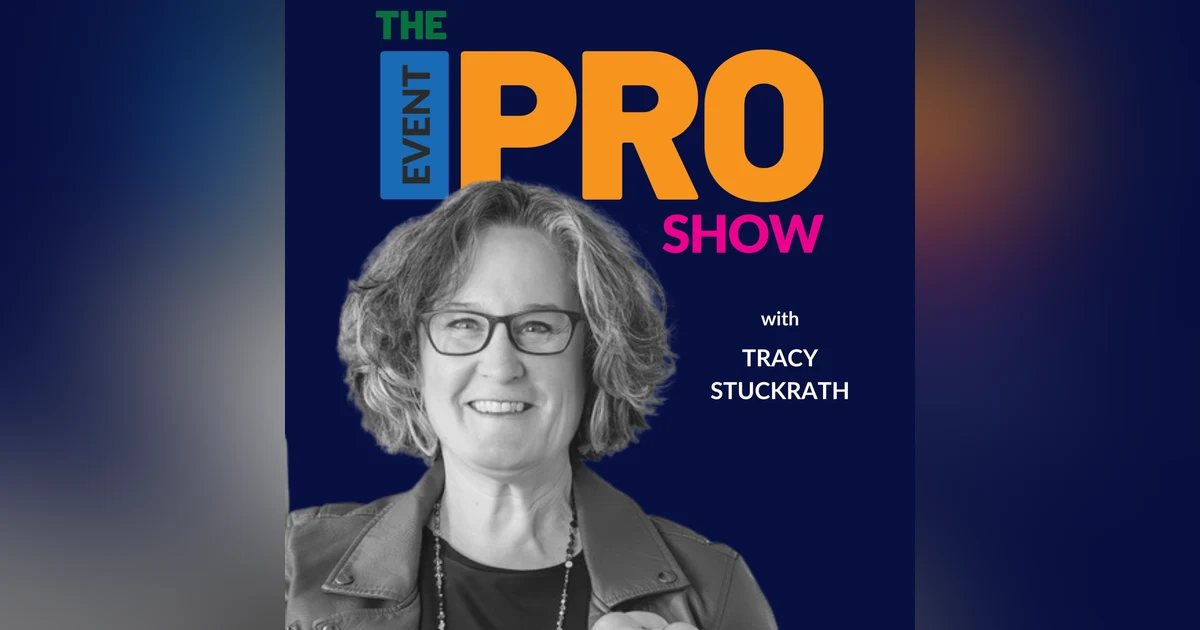

This episode of The Event Pro Show features host Seth Macchi in conversation with Tracy Stuckrath, founder and president of Thrive Meetings and host of the Eating at a Meeting podcast. With over three decades in the field and more than 300 podcast episodes to her name, Tracy leads the charge in creating food and beverage experiences that prioritize safety, inclusion, and sustainability.
Tracy shares how growing up as a “Marine brat” shaped her ability to connect with others, how her own food allergies ignited a passion for accessible hospitality, and why every menu decision matters. From behind-the-scenes challenges to real-world stories of impact, Seth and Tracy unpack how thoughtful food choices strengthen community and elevate the attendee experience.
If you're a planner, producer, or simply care about creating meaningful, people-first gatherings, this conversation offers real-world guidance and inspiration you can use right away.
Resources:
The Event Pro Show is a production of LEMG.
LEMG is a leading event production company known for delivering exceptional experiences. From site planning and event design to technical production, staging, lighting, sound, and more—we do it all. As a second-generation company, we’re proud of our rich history and commitment to innovation. Whether it’s a corporate meeting, conference, convention, or live event, we’re the team our clients trust to execute their vision flawlessly.
https://lemg.live/
0:00 Welcome to the Event Pro show, your ultimate guide to the world of corporate events. Whether you're a corporate event planner, experiential marketing pro, producer, technician, or anyone involved in creating exceptional events, this podcast is your go to resource for valuable insights, expert tips, and inspiring stories from the industry's leading professionals. Well, thank you for joining us on this latest episode of the Event Pro Show. I have a great guest today and, and I'm just going to jump, Tracy, if you don't mind, I'm going to jump right into your bio here so we can get right to it because I'm excited to talk with you about all the things that you know. So our guest today, Tracy, is the founder and president of Thrive Meeting and Events and the host of the Eating at a Meeting podcast. How many episodes are you up to now?
0:44 304. 304. Holy cow. Prolific amount of podcast episodes. So very much. A subject matter Expert with over 30 years of experience in event planning. She helps organize organizations, create safe, inclusive, and sustainable food and beverage experiences that enhance culture, inclusion, and employee guest satisfaction. She's Also Co authored two books, published over 150 articles. Holy cow, Tracy. And is recognized as a leader in the meetings and event industry. She holds certifications in special events, meetings management, health coaching, and food safety. Please welcome to the show, Tracy Stuckreth. Thank you so much. Thank you. I'm so excited to be here. Yeah, it's amazing.
1:24 I feel like we have kind of a celebrity in our, our circles. So Tracy speaks at a lot of events and where I really met you was just a few weeks ago at an event. And we've met before, but, like really talked and what you talked about. I was kind of shocked that I've been in corporate events for 20, 25 years and never really taken the time to think about the things you think about every day. And it kind of like I really did think about it for the next few days of like, wow. And everywhere I looked, I was like, I'm seeing things that I've never noticed before. So that, oh, I'm so excited. Thank you. So you have impacted me. Thank you. So, on that note, I know we're going to get into your specialty, but I really want to ask you just like a starting question of. Okay, what's the first event you can remember attending as a child?
2:21 Just something way. Oh, attending as a child. I mean, the first ones, I, I. Well, first of all would be Donnie and Marie concert, but I love that. Yeah. But I, I mean, I think it's like the field days and the. And football games, right. Peewee football games. Those are the kinds of events that I really kind of remember until I jumped to high school. Right. You know, and. Or even actually, let's. I'll take it to middle school. And we did the sock hop in middle school. The sock hop. Are you talking about where you get in the. Get in the sack? No, we. It was like the 1950s and you had to wear fun socks. Oh. And I totally was running across the thing and fell on my rear end because I was doing whatever. But even now I'll jumped to elementary school though, too, which is fifth grade.
3:14 Is that fifth grade? I don't know so many. I. I'm a Marine brat, so I moved around a lot. But this Sadie Hawkins dance in fifth grade. Sadie Hawkins dance, where you ask the guys to the dance. That's the Sadie Hawkins thing, Right. And I was brand, brand new in school, so somebody just hooked me up. Nice. Nice. Yeah. So Joey Rizzo, really? Was that. That was their name. Joey Bris. That was her name, yeah. Oh, it sounds like right out of Greece or something. Exactly. I love it. I love it. So you being a. A military, like a Marine brat, is that what you had to kind of make friends quick and then kind of have some sort of roots, and then you had to do that again and. Again and again every three years. Do you think that affected you and how you approach life even now? Well, I. I just wrote my bio and. And at the bottom of it, or re. Sent it to somebody there the other day. And I'm like, it'll says you'll catch Tracy talking to strangers. Because that's what I do. I love doing that, and I think that did give me that ability to do that.
4:21 But it also depends on the years that you move, because I moved before 9th grade and between 11th and 12th, where. And then we moved again after 12th. And so my brother did 7th, 8th, and 9th in Japan, whereas I was 9th, 10th, 11th, and then he did 10th in Georgia and then 11th and 12th in Maryland. So I really do think it depends on where that falls and how it impacts you. I think the higher in high school you get is it just gets more and more challenging. Like smaller kids are resilient, you know, but right high school, you build some. Some roots and it's hard to kind of start over again. Well, and I moved from Okinawa, Japan, to southwest Georgia. That's for my scene for my senior year in high school. That's tough. I can't think of a more challenging time of life to Move and then move halfway around the world. Right, exactly. And it was, it, I joke, it was like stepping into Footloose because it was just a completely different environment from.
5:21 Japan to where you ended up. So now you find yourself in environments because I see you speak at all sorts of things, go to all sorts of things. You do your show, you're always meeting new people. So it's kind of like your comfort zone. Completely is my comfort zone. And I mean in the last couple of flights that I've been on as well, I have just chatted and ironically they've all been men that I've had these random conversations with one about what's going on in the, you know, what's going on in the US and 1, 1 gentleman was gay and married and another one was Jewish.
6:03 And so it was been really interesting to chat with them and get their perspectives on what's going. And a lot of times we were whispering to each other because we don't want the whole plane to hear what we're talking about. It's nice to find people that you don't even know and you can have a conversation, civil conversation with. Right, right. About an important topic and, and walk away with, okay, I've got a new perspective. Or I'm like, oh, I don't want to talk to him again. Right. But yeah, I think that's essential in a functioning society and I think you're circling around something of like one of the important fundamentals of why we do what we do, like people together in real life is so important, especially now because if we can keep those skills up of being able to interact with people and see the value of people, that we don't necessarily have to agree on every single thing.
7:02 But if you're just doing social media all the time, you just kind of refine it down to the few people in the world that think exactly like you. And that's really a. Not a great place to be as a human. Exactly. And we're in a little bit of a, well, a little bit of a turmoil with event, live events because of all the government, you know, the stipulations that have been put on government, the departments that have been closed and people afraid to come to the United States to travel. So the events industry is once again, the live events in person meetings are getting hit hard by what's going on. And you, I think people disconnect that value of this face to face conversation. Sitting next to a plane or sitting next to somebody at a 72 inch round table. Right.
7:51 Chatting with Somebody that. That is really, really valuable conversations to have and interactions to have. So it's. It's unfortunate that we're getting hit hard, and I think we're. I said this during COVID you, especially your team, you wear all black so that you're hidden behind the scenes. People can't see that technical stuff that's happening on, you know, happening to make that event happen. Event planners do the same thing. Right. But for that same reason, people don't know that we exist, that our industry exists, and that we are here to make these events happen. And then when you cancel this, you're canceling our industry. Right. Which by design, is supposed to be not seen, but it represents. There's such a huge amount of people represented in events.
8:41 Right. And we're not supposed to be seen, but we're responsible for bringing everybody together. That's right. So it's very ironic or whatever that backwards word would be like, we were responsible for bringing everybody together, but we're not allowed to be seen. We're that wizard of. The wizard of Oz guy. Totally. Totally. And it was super apparent when we walk through Covid when that. That kind of. I don't want to call it a flaw. It was just something that was very apparent that when you see restaurants shut down, you see, you know, most of the employees, especially, even. Especially if you go to a restaurant with an open kitchen, you can almost see the whole staff. And so you think when they. Oh, they shut that restaurant down, there's a whole team that can't work. You go to an event, and a lot of times all you see, maybe. Maybe if you even notice them, is somebody maybe at the audio console or something. Maybe.
9:31 But really, if it's done right, you're not even noticing anybody. But it represents just as many people, if not more than a major restaurant or something. I love that. Having your podcast, eating at a meeting. I think it just struck me that in my family growing up, where we all connected was around food. And so it was meals. It was the type of meal you're having, the length of time, all that. All that. And it's interesting that you have spent a lot of your career thinking about meetings, but the eating part, and it all kind of clicked in my head. That actually is one of the most essential parts of these meetings is because there's something that happens when we're all doing an activity that we all relate to, no matter what. 100. Yeah. And it is. I mean, not to discount AV, but it is a higher expense than the AV card. It is. Yeah. And I was just on a webinar with Julius Solaris, and it was food and beverage, then AV or venue. And venue were the top three expenses, and food and beverage by at least 15% higher than the other two. And it's the thing that we spend the least amount of time focused on.
10:44 And I've been practicing for my speech that I'm doing on Tuesday, and it's the. Such an opportunity to create an experience with the food and beverage that you're serving. And we need to be really proactive about it. Right versus, versus. Assuming that I'm going to pick the day of the week menu for. For Monday and then Tuesday and then Wednesday and assume that there's something for everybody. Right. There's a lot of assumptions made with food and beverage. Right. Without the education to make those decisions. Exactly. Yeah. Which is. That's the part that hit me the other day when I was hearing you talk is like. I'm like, yeah, I can. You know, I. I understand. There's people with. No, you don't understand at all. And you need to kind of get inside their head and see it through their eyes. Oh, you don't have any options for. And they shouldn't have to struggle through that. You know, there should be inclusivity in that. You. You obviously have a passion for education in this space too, especially in the corporate meeting space. But was there anything personally that led you to that point in your life where this became a real driving passion in what you do? Well, when I first found out, and it's been. It was 2003, and two things came to mind, or come to mind with that, is that I didn't. I was doing an event for 1200 people at Disney at the Contemporary, and it was relatively close. Recent, after I had found out about my allergies, and I was mortified because my allergies were
12:15 on 90 pages of banquet event orders. And I was walking. I can totally remember this. I was walking the hallway with the chef down in the Contemporary, and she looked at me and she's like, if I don't put it on the B O, then if I'm not here, the staff doesn't know. Yep. And the staff relies on that banquet event order to do so many things. If it's not on the beo, they don't know to do it. Right. And so I'm like, okay. And it's a mini contract. It's another supplemental contract to the contract you have for that venue. But the other one was when I was in Corporate. And I found out about my food allergies in corporate, and we were having a staff meeting, staff birthday celebration. Let me correct that. And my boss's boss said, just, Tracy, just eat the damn cake. Yeah.
13:04 I'm like, but I can't, because it's got gluten and sugar. And I mean, that happened, like, 20 years ago. Yeah. I mean, so I still tell that story, and that's really kind of what. And there's. There's people that probably still connect to that story, like. That's right. Moving the needle has been a challenge, you know, over that 20 years. Yeah. And I saw her at a funeral years later, and she said, you know what? I kind of understand it now, because my daughter went vegan or vegetarian for a while, and she trying to feed her. And I'm like, oh, well, I'm glad you realize this now. I'm still telling this story about you 24, 20 years later. Right. Yeah. It would be wonderful if you had just empathy before, but. Right. Yeah. You had to have a personal experience. So I.
13:56 If. If you were. I'm. I don't like this term. I just don't know how to phrase it. But why should the average person. For lack of a better term, why should the average person care about food? Inclusivity. Let's just starting there is, like, the foundation for the conversation here. Right. Because. All right, I. We talked about me talking to strangers. If you don't talk to strangers, you can't make a new friend. Right, Right. Right. And so if you can't feed me. Right. You've just lost the ability for me to be your friend. Because I actually. If we're in an event or, you know, whether it's at school, you know, whatever, or at a corporate event, I'm gonna have to leave to go get food or I'm gonna be very hangry while I'm talking to you, because I'm gonna sit there and watch you eat food while I don't have any. And. Which then reminds me of a question that I asked my niece when she was 9. She's now 23.
15:02 And we were at. We went to Pinehurst. We were in Pinehurst to visit my grandmother, and we went to the country club to talk to the chef, and she wanted to come with me. So we went and I. I said to Abby, I said, when we all go out to dinner, the nine of us, you know, what is it like when we sit down to dinner and you've got your food and I don't have mine yet, and she's like, I feel guilty. I'm like, why do you feel guilty? She's like, because I have food and you don't. And she was 9 at the time. And, you know, really struck me, you know, at that. I mean, that's what, 8, 7, 17. I don't even know how to add it 14 years ago that she said that. But it really stands out. And I think when we're thinking about just the average Joe person, you know, you know, I.
15:56 Food is the thing that we use to connect with people. If you move or somebody's sick or you give food to them. But I'm like, if you give food to me that has noodles in it, or like my neighbors do, you know, they're like, oh, well, your parents can eat this, but you can't. Great, thanks. Thanks. I appreciate that. Yeah, yeah. So it, I, I don't know if that answered your question. I just used a bunch of examples to. It's a, it's just a very human thing. I mean, and I, I just can't get away from the word empathy. And it's just another way of showing people that you care. Right. But I don't think it should be an exception. I think it should be part of the process. Not something that we're like, oh brother, we got to deal with this. Right? But this is just, we're, we're dealing with humans and let's make sure we serve them all really well.
16:55 And that was kind of the thing I walked away with the last time that, you know, I heard you talk is, it's, it's not like some big exception. This is just, if we're going to serve humans, let's serve humans. And the people that do it the best not only are just doing the right thing, but it actually can be a competitive advantage. 100 for venues are way ahead of the curve on this. Well, and there's a statistic that my friend Shandy from Certistar has on her website and it says that the food allergic person or person with celiac dietary needs, their restaurant bill is typically 38% less than the non food allergic person's bill. And then another stat that I have from celiac or gluten free passport is that 91% of people with food allergies or celiac disease will come back to a restaurant if they've been fed well and respected. So if you can increase your sales by offering more options, whether it be a restaurant or an event, you're going to get 91% of those people back, right? That's revenue in your pocket.
18:10 So. Right. So not only just empathy, there's actually a business side to this. That does make sense. Right? Yeah. And then, then another, the business side of it too. And talking about risk, part of that my computer keeps sliding is. So I don't know if you saw in the news last, and I mentioned it in my speech that last December, Dominique Brown, a young woman, was invited to an event and she did everything right. She shared her dietary needs, her food allergy in adv. She asked the server if she, you know, had if that. That contained her allergen. They said no, she trusted them. But unfortunately that trust was broken and she. It cost her life. But by asking the question about dietary needs in advance and making sure that you're looking through these things, it actually is a. It's reducing your risk. It's taking it. It's taking that step from risk, assess risk, following up with risk, but as a preventative measure to avoid risk. Right. So think about, I mean, the bad PR that, that event, that company, that venue got from that. And we still don't know the results of that yet. But except for the. That piece of the story. But you know, the repercussions from that. I'm like, if that ounce of prevention could have just been done, it would have reduced that risk tremendously. Right. Or eliminated it
19:40 altogether. Right. It. There's layers. There's layers that. When you start really looking at it and taking it seriously. But, But I think you've probably also seen misguided efforts. So give me some examples of some misguided efforts of venues that, that are trying to add inclusive food options at events. But you're like, okay, this. They. They don't clearly don't understand. There, there's one. And pictures are a thousand words, but. Or whatever that phrase is. But. So I, I do have a picture of this, but it's. It's a breakfast meal and their breakfast sandwich is wrapped in aluminum foil and there's a sign on the front of it, on. In front of both of them, two different chafing dishes and one says egg and bacon croissant, and the other one says bacon croissant or egg croissant Egg and cheese croissant.
20:37 One says gluten free and one says that it's contains gluten. But they're wrapped completely correct the same exact way. Like if you took them off the table next to each other, they look the same. Look the same 100%. And I said, I'm like, I've never seen A gluten free croissant before. In 23 years. 24 years. Right. And they're like, well, it's a croissant. And I'm like. So I opened them up and they were. One was not a croissant. It was very soft. And I have a video of this very soggy gluten free toast that when I literally picked up the toast, it was stuck to the egg and the bread was coming apart. But the. The other part of it is, is that they had the signs in front of the wrong items.
21:22 Oh, they were just swapped. They were swapped. But the servers don't know because the aluminum foil, like, just change the color of the aluminum foil. Yeah, right. So that the servers know that this one is gluten free and this one is not. So you've got labeling issues, you've got packaging issues, and a misunderstanding of what you're trying to accomplish. You don't have to just be truthful with what it is. Like, don't, don't say that this is a banana when it's an apple. And like. Right. Clearly this is wrong. Yeah. Yeah. Okay. And in that same venue, the labeling of some brownies, I mean, it said nut free, it said non vegan. I'm like, okay, what is non vegan? Why are you even putting the word non vegan on there? Right. And. And it said nut free. And there were clearly nuts in the brownies. And so it's one. And this is. This happens a lot. And.
22:20 Well, it doesn't happen a lot, but. Well, it does happen a lot, but I have been told by chefs, one yelled at me, and one said this, I cook, but I'm not responsible for labeling. And then the front of the house staff says, well, I don't cook. How should I know that? And the front of the house staff is the one responsible for making the labels. Seems like a healthy relationship to me. I don't know what the problem is there. It's a process breakdown if I've ever heard of one. Exactly. Yeah. So the one chef that yelled at me, he had. There was a bowl of pasta here, and there was one sign over here on the left of it that said pasta salad. And over here, there was a little tiny sign that said gluten free. And they were just by themselves. So they could just have been picked up and, like, just moved to another spot. Yeah. Randomly put somewhere. Yeah. So there's an importance with team education and understanding that it's all everyone's responsibility is really. And when I hear that it's like, it's not really one or the other. It's. You all need to be on the same page and you execute as a team and if it fails, it's a failure of the team. Exactly. Yeah. Because a chef is not. Is any better than what their front of the house staff portrays. Right. So they need to have. Because they're the ones talking to the attendees. They're the ones talking to the meeting planners, the banquet captain, the servers, the chefs in the back. He's probably, he or she is probably prepping for the next event. Yeah, right. Or trying to expedite that food. But he's not. They're not out there in
23:51 front of these attendees who are the ones eating the food and have the questions. So that relationship really needs to be very symbiotic. Got to be a team. Yeah. So if I'm a, if I was a planner that, that's just now learning and thinking about inclusion in food and vegetables beverage offerings at my events where like, what would be the abc? What are the. Here's the three fundamental things that you would need to do to get started in your education process or what you would, what would you recommend? Well, the first thing, when you're doing a site visit or you're selecting your venues, I, One of my questions is ask how the front of the house and the back of the house staff team work together to manage food safety.
24:36 I mean, that's first and foremost, right? And then ask the chef, do you have menus that meet specific dietary restrictions? I'm actually going through menus right now for two different events and one off site venue. I'm like asking all these questions. He's like, Tracy, here's my grid of every single food item that we serve and what allergens are in each. And I reply back, I'm like, can I. Is it inappropriate to tell you that I love you? You know, and. And then he sh. Shows up, you know, shows me a pick thing that here's the carrot hummus and here's all the ingredients and here's the allergens and things like that. So first and foremost is like, how does the food and beverage team work with the front of the house and the back of the house teams? Right. Work at managing food safety. And then, you know, and then before the chef finalizes the menu, say, can I have a breakdown of the allergens and the dietary restrictions for this menus before we finalize it? Because, Seth, there are so many times, I mean, I went through, I went to an event in Atlanta a Couple years ago, the only thing that I could eat on this Mexican buffet at this hotel was the guacamole. The chips had gluten on it because it had a thing on it. And come to find out, the food.
26:00 And Bever, or the vice president of sales for that property or that brand was celiac, but he wasn't eating lunch, so he. It didn't even phase him that the only thing that was gluten free was guacamole and maybe some sour cream, but, you know, who knows? And I. Sour cream's just gross. But. Yeah. Yeah. I mean, like, in a. In a. I mean, large format setting. Yeah. There are some foods that are, you know, maybe not one, but. Well, I don't like the flavor of it. Yeah, exactly. But I think the. The first question is really when you're picking a venue is how do you handle food safety? Because it is literally. And I'm like, kind of really practicing my speech here for Tuesday. It, like, if you don't have. We. Or we plan for safety, we have security guards, we have evacuation things, we have backup plans in case there's a weather. Right. In case there's a tornado coming through or whatever.
26:56 But when was the last time that food safety was actually on your checklist? Right. And then people put together risk mitigation plans in all different dimensions, and that should be a part of it, right? Yeah. So it starts with the site survey. And when you're weighing, you know, you're grading venues that should be weighted pretty highly. Yeah. As. Is this a good venue for us? Because that could be very problematic later on. Yeah. I mean, if you're focused on creating an experience where everyone feels valued, food and beverage really needs to come into that conversation. Because literally, and. And. And I'm guilty of this from before I started this work is like, okay, I'm gonna pick this menu, this menu, this menu, and we just assume that something's there. Or we assume that when we send the list of dietary needs to the chef three days before the event, they've got it covered. Right. Like, I did my part, and it's out of mind. Yeah. Right. And that's not the case. I mean, they need more than three days to prepare. Right. You know, you know, there's so many events going on, they don't have time to figure this out on the fly.
28:03 This is another example of people providing products or services for events. Set your partners up for success. And so, you know, timeline. Make sure people have adequate timelines to their job. So on that note, what do you consider an adequate timeline for a chef to take in that information and plan. Accordingly at least a month. I mean, and when we were in Covid, a lot of them were having to order their food a month in advance. So if you can get your menus planned as far out as possible, that's awesome. But, you know, and sometimes we're. We're at the. If we've negotiated the prices on food and beverage, you know, depending on what time of year your event is, the menus for that year might not have already been designed yet. So we're at the. We got to go back based on last year's menus, but a month to two months in advance at a minimum, if you can, you know, because then.
29:01 But then you also have to be able to collect that information of the dietary needs of your attendees. And if you don't have it, you know, going forward, take the historical data if you have it, right, saying, hey, last year we had 15 people who were vegan and two, three, you know, 20 people that were gluten free, etc. Get the chef to design the menus around those dietary needs up front. Right? I love it. I love the idea of setting people up for success. You know, it's what you want, but you got to give them what they need to get the job done. If you give them three days, they're going to do the best they can. But at that point, it's kind of on you as the planner, right? Well, listeners at home, you don't know this, but about three weeks has passed since I asked the last question of Tracy. We had. We had an Internet outage, but we are going to get back to. To our questions. Just if you wondered how we changed clothes, if you're watching this in a video format, that's what happened. But my last question to you, Tracy, was what are the competitive advantages of venues that are more in tune with inclusivity around food and beverage? I think there's a financial benefit to it 100%. And this story that pops into my. My mind first and foremost is actually about 10, 12 years old, and I was speaking at an event in Virginia, and the chef came out and he was telling the story, or I had a conversation with the chef as part of my panel, as my
30:31 presentation. And he came out and he said, there's one gentleman that comes and stays with us five days a week for work. He travels from wherever he is, and he's got food allergies, and we do such a great job for him. He brings his entire family for three weeks in the summertime. And each of his kids and his wife have different dietary restrictions. And we accommodate them the entire time that they're here for three weeks. And so that right there is a very strong one, right? It's heads and beds, but it's also like, hey, what are we doing to make sure that they want to come back here and put their head in our bed? Right. The other story comes from a hotel in Orlando. And the pastry manager was telling me this story.
31:21 Yeah, I don't remember. This is probably five years ago. And they had two. Two women that had come to stay in the hotel. And for whatever reason, I don't remember what it was, but they were vegan. And they went to the restaurant in the hotel, and the hotel had nothing for them to eat. And this hotel chef was like, and. And the pastry chef and the hotel chef were like, wait a minute. They're leaving our hotel for three meals a day for the three days that they're here? How much money are we losing because of that? Right? And so, I mean, those are. One is, you know, a kind of a transient person. Another one is they were there for a conference over a vacation or whatever. But the same thing goes with. With catering. And to me, the benefit of it is I'm like, seth, you're paying a hundred, five hundred to come to my event, right? If I can't feed you, you're leaving my event. And what is the purpose of me having you at my event? Right. Are you my speaker?
32:30 Are you one of my exhibitors? Are you one of my attendees? You know, whatever reason it is that you're leading, you're losing the benefit. And I'm. To me, personally, I think I am, as the host, losing the benefit of having your knowledge, your network at that event. Right? And so the central point of these, getting people together, if they're then leaving and then the lifetime value of that person, they're probably not going to come back if they didn't feel welcomed. But if the event goes for another five years, yeah, it has a huge impact, for sure. Or even like five days. I'm like, you. I mean, one planner I was talking to recently, she just. She had that experience herself, and she's like, you need to actually go speak at this conference, because this is ridiculous.
33:15 Because I had to go and leave. And. And it was Las Vegas, and it was at the convention center, and there's nothing in walking distance to the convention center. Food Watch. Right, right. And so she needed to leave the convention physically leave, get an Uber and go to somewhere else to eat for her meals. Giant. And so, yeah. Oh, you know her, she was at our North Carolina chapter event. Love the North Carolina. North Carolina. The Carolina. Yeah. Carolina chapters, not North Carolina. Yeah, we're all about the Carolinas here. Well, we had a, we in the news. I mentioned before we, we had to stop our recording here and, and pick up a few weeks later. But in that interim period, there was a, a major story around a broadcaster that was covering the Kentucky Derby.
34:08 Can you share a little about what we can learn from things like that as meetings people? Right, yeah. I mean, and I. So it was Mike Tiricchio from NBC covering that. And yesterday he, he was on the Today show and talked about it, you know, and he was saying that he doesn't eat a lot before he gets on air because just doesn't want to, I guess, be bloated or whatever it is. Right. You know, we're all like that when we're about to give a presentation. And so he was, you know, scouring the buffet or whatever it was. And so he didn't disclose if it was from a buffet or if it was a packaged item. But he did say that he's had his nut allergy forever and since he was a kid. So he's very aware of reading labels and things like that and whatever he ate contained nuts and he didn't know it. So I'm going to make the assumption, and this is me making the assumption that it was an unpackaged item. Right.
35:08 And, and he had an allergic reaction on air. So the things that we can learn from that is one is, you know, our unpackaged food should be labeled especially for that because actually in his talking about it, he, he co hosted the Today show last week or two weeks ago and he said if we're doing any cooking demonstrations, please note, you can't have any nuts in the food that you're serving because I'm allergic. So he's very aware of communicating that. It's not like private about it. Yeah, exactly. Right. So, you know, was the food labeled on whatever he was eating? Right. Where who prepared that and did we did that catering team know about his nut allergy. Right.
35:53 And, and I just did an event and I'm doing another one next month that I said to the hotels, I'm like, we have a couple of people who cannot be in the room with nuts, so we're going to make our entire event nut free. And they're like, well, we're not a nut free environment. I said, I understand that. But we can be nut free in our space, right? And where. And what we're serving. Right. So there should not have been nuts on anything in that space that where Mike Tiricchio was working. And that's just me saying that. That's my opinion from the, from what I have knowledge of. So as, as planners, as event people, we, we take control of the situation by creating mechanisms where people can communicate what they need and then making sure that communication gets to anyone, taking care of food so that we can set everybody up for success, having a great experience, it's healthy, everybody's safe. And we don't have things like attendees having incredibly negative experiences or keynote speakers not able to jump on stage or. Exactly. All of these things. We, we can do a lot to control this. Or even your tech team, right? Like what if your tech team has a nut allergy or shellfish allergy and one. He's up on the. He or she is like putting the lights up on the.
37:18 Up a high. Whatever. Up on the trust. The trust, yes. They're on a list up there. Yep. Right. Or the person who's even pushing the slides in the back of the thing because like it's not me pushing my slides. Right. It's me pushing a button to tell your guy to push the slides to the next one. Like, what if they have an allergic reaction? Right. Yesterday I was in Raleigh and I took my. I updated, recertified my food food handler manager certification. So food safety. And one of the things that I thought was reiterated quite a bit, and I really liked this concept too, is the critical control points. Right. And, and this has to do with food and beverage, but mostly in the back of the house and manufacturing. But what are our contributor, our critical control points to managing safety when it comes to food and beverage?
38:08 As a meeting planner, Right? Yes. You know, you're taking that information from an attendee, then what. How does that information get communicated? Where does it get disseminated? And what. How can we help ensure the safety of that person through that step? And we need to be looking at all of those critical control points throughout the entire process. And we probably do it, you know, we do it with a hurricane. Right? All right. What if a hurricane happens? Right? Yes. Or what if a protest happens? What are our critical control points to manage that? We need to be doing that with our freedom efforts too. Yeah. I love it. The risk mitigation. You know, in av, we have training for safety and we have alternate plans, you know, to make sure if this happens, then we do this and making sure that people are safe, making sure we have backups. Why wouldn't you do that in every aspect of your event, including protecting your attendees, you know, and. And creating a mechanism to do that? Right. I think this talk, like I told you when we started it, really opened my eyes. And I don't. I don't think I'm unique. I think that you are in a world where you are an expert and you think about this every day, but just by making people aware, hopefully it'll be kind of like the experience I had.
39:28 I told you when we started talking that I've been looking around, seeing things I've never seen before, and it's still happening. So I'm hoping that people will be listening and change some of their behaviors around events to make it a safer environment. But I do have a couple more questions for you. One, from your perspective, this is a different answer from other guests that I've had, but what do you think corporate events will look like in 10 years? And sometimes this is. I'm asking it to a planner, sometimes I'm asking this to somebody that's dealing with technology. So everybody comes from a different direction. But from your perspective, what will it look like in 10 years? Well, I'm hoping that it's focused on the DEI stuff, because what's going on in our society right now, DEI is kind of trying to be erased. And it's such a critical aspect of our society in general.
40:25 Right. And I'm like, you have facial hair. I don't have facial hair. Right. You're a man. I'm a woman. Right. I'm like, that's DEI Right then, you know, in and of itself. Right there. But I do think that, you know, we. The customization. There's a lot of talk about customization and personalization of a variety of things. And so I think that's going to become a lot more prevalent in 10 years and with our technology, right? And like, hey, I can go in and scan something and maybe our food and beverage, I'll be able to scan it on a QR code or. Or order my food in advance when I'm at an event, right. Instead of going through a standard buffet, although feeding 17,000 people, you know, at one time is. It's very, very challenging. But we do it at food festivals. We do it. You know, how can we bring that element into it a little bit? But I think definitely personalization. And I think. And I think that will be enhanced through technology, whatever way that is. But I do think that that technology has to be. I'm going to put fixed in that, in what the catering teams utilize and what event planners utilize called Excel or, you know, Excels in that middle thing or our event registration systems. Can that
41:57 event registration system incorporate the dietary needs and shoot right into, you know, that chef's catering menu? Yeah, right. Yeah, I do. I agree with you. I think the. This idea of, like, custom experiences is definitely something I could completely see. And why not? Why wouldn't there be more efficiencies in inclusivity around food, around eating and different needs? And that is something that. It allows more people to sit at the table. It'll. It allows you to have more custom experiences that are enjoyable for everybody. I love that. I love that picture of the future that we're using technology in a way that makes it easier to allow more people to enjoy. That's a. That's a really cool.
42:46 A really cool picture. Well, if people wanted to learn more about you or they wanted you involved with their event or all the things, all the expertise that you bring, Bring it on. Yeah, bring it on. Bring the work to Tracy. How. How can they reach out to you and get a hold of you? Well, my email is Tracy T R A C Y Thrive meetings dot com. That's the logo back there. Or tracyating dot com either one will work. And you can find me on Instagram at. Eating at a Meeting is my handle and Thrive Meetings Events is my website address. Love it. Oh, yeah, love it. And if. If you want to continue to take a college course and everything that Tracy knows, go and listen. Subscribe to the Eating at a Meeting podcast. There is so much content there that Tracy has created over the last several years that is just like a.
43:48 A rich resource for what we've been talking about today. And Tracy, thank you so much for joining us on the event pro show. Oh, you're welcome, Seth. And I just want to throw one story in if I can. Yes, please. And it's from a recent event. And so I had. It was during Passover and I had one woman who was Orthodox Jew. And I think we talked a little bit about her at the preview at an event that she came to four years ago. But this year I also had a gentleman who was Halal, who is follows Halal. And he emailed me probably two days before the event and said the subject line was Halal. And in the subject or in this, in the main portion, it said, will you have options for me? And I went and looked and it said. And he had no. He had not registered with any dietary restrictions. And I replied back, and I said, he's like, somebody else registered me. And so there's a critical control point. Right, Got it. Yeah. And so I texted Chef, and Chef was. Chef at the JW Marriott Austin was phenomenal. And. And he said, no problem. And he sent me his kosher chicken certification or his halal sort of chicken certification and the packaging and everything. And after day three, this gentleman said to me, tracy, can I talk to Chef? And I'm like, oh, what happened? Right? He's like. And I said, everything okay?
45:14 He's like, it. It is. He goes, I want to. Out of respect. I want to thank him personally for how he fed me this week. And one of the things that he. When they met in person, Chef said, well, and one of our interns is from India. So I went down and talked to him and said, what can we make? And had his intern teach him how to make some food and a couple of dishes. And this intern, let's just say, was from North Carolina, not whatever part of India he was in. And the gentleman's like, that's where I'm from. He goes, I couldn't understand how you got the spices so Right. And so it was just very serendipitous. And I think going back to that question you asked me one on this time, it's like, there's that benefit. Right.
46:02 I just made that person so much happier who traveled 20 hours from India, whatever it was, two, three days I've traveled to get to this conference, and he's going to come back and say, this is amazing. Right, Right. That is a great story of why this is important. It's important. And then it made an experience that they'll never find, forget. And it also speaks to the other side of that, that if they felt so strongly about that, how many times have they been in an environment where that isn't. They have no control over that, and they just kind of have to muscle through another event where they're not really seen. Yeah, exactly. And Chef is like, I am here to. To feed you, and I want to make sure I feed you well. And that's that response. So, yeah, 100%.
46:48 And so he'll come back to that. JW. And he said. He's. He said, I was at another one, and I didn't eat this well, and I wanted to thank you for it. So that's amazing. That's amazing. So, yes. And jumping back to your last thing about me is that there's also the eating@ameeting.com which is lists all of the podcasts and I think I've had 300 conversations. No, I know I've had 300 conversations. I think I'm up to episode 305 now. So. See, I'm telling you people, you got to go check it out because there's something for everybody there. There's a lot of content. Content. It's good content. I appreciate you. Thank you. You obviously a prolific podcaster, so it was an honor to have you on this one. So thank you so much for your time. You're welcome. Thank you for having me.
47:33 Absolutely, absolutely. We'll have to have you have you back. And thank you for listening to this episode of the Event Pro Show. You can find more episodes@the eventproshow.com where we put out an episode about once a week with content about anything involving corporate events. That's what. That's the kind of content we're putting out. Thank you for joining us and I hope you have a wonderful day. See you later, everybody. The Event Pro show is a production of LEMG video by Nick Barrett, audio and post production by Prince Thompson. You can learn more about us at LEMG Live.