

 Spotify

 Apple Podcasts

 YouTube
Building Connection: Mark Mallchok’s Audience-First Approach to Corporate Events
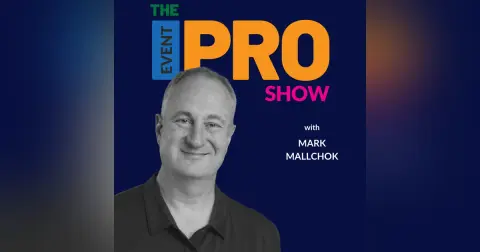
On this episode of The Event Pro Show, host Seth Macchi and guest Mark Mallchok take listeners behind the scenes of corporate event production, tracing Mark’s path from childhood performances in Hawaii to founding Brella Productions and leading large-scale projects for major brands.
Mark reflects on his creative journey and explains how storytelling and collaboration shape powerful event experiences. He also shares how his team at Brella continues to push boundaries with hybrid meetings, immersive video content, and global campaigns that connect audiences in new ways. The conversation explores how technology and audience expectations continue to evolve, offering thoughtful perspectives, genuine stories, and useful guidance for anyone dedicated to producing events that leave a lasting impression.
Resources:
The Event Pro Show is a production of LEMG.
LEMG is a leading event production company known for delivering exceptional experiences. From site planning and event design to technical production, staging, lighting, sound, and more—we do it all. As a second-generation company, we’re proud of our rich history and commitment to innovation. Whether it’s a corporate meeting, conference, convention, or live event, we’re the team our clients trust to execute their vision flawlessly.
https://lemg.live/
0:00 Welcome to the Event Pro show, your ultimate guide to the world of corporate events. Whether you're a corporate event planner, experiential marketing pro, producer, technician, or anyone involved in creating exceptional events, this podcast is your go to resource for valuable insights, expert tips and inspiring stories from the industry's leading professionals. Well, thank you for joining us on this episode of the Event Pro Show. I'm very excited about this week's guest. Someone I met this year at wec, runs an awesome company that I'm learning more and more about. Mark's bio. Mark, I'll just, I'll just give your bio here so people know what direction you're coming from. Mark co founded Brella in 1992, Brella Productions in 1992 with CEO and President Bernadette Burke. A veteran producer and director, he's directed engaging corporate meeting and event experiences around the world for notable healthcare, financial services and heavy industry clients.
0:56 He draws on his theatrical and film background to find compelling stories that anchor client projects and support their business and learning goals. He specializes in audience and participant management, combining powerful technical tools with rock solid narrative and performance techniques to deliver unparalleled face to face virtual and hybrid experiences. Well, Mark, welcome to the show. Thanks, Seth. And that was a mouthful. That was a lot of stuff. I like it. I like it though. It's only a paragraph. That's pretty good. You know, you go three paragraph gets a little, just a little iffy and it's, it's true too because you guys do such a good job. I was a guest on one of your webinars recently and I felt so taken care of. Just as a presenter. You guys are just total pros. Not just for, you know, the final product from the, the attendee standpoint, but from like the presenter standpoint. It was just great. It was a great experience. So you guys are awesome. I appreciate that.
1:55 Yeah, I have a great team. We've been doing some really fun stuff and actually that is our ethos. Like we want to take care of everybody as part of the event, not just the audience. Also everyone who's participating in it, our clients and everyone working it. Because if it's not a lot of fun to do the event, it's going to come through to the audience. I know you have a lot of experience in this space and the Event Pro show is designed to be content for event professionals, a lot of event planners. But the, our, our guests tend to be people that in some way shape or form touch corporate events. And so I know you have a lot of experience around that. But I'd like to ask a question just as a setup to every guest. It's like a baseline question, you know, and I think it's, it's the most fun part of the show for me. But what is the first event that you can remember attending? And I'm looking for something like back when you were a kid or you know, like your earliest memory you can possibly think of. And what was that? How did it make you feel? You. Yeah. And I'll be honest, it was actually a little hard because it wasn't just one, it was lots of small little ones. And I'll give you the back. So I was lucky enough to grow up in Hawaii, on the big island of Hawaii, where my parents were librarians at a boarding school. So I grew up participating in every single activity as part of the faculty family. Like we lived off campus, but we like ate breakfast there, we went to school there, we ate dinner there with the high schoolers at a family style table. And, and we participated in every single performance and activity. So like each one of those was like a
3:28 mini event. So I grew up literally on stage and participating in events like through grade school. And I moved very quickly in helping setting them up and planning and running them. And that's where I really fell in love with theater and events. It also helped that my mom worked for a while at a professional theater performance venue doing tech. So like designing sets, painting them and lighting them. I remember vivid, like going to that theater and like watching her set all this stuff up and like being in the audience or being backstage or being on stage. Right. For all of these plays. So I was able to be part of all of those events there. So I basically grew up on stage and backstage. I love it. It's in your blood. It is completely. That's so cool. And that's, that is not everybody, not some people grew up in it and have it like you like have it in the family. Some people kind of fell into it. Some people decided like mid career this is what they want to do. It's cool. Everybody's entry point into events and kind of how that impacts how you look at events even now. But, but as far as your experience, you're growing up, you're. You're doing, you know, things that you think, you know when you're little. I think sometimes the way I thought is like, this is how every family is, but you know, like you're doing things you're taking for granted. But at some point you said, this is what I want to do as a career. Is that something that happened? You young or did. Did you come back to it after doing some other things?
4:56 No, I mean, I pretty much always knew it. Like, I. I remember, like, going over with a bunch of, like, my sister and my friends, and we put on a play at a neighbor's, like, patio there. Lanai. Right. Like, I remember doing that. And again, you know, I grew up doing all of that stuff. I knew through, like, middle school and high school, I was like, it's setting up for dances and plays and performances. I was in every club that you could that had any sort of, you know, event sort of aspect to it. I was in yearbook, I was in choir. I was in theater. I was in a club. I was shooting all the games. I was doing all these sports. Right. But anything that needed to be coordinated, I was that guy. Like, I always wanted to, like, manage the process. And I think the turning point was, you know, for a really long time, I wanted to be an actor. I went to Northwestern, which was like, the top theater school. Like, for a long time I wanted to be an actor. And then I discovered during that process, during college that I was actually better. And I enjoyed a lot more the planning and directing of the shows and doing filming and editing of videos and putting on this stuff, because it allowed me to craft the story and have a greater impact on the audience than I did if I was just on stage. Also, it guaranteed that I'd actually be able to eat and pay for what I love to do versus being a starving actor.
6:15 So that was kind of the turning point in college is I was like, I know I want to do this very quickly. I think there's so many people in an event, event production, wherever, whatever type you do that were some type of performer. And whether that's theater, like you, or music, my case did a lot of music. But I, I. There are similarities or parallels between the way you feel after a show as a performer and as a technician or a producer. You're done with something that was highly. Took a lot of work, a lot of effort. You were putting yourself out there to some degree. You took a risk, you know, this could fail kind of a thing. And that's very performance, you know, as a performer. That too.
7:00 And at the end, I. There's that camaraderie, too, that I. That is the same as a performer, I think, a lot of times with actual technicians or producers or people there behind the scenes too. Do you, do you find that. Oh, completely, yeah. Yeah. I mean, one of the big things Because I always get asked, you know, by people, like, getting into the business and so forth, like, what are some of the big things that you should be doing? And I was like, absolutely. The tech is there, you need to know that. But the thing that I recommend is always try to get some sort of performance, because not only does it help you to coach what people are feeling doing on stage and how they're acting on stage and how they interact with the audience, but it helps make it easier to communicate. Yeah, you put yourself in their shoes, but it just makes it easier to understand your craft. Right. Like, the more you can understand about whether it's theater, music or the tech side of things, it doesn't make any difference.
7:51 Like, we're all in this idea of creating a performance. When we take on a new project, we call it a show from the very beginning. Right. Whether it's an event or a meeting, it doesn't matter. It's a show, it's a performance. Right. And everybody is part of that ensemble. Doesn't matter if you are the one speaking or the one, you know, who is managing the mic so that somebody can be heard, they can be lit, they can be seen doing the camera work. It doesn't matter. You're all part of this big ensemble. And I love that part of being part of the ensemble and, you know, having everyone participate in it. Because again, you get this aha moment at the end of like, woohoo, you know, we did it. It's that old analogy of like, I've got a bar and I've got some costumes, I have a friend who's got a whatever and like, let's put on a show. That's right.
8:33 That's what every single one of these is. It's amazingly fun to do it. Yeah. Even when it's long hours in the basement of a hotel and you never see the light of day, that's being a blast. I think people get addicted to it too, because that. That feeling at the end and there's something special about, okay, this was something that didn't exist in the world. We put all of this energy into it and it turned into something. And then there's that magic element when you add people to the mix, to the room, then something even cooler happens and you created something that out of thin air is what it feels like. Magic. You know, it could be corporate, it could be entertainment, but it's something new and different. You know, that's what's wonderful to me about it. Or like, in its best times, that's what it is, you know, maybe the worst times, it's, you know, 3am and you're loading out, but that's the worst. But the best time is that magic that you created. You know, it's the anticipation leading up to the, you know, audience coming in, like that walk in, music hits, the ballyhoo goes, right? And, you know, the audience walks into the theater, as it were, you know, and into that ballroom.
9:35 And it's those butterflies that you get. And, you know, there's nothing that beats it. It's nothing. Nothing. It's incredible. So what, what were some of the first jobs that you actually, you know, were able to buy groceries after you did that actually paid you? Yeah, well, luckily during college, you know, I got pulled into doing a lot of different things, like I invariably do, right? But I got pulled into one of the film organizations planning and showing films on theater at campus. And that actually led to being pulled into helping to organize and plan some of the film programs for several large science fiction and world cons. Oh, cool. So if you're not familiar, they're basically very large conventions that, you know, people who are fans of science fiction, either books or movies, whatever, come to. And it is a massive event, a series of events. Like there are tons of these. So I was part of the planning team for that through college for a lot of years. And it was amazing because I was able to observe and learn all the aspects of planning and managing these larger events because there were hotel contexts, there was registration, F&B, AV programming, VIP and speaker coordination. There was award shows, art auctions, like everything imaginable. And I was great because, you know, I was there for my expertise, right? But it was amazing training grounds while I was in college and learning about the industry and what it is and how to do it, and that partied really well into more actual paid events. I. That one, I probably wasn't paid all that much. I guess
11:06 my first paid event was at a summer Renaissance festival as a street performer. I was actually paid for this. So I was a sword fighter. I was teaching. I was doing stage combat choreography. I was playing the sets and the performance. I was even a jouster for a couple of years. So that was probably my first paid. Man, that sounds like hard work too. Oh, my gosh. Like, incredible. Like the, you know, the, the. The street performance aside is you're wearing Elizabethan garb, right? You know, so it's wool and heavy and so forth, and you're sweating your butt off because you're running around, you're fighting all these stuff. The jousting is massively heavy gear that you're falling off of horses on all the time in the heat of the summer. Yeah, yeah, it's, it's. They don't pay nearly enough.
11:51 So you founded varela back in 1992. So when you quit a while ago. Yeah, so it was a minute. It was a minute ago. But at the time, what was your vision when you started the company and how has that evolved through the years? Because I do think visions do, you know, they tend to change through decades. Years. So what was it when you started? Well, you know, other than food and being able to pay rent, Big Bon number one goal. So it's really good. Bernadette and I actually love to do a lot of different things, as you can tell from what I've been saying all along. Right. So she's exactly the same. So we knew we wanted to travel the world. We knew we wanted to meet like tons of people. We wanted each project that we worked on to be a unique experience, right? So when we looked at our options, we decided that feature films were just way too limiting. Like you're on a movie for years and years. TV's even worse, right? It's every day is the same for just decades.
12:51 And it surprised us, but we actually fell in love with corporate work because every single client and every single project is completely different. So like we could be completely nosy and learn like new things and meet new people every single day. So it fed this desire of ours to be able to solve new challenges and geek out about other people's businesses. So we started the company and doing video production. And because again, that played into every video project was unique and new and so forth and again, paid bills. And what happened is that over time we evolved because we kept growing into being able to do other things in production. And that came from our backgrounds. Like, you know, I was a photographer, I was a programmer, I was on stage, right. I did all these things. Bernie was the same. She was a shooter editor, like animator, like all of this stuff. And we love that. So as we did more and more of these projects, we evolved more towards events because we were doing videos where we would do like an opening video, a transition video, a teaser video.
13:54 We do that on site recordings and live switching the post event recaps. Like all of those things kept drawing us further and further into events. And our clients loved what we produced and they wanted us to take on a larger role every single year. So we've grown and expanded and contracted as well. So like in the many first started days, you know, we rode the technology wave as something came out that was new and different. We would explore it, we would learn about it because we love learning new things. And then we would decide if it was appropriate for our clients or not. Like some things just were like, well, that was cool, but no, right? Yeah, a lot of things. We would try a new thing, we would learn it, we roll it out, we would ride that for a while and then slowly but surely we would, you know, modify it and try something new as event and video technology events. So I'll give you an example. During COVID like pre Covid, we were starting to actually play with virtual meetings. Like we were exploring like Zoom and started actually had an agreement with Zoom, like before everything, before it was cool. Before it was cool, right? So like we had started that, we started looking at like, oh, what can we do with virtual like environments and platforms? So we started that Covid hit and so it exploded. So we hired on a bunch of people. Like we over tripled our staff during COVID because we were doing so many meetings. But it was more importantly an opportunity for us to bring on people from live events, like in person events and theater, who were suffering horribly, like completely out of work. And we brought them on, we hired
15:27 them on, we trained them up, we upskilled all of them to do what they wanted to do. And, and we helped service our clients who were in a pinch and needed to do really high end work. Great ways of connecting with your audience, but in a totally different venue and a totally different platform, trained all these people up, did all sorts of great stuff, and then at the end of it, they all went back to their passions, they went back to their lives and we've evolved into something else which is again much more focusing on the planning and organizing. So I think that's amazing. That's amazing. Such a cool example of being flexible and, and being a part of a small business allows you to do. You can turn on a dime, you can, you know, there's a guarantee that it'll look different in three years, you know, so as long as you're willing, like, you know what I hear from that is you guys are always exploring new technology, always curious, willing to completely change the game over and over again.
16:22 I mean, these are resilient skills. But I will take a moment and I, I think that, you know, the way that you guys produce virtual events now and for people that produce events or have an event portfolio, really keeping in mind that virtual events are still such a powerful tool to use in an environment where you're being asked to do more with less. So, like, if you have a whole annual portfolio of events, maybe you should look through each of them and. And deploy virtual on some of them if you're being asked to do more. But not anymore, because they can be super impactful, especially when they're utilized correctly. You know, the lessons we learned about, okay, we can do, maybe the programming needs to be shorter, but it can be really impactful, you know, or how can we keep people engaged in this? There, there's some great ways to do it. So I still think it's such a valid format, you know, even though it is a lot of fun to do live events. And that seems to be the primary right now. Yeah, I mean, you know, theater background, like in person, that is the holy grail. That's what you want to do. But there is, as you said, a ton of very important reasons to do virtual.
17:34 We did a program in the height of COVID and we actually looked back at the data and the metrics from pre Covid meetings in person to the ones that we did virtually. And the amazing thing was, is that we reached a lot more people that had bigger audience doing the virtual side of things and had a bigger impact than we did in person. So for example, this was a global event. They had approximately, and I don't have the numbers in front of me, but they were approximately 40 countries that they reached out to. We were up to 65 countries. During virtual, the audience doubled for the people that could afford to come. And it's a great equalizer. Virtual is one of those things that's underrated because it allows you to reach out, especially in corporate, to a huge audience. Right. Not everybody has the budget to be able to send their people all the way across the world to something. A lot of our clients have events that we hold in Europe, for example. Right. And if you're a smaller team in Asia Pacific, latam someplace else, they can send maybe one person in person and that person gets an amazing experience. But if you have a really good virtual or hybrid experience, their entire team can participate.
18:48 Like, the impact is massive. Like, there's so many more people that can actually join in, participate and be affected by the content and the information being provided on a one, on one really close basis versus hearing it secondhand. There's a lot to be said for that. That's right. And once you've invested in that initial package to like actually put on that, that streaming event, the, the Cost to add attendees is just very small. Very small. Yeah. So economies of scale. Yeah. Well, and one of the other things too that is important to remember is that there are no very few standalone in person events that only happen in that room. We have a couple. Right. But more and more, every single program that we're producing, we have to think about. All right. Even if there isn't going to be planned for a virtual, you still have to set up for it. Right? Because invariably you're going to have a virtual presenter who turns virtual because this has all happened. They've gotten sick, they've missed their plane and you know, they can't make it. They have another thing, somebody else's. So you're always preparing for that. Right. So to your point, it's not much more to plan for having that ability to do. And if you start at the very beginning and start planning it, you know, then you can have a huge impact and promote it and bring them in because again, you're going to have to broadcast out to that one presenter and have them come in anyway. Why not just make it hybrid? That's right. That's right. I love it.
20:16 I. It's such a great. And, and the world. The adoption of the technology was pushed forward about 10 years over Covid. So everybody knows how, you know, like, I think if Covid didn't happen, people would still be kind of like, I don't want to, it's not, I don't want to learn it. You know, now everybody had to, you know, look at our kids, you know, going up through school and graduating through a lot of that. They, they now expect that in education. So there's a whole generation that's just part of it. That's. That's one way you can do events, you know. Yeah, yeah. And I think you're right. The silver lining of that was like, because we did a bunch of K through 12 higher education, distance learning work back a long time ago, before it was cool. And it was a struggle. Like people just didn't get it. They couldn't get into it. Like it was much harder. Now for all of the challenges that Covid brought, right. There are so many things that people are now comfortable for doing things like this. Right. Never would have been able to do this 10 years ago or being able to like hop on a quick call or do like meeting after meeting around the world. Like I get up early and I do meetings in Europe, you know, I'm late for meetings in Asia. Like that's the new normal. It's Easy to do that. And we wouldn't have had any of that if technology hadn't had this massive increase and ramp up that we had to have. See, we're both, I think we're both a bit of optimists too, because we're seeing the glass half full part of. COVID half full is absolutely. Yeah. Not, you know, half empty. Yeah, yeah, it was rough, but there were some good things that came out of it. But as
21:48 far as you have a background in theater and film, so how has that influenced the way you design and produce corporate events over your, your career? Yeah, it's interesting. I absolutely have and we've talked about this. Like, I have a audience first mindset, right. So the first thing I think about on every program is what will engage the audience, what will make moments memorable, what will want them, make them leave wanting more to want to come back for next night or to pay for that second ticket. Right. So I'm always looking at the, the science of engagement and retention, which again comes both from my theater and film side. But also as I mentioned, like, we did some work in training for years for K through 12 and higher ed. And so I was always having to think about that, like, what was it that would engage the audience? What would keep people to, you know, reading, to save, participate instead of checking out, like, what would actually trigger them to remember something? What was that memory that would spark retention? So, you know, if the students or our audience. Right. Is not engaging or retaining the content and having those long term memories, then why are we doing it? Why are we spending the time and money? Right. So that is the important thing. So the theater and the film side of things really plays into asking the question of why are we doing this?
23:01 How can we make it better and how can we actually allow them to retain? So I really love starting a project and mapping out the story of the program. So I, I, I. We've talked about this before, but I love meeting at the very beginning of the planning stages to talk about the goals and the outcomes and what success looks like for the business owners. Even before we decide on things like dates and locations and agenda and is it an LED wall or projection light? Start by like going, what are you trying to accomplish? What are your goals? What's success look like? How do we get there? How do we make the audience love the experience, you know, and then from that everything else follows, Everything else just rolls into place. Yeah, I'm a big fan of clients coming very early to their production partners. Bring them in, even if you can build relationship and start avoiding even the RFP phase. I don't think that's like abdicating on your responsibility. I think that you've done a good job finding a good partner, you know, and if you do bring them in and let them, you know, what you're. You're implying we create a story arc for a whole corporate event and then we can plan everything else around it. And if they. People don't remember, like, what you just said, what's the point?
24:19 So, yeah, I think that's powerful, but tying back to what we were saying about virtual. So is there a difference then about how you approach engagement for live audiences versus virtual audiences? You know, in this, in this thought of, like, how you're creating the story of, of your event, how would you advise event planners when they're thinking about, okay, we are going to have like a virtual component, so what are we thinking about? Yeah. And, and the short answer, is there a difference? Yes and no. Right. Obviously, there's technical differences. You know, there's different technologies. But if you go back to the very beginning, you look at the underlying goals and objectives, they're absolutely the same.
25:01 Right? Yeah. The challenge, of course, with virtual, and we've talked about this just a few minutes ago, but, like, I think it's really hard and it's much more important to engage for virtual. So you have to work a lot harder. Like, virtual is not easier, Virtual is harder, and obviously hybrid is even harder. But, like, you need to think about things like adding in polls. Right. You need to make sure you're changing presenters and media, like, every 10 minutes. You need to find ways to call on the audience more frequently for Q and A. Don't just wait till the end, but, like, break it up. Right? Because, you know, they're used to having constant, you know, feedback, constant attention. But if they don't for a while, they're going to check out, they're going to go to the kitchen. Right.
25:44 You know, they're waiting for a commercial break. Right, Right. So you absolutely need to do all of those things. You need to find ways to see your attendees on screen, find ways to bring them in. And it doesn't have to be like a gallery view of everybody all the time. But it's amazing when you pull one person in and bring them up on camera from the audience, suddenly everyone is freaking out in the audience because, like, I could be next. So now they're engaged again. Like, they're really connected. So a lot of things like that. There's also things you have to do from the standpoint of video. You know, some things work better in virtual, some things don't. Right. So you always have to play that. But it's this idea that as virtual and this is the, the problem that we had at the end of the pandemic with zoom and teams is you're competing with not in person, you're competing with tv. Right. So if your shows are not broadcast quality for virtual. Right.
26:38 That's who your competition is. So you need to be using things like VMIX and other tools to create like multi up pips, different looks and branding. You need to be thinking about green screen studios for your presenters and full backdrops that you have them walking on like you would, you know, for like Sportscenter or something. So it's a much more elevated visual experience to make up for that lack of in person contact that you have in a room in person. Right. So you're fighting those zoom and team stereotypes and it's definitely a lot harder to achieve the same impact. Yeah. So yeah, yeah, yeah, I think you're right. I think production, high production is like the table stakes. That's just the starting point.
27:19 And then you get into your story but keeping it quick, keeping the, the pacing tighter. It's kind of like radio was, you know, like you don't ever want dead air. You know, you got to keep it moving. Yep. Oh yeah. I had a radio, tv radio show for a while. Right. You know, again, one of the thousand many things I did. And, and it was hard to plan that out. And then as soon as you had the visual element. Absolutely. And then the event is the personal element. Right. You not only have the audio side of things, you not only have the visual side of things, but now you have that inner communication, that connection, networking with people that you have to play in. Yeah, yeah. It is a lot of work to make it happen. Right. But when it's done well as an attendee, it feels right. It's magic. It feels right.
28:03 So what do you think has changed the most in corporate events since you guys started Brella? There has been a lot that has changed, I think. So obviously we just talked about this. First thing is, is every in person is now hiring. Right. So you got to plan for that. Like you have to plan for how do you engage the audience, how do you have to have participation from remote audience. You always need to plan for those virtual presenters and the communication feedback challenges. Right. So all of that has to be planned for in advance. It's not something that you can just like turn on at the last minute. Hey, can we actually add a virtual audience, you know, in five minutes when we're. No, no. Like cameras, audio mix minus like feedback. Like there's so much. So I think first thing is, is obviously, you know, the big change is that everything is. Is hybrid now and you have to think about different audiences. Not just your audience in the room, but your audience that's around the world.
28:59 And how do you not just connect with them, but also how do you localize it for them? Like your audience isn't just one demographic, it's thousands of demographics. So that's a big change and a huge thing for the future. I think one of the other big changes that have occurred is there's a lot more opportunities for creative engagement using technology like LED walls. Now they're at such a low price compared to what they used to be that you have to think about that. We did a show in Bangkok and it was actually significantly more expensive to use projection than the walls because the walls were a so cheap. But also, more importantly, they were easy to set up and anybody could run them.
29:40 Doing a blend in a projector is a lost art. Like that was very expensive, right? Hard to do. It's an absolute skill. Nobody there had it, right? So it has become a lot cheaper. So you know, what used to be a simple corporate meeting with a pair of like flanking projected screens. Now instead is like LED walls. Immersive elements inside and outside the room. Real time feedback from the audience, whether they're on screen or just using tools like mentimeter or Slido. Right. It's an active audience versus a passive audience. So that's a massive change that's happened is you have a lot more technology and you have to live up to the technology. You have a broader base of audience, both virtual and in person. And you need to have that audience be engaged using polls and word clouds and feedback from them and Q and A submissions and moderation. Like, it's just gotten a lot more complicated, a lot more fun, right? There's a lot more from a technical perspective, super fun. But I think you're right, man. There's so much technology that's going on. And I also am thinking the environment right now.
30:55 So everywhere you go, you go to a sporting event, you go to theater, you go see a touring act, you go to church, everywhere you go, production is such a high level. And what I've. The biggest thing that's changed over my career is things that used to be like wow are like common. And so it Kind of comes full circle back to what you've been talking about. If you're thinking about your, what story are you telling and create a compelling narrative through three days at your event or whatever it is, it starts giving a real reason, like a tangible reason to come to your event or attend your event. Yeah, all of the production is great for people like us. It's super fun to do, but also pretty common. What's not as common is the way that you're talking about thinking of really sitting down for a minute before you write that RFP or before you get down the road on what tech you're going to use and think about what you want people to walk away from the event with. How, how are you going to make impressions on your attendees in a way that's impactful and meaningful? And I think that is, it becomes like a competitive advantage, which I'm, all I'm saying is event planners, you need to talk to, to Mark because people like Mark can help you create something that's that much more impactful in a, in a really crowded market of events.
32:28 You know, quite frankly, you know, when you look at your calendar as an attendee and you're trying to. These are my anchor events I'm going to go to this year. It's pretty competitive, you know, so I want to go to one. If I'm going to spend the money, I want to go to one that makes an impact on my life and. I get something out of it that I learned something, that I'm engaged. Right? Yeah. You know, the thing that, that always baffles me is the lack of amount of pre production spot time that is allocated in the budget and in the planning. Your event is 5% out of the 95% that remains of the time that's required. So if you look at an event and you go, wow, all right, I've got one week is my on site event, right. Maybe a couple of days for a load in, etc. Right. But that's, that's, that's where I'm running all of my energy and all my thought process too. All of the other time. That 95% of the time is where the magic really happens. It's in the planning, it's in the organizing, it's in the brainstorming with all of your partners. It's figuring it out. And the sooner you do that, the more impactful it's going to be. You have less costs because you're not doing U turns. Right. You are able to book your crew and your talent Way in advance, because you planned it out. Your creative agencies are able to actually have something well in advance, so they're not rushing and doing stuff in OT and over weekends because they have weeks and months to think about. Like, I've seen after the site survey what the place looks like. I've received all of the pictures. I have the
33:58 floor plans. We know what the AV the room set's going to be. We know what AV we got. We've negotiated in between all of us, between the AV and creative side about what type of LED wall, how wide is it, what's the ratio? What's the pixel pitch? Oh, it's 1.9. Great. That's going to allow us to do X, Y, and Z. Here's the resolution. Like, they can do all of that in advance. They can produce the video clips, let's say, in the backgrounds. Once instead of getting on site and, like, freaking out because it's a different ratio, you act like it's a different resolution. I've never seen this before, right? So those are the things that I absolutely love is, is the sooner the better. And. And this is probably like, if I have to be on a soapbox for absolutely anything, right? As you said, like, embrace your partners and bring them in early. Rely on your experts to give you recommendations on how to elevate that audience experience.
34:50 It's their job, it's their passion. Rely on them. Don't get me wrong, I love. One of my favorite things to do is to manage this ensemble of partners, right? You know, if you want to think in theater, it's the actors, the tech crew, the craft services, transportation writers, right? But it's exactly the same in events, right? So listen to their ideas, suggestions, and recommendations. You don't need to do this alone. Let the professionals who you're paying to be experts, be experts. Let them do their jobs and bring them in early. That's it. That's all. I never need to do another podcast. That was a great summary of if people could embrace that mindset. And, you know, I think that is a. That's the way I feel about it. I also think event planners are struggling because that's like, they want to get to that point.
35:41 But I was having breakfast with a group of planners this week, and there's limitations on what they get. They're, like, stuck in the middle of, like, we know about the events, but I have no info until three weeks out. You know, it's like they're in this weird thing. So your partner, you know, we want to be There as early as possible. Hey, if you only have three weeks, we'll. We'll try. We'll. We'll do our best. We'll do. Okay. Like, I'm literally have one that is two weeks out and we're still struggling to get information. Right. I. I get it. I totally understand. I will say use us as a tool, as an excuse, as a crutch, as a crowbar to get information out. You know, hey, you know, the creative agency, the AV partner, they need to know this information.
36:26 Bring them into a meeting. Like, have us ask those questions for you so you don't feel like you have to be the bad guy. Right. You know, you can have us go, hey, so we just want to make sure we have enough microphones. Tell us a little bit about this panel. What are you thinking? How's it starting? Is there a moderator? Do you need tools? Like, and then we can bring all of those questions up front and then suddenly you're in the background as a planner, like, write all these massive notes because, like, suddenly they mentioned, oh, yeah, yeah, we probably do need actually a break afterwards. And so we're gonna need some F and B or, you know, oh, yeah, we need a rehearsal. Oh, we need to set up the date. I guess I should book that room a day early for setup. Like, let us help you with those things because, you know, we can always find ways to bring those questions to your client to ask them so you don't have to and then. Right. It keeps you out of asking those hard questions. Yes.
37:15 I love it. I love that. Well, what do you think as we're wrapping up here, what do you think corporate events will look like in 10 years? Hard question. Big crystal ball, very close. Nobody knows. I'll just preface it with that nobody knows. I think there are a couple of standard things that I can see in 10 years. So I think that corporate events are going to continue to evolve and focus more on connections and relationships. Right? So knowledge is going to be easily available. It's online, it's via AI. At some point, we're going to have neural implants, right. Where it feeds it directly into our brain. But, like, those connections of, like, face to face and face to face is either in person or what we're doing right now. Like, I consider this face to face, Seth. Like, I love this conversation because you and I can have a great conversation on this. And we know that, you know, we're getting something out of it. So any sort of connection can't be replaced. And I think this is going to be really important because it's going to help build authentic moments and trust. Like deep, deep fake video is easy now and it will be completely indistinguishable. Like, but in person it's much harder to fake. Even this is much harder to fake. Right? Yeah.
38:33 So I believe that there will be a lot more events, but I'm going to believe that they're actually going to be much more intimate and focused. Right. So brainstorming, working sessions mixed with team building and networking and community building. Like, so there will be all of these very small focus, intimate events and it's going to be much more about unique locations, venues and experiences than like large cities and large congress centers. This actually just brought up something for me. Like I literally two weeks ago was in Barcelona doing an event for about 120 people in like this all inclusive sort of corporate retreat. And it was amazing because everyone was focused. It was 45 minutes from the airport. They couldn't sneak out and go shopping. Right. Like, you were stuck there and there were activities, there were bike rides and like all sorts of things and massive amounts of food. It was phenomenal experience. Right. But it was much more about getting in a room, talking with each other, doing workshops, communicating really quickly. Those were those moments that were very intense and very productive because they were super efficient versus a large congress center, a large sort of thing. So I think they're going to evolve into much more about why do we meet in person. We meet in person to have connections and it's easier to make connections in smaller groups in places that are unique and different and we haven't all been to before. So there's my tenure. I love that vision of the future. So I'm hoping for that. And you guys are definitely poised
40:05 to be a creative partner with event planners to create those moments. So I really appreciate your insight into how you think about events and for taking time with us today. Thank you, Mark, so much. You are very welcome. Happy to do it. Well, thank you for joining us on this episode of the Event Pro show. Mark, how can we find out more about you and Brella? Yeah, absolutely. Well, obviously LinkedIn, if you search Brella or if you search for my name, you know, look up Melchalk M A L L C H O K. You can also find me. I think my one is actually brella mm on LinkedIn. So that's great. The Brella website.
40:46 Find my email, call me. Like, I love, as you can tell, I love talking about this stuff. Right. I love to talk about these topics. I love sharing experiences and learnings. I was lucky. I learned from some amazing mentors. I've experienced a lot of amazing shows and I am happy to share anything I can with anybody who wants to reach out to me. Love it. Well, thank you so much Mark, and thank you for joining us on this episode. If you want to see all of our wonderful guests we have had on the Event Pro show thus far, you can go to theeventproshow.com or go to wherever you listen to your to your podcast, Spotify, Apple, all those wonderful places. We will bring you a new episode about once a week.
41:30 Thank you for spending time with us today and we will see you on the next one. The Event Pro show is a production of LEMG video by Nick Barrett, audio and post production by Prince Thompson. You can learn more about us at LEMG.