

 Spotify

 Apple Podcasts

 YouTube
Bridging Cultures at Live Events the Wordly Way with Kirk Hendrickson
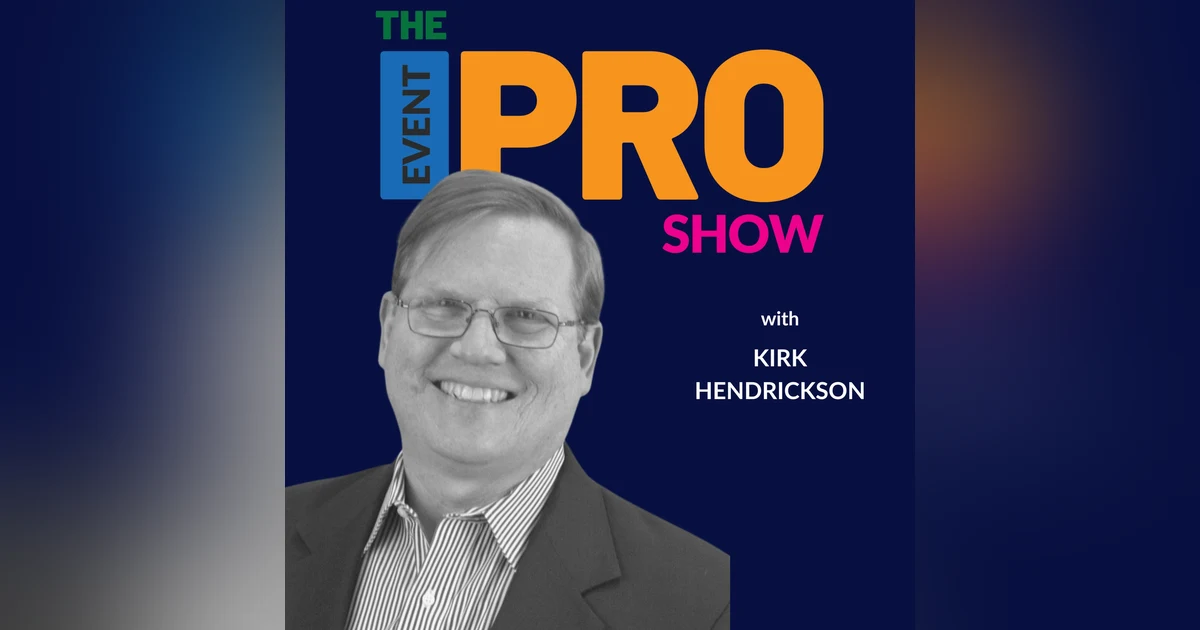

In this episode, Seth Macchi sits down with Kirk Hendrickson to explore how accessible, multilingual events are changing the way audiences connect. Kirk Hendrickson, COO and co-founder of Wordly, explains how real-time, AI-powered translation and captioning are helping remove communication barriers across live and virtual experiences.
Kirk shares his path as a hands-on entrepreneur focused on solving practical challenges, along with Wordly’s rapid growth and its expanding role in global conferences and large-scale gatherings. The discussion highlights how multilingual technology is improving accessibility, broadening audience reach, and being adopted across industries far beyond meetings and events.
This conversation offers practical guidance for planners, producers, and AV professionals who want to create more inclusive experiences. Seth and Kirk also discuss implementation considerations and a future where speakers can confidently present in their native language, allowing audiences to engage more fully without language standing in the way.
Resources:
The Event Pro Show is a production of LEMG.
LEMG is a leading event production company known for delivering exceptional experiences. From site planning and event design to technical production, staging, lighting, sound, and more—we do it all. As a second-generation company, we’re proud of our rich history and commitment to innovation. Whether it’s a corporate meeting, conference, convention, or live event, we’re the team our clients trust to execute their vision flawlessly.
https://lemg.live/
0:00 Welcome to the Event Pro show, your ultimate guide to the world of corporate events. Whether you're a corporate event planner, experiential marketing pro, producer, technician, or anyone involved in creating exceptional events, this podcast is your go to resource for valuable insights, expert tips and inspiring stories from the industry's leading professionals. Thank you for joining us for this episode of the Event Pro Show. I am your host, Seth Macchi. I'm the CEO of lemg. We're an event production company based out of Charlotte, North Carolina. But we do corporate event productions all over the country and I'm very excited about this week's guest. As you know, every other week I have an expert that touches corporate events, among other things that I think that you, if you don't know about them already, you need to know. And so today's guest is definitely making waves all over events and other markets.
0:52 Today's guest is Kurt Hendrickson. He's an entrepreneur and COO and co founder of Wordly, the platform transforming live events and conferences with automated real time translation in many languages. With a strong history of scaling early stage companies to successful exits, he brings deep expertise in product strategy, operations and customer development. Kirk's leadership is helping redefine how event organizers create accessible multilingual experiences for audiences around the world. Kirk Henriksen, welcome to the show. Well, thank you for having me, Seth. I'm really glad to be here. Yes. And I'm very excited. I have had lots of guests, but I think your product is amazing and in a setup for my first question, I'll just go through a few stats here that I know of and there's a bunch. But it just was your six year anniversary, correct? You guys have been around six years. You've been on the Inc. 5000 list. Now it's one of the fastest growing companies in America and including one of the fastest growing software companies.
1:59 You've been used at IMAX America 2025 and I think previous years you have surpassed 3,000 customers. You have over 4 million users in more than 60 countries. I could go on, but here's my question. What is Wordly? Well, Wordly is a platform for providing real time simultaneous live caption and translation. 100% powered by artificial intelligence for your in person meetings, your virtual meetings, any type of meeting event that you have. It's used globally by as you mentioned, companies ranging from Fortune 100 to the United nations to your small church around the corner. We're used all over to provide this great language translation and interpretation solution that just allows anybody to now no longer have language as a barrier which when communicating, that's fantastic. And I know this is always, you know, as an event production company we deal with this a lot, especially international companies need some sort of service. But even just for accessibility, this always comes up just, you know, there are people that might need to read what's going on or different, different uses and what. When you showed it to me, when we met each other, we met each other at WEC in St. Louis and just on the floor there, you showed it to me on a phone and it was like so powerful and accessible and easy to use
3:30 that it just seemed like a no brainer of like a, a something in the market. Now that is solving a problem. That's been a pain point. But as far as you. I'm going to back up before I get into Wordly because I want to. I have a few specific questions about worthy but you're obviously an entrepreneur. Were you always an entrepreneur? Is that something that developed over, over your career? I would say it probably is something that developed over my career and I've always seen myself less is about necessarily being an entrepreneur as more about interested in how can I help solve problems, real problems. And one of the challenges that I found when I worked for really big companies like Boeing, PricewaterhouseCoopers and I would solve problems. I mean it was really cool building airplanes and designing wings for airplanes and things like that. But you did a little bit of the problem.
4:28 And as I started working for smaller companies, I got to solve more of people's problems and I got to influence what problems we were solving. And so, so as I said, it's, it's. I've evolved into being an entrepreneur because I love to help understand what the issues are that people are having and how we can develop solutions that will really make their lives better, frankly. And, and so, and I, the more I can contribute the, the more I enjoy it. Which has led me to getting into earlier and earlier stage companies to the point where I founded a previous company before Wordly and in the market research world. I then was a co founder with my co founders Lakshman Rothnam and Jim Furby for Wordly just because this was a fascinating problem that I wanted to solve for the world. How to make it so that people could actually speak with each other even though they don't speak the same language.
5:24 Right, right. And now with AI all of a sudden things open up and you start seeing possibilities and are you, would you say you're more of like a hands on founder or are you more of like the visionary, like you're always 10 years ahead. What's your style? Or are you both? Do you play in both worlds? So, so you do have to be a bit of both. I mean there's definitely the classic visionary founder that, that's not me. I generally probably tend more towards being the hands on person because as I said I like understanding like what are the problems that people are having? How can I actually help solve those problems? And sometimes that's being a visionary to see beyond what is available today. Sometimes that's a little more, you know, how do I actually physically make it possible for you to be able to get the translation in real time on your phone?
6:15 You know, so, so there's, I have to bridge that gap. But yeah, I probably, I'm probably a little more biased towards the hands on piece. That's one of the reasons I run our sales team, I run our customer success, I run all over customer support is because I like to be in the trenches and making that happen. Right. I think both sides too though require a ton of creativity. It's just it comes out in a different way. It requires you to see things in a way that other people don't believe in it in a way that people can't see. You know, it all kind of requires a ton of creativity which is inspiring to me. And also why you mentioned big company versus little company, you know, that's why I love small businesses. You get to look at the entire value chain and have influence on it instead of just a tiny little bit which to me always from a little kid, you know, I wanted, I wanted to do a different thing every day. And so if that's, you get into small businesses, startups, those type of things because you will be doing something different every day. And when you know like that sounds like how what you are, what you're describing there and you were talking about solving problems.
7:24 So when you started wordly, what were the problems you were trying to solve? You know, as you looked at the, the market. So we explored a lot of different areas related to wordly and we found that, you know, events were a big, really big opportunity because really what we were trying to solve with a, was a math problem and the math problem was really simple and that is human interpretation is really good but it's really expensive and it doesn't scale. If you want to say for instance, like today wordly supports 67 languages simultaneously. If you wanted to actually support 67 languages, I mean you've been in AV forever, how many sound boosts Would have that been, especially back in 2019, how much infrastructure would be involved?
8:09 How many people? You have to have two interpreters for switching on and off. I mean, to support that, even imagining just five languages, right? Or. Yeah, and I'll give a little context for that example. Even one. One or two languages. So doing. We used to do these shareholder conventions for a global company. We'd have to set. First of all, we'd have to have a footprint in the arena for a bunch of booths that we set up. And then each one had to have, you know, headphones and some sort of mixer. They had to have soundproofing in it. They each had to hear a mix, and then they each had microphones, and they all were going separate places. All of that infrastructure is expensive. Then they're physical people. And as we know, labor is very expensive. You know, talent's very expensive having people doing it. And it was a very challenging problem to solve just for a few languages.
9:02 Oh, absolutely. And one of the things that we. We always like to think about is that the demand for interpretation far exceeded the supply of interpreters that were out there. So when we. When we look at AI solutions today, you know, see, sometimes people, they get. People get a little scared about the AI, you know, what's AI going to do to my job, etc. And the reality is that the need for this was just so much more than professional interpreters could possibly provide. And as a result, you know, when we started, we would often, we would be going to an event and they would ask us, okay, well, well, we always deliver in Japanese. We already have our Japanese interpreters, but we get demands for 10 other languages. Can you do those 10? So we, you know, go in and do the other 10 languages.
9:51 And that would be that. That was kind of actually a decent amount of our business in 2019. Or there was the. You know, we're a small event and we have an international audience and they really need it. And what we've told them in the past is bring your own interpreters. Doesn't always work out very well. The person's. You hear all this whispering in the back of the room. It's effectively whisper interpretation. This could solve that problem because, you know, we just can't afford to have our own interpreters and hire the interpreters and do all that. So now we've created something that. Where it's not just the biggest conferences, the plenary sessions, all the breakout sessions could use this. All the small conferences can use this. I mean, we literally work with your local church that has a tiny budget because they have a new family that's joined their congregation that needs. That speaks a different language, and they want to be able to have that family join their flock. So, you know, it's such an amazing tool where we've dramatically expanded people's ability to have language access. It just simply, you know, wasn't there before and was done only in very specific events. So it started as kind of supplemental. And then I. I would imagine people saw how easy it was to deploy, and then it started becoming the primary. But when. When you were launching it at the beginning, what were some of the early, like, challenges that. That you didn't see that you had to kind of work
11:22 through? And I'll give you one to start with. Here's one I'm thinking of. And it might not. It's not a technical challenge. We have clients that. I can already hear the argument, and you might have already solved this with them, but I would hear, we don't want anything like that because all of our data is sensitive and translation has to be perfect. You know, we have a lot of technical language. You know, these are the type. You know, it's either proprietary information, scared about, you know, security, or translation will just be wrong because we use a lot of acronyms. We use a lot of technical language. So I imagine those were those some initial challenges. I mean, those were definitely some things that would be. Would be brought up that we had. It was, I would say the biggest challenge, frankly, was that people just simply didn't believe you could do it. Oh, right. I mean, that was it. It was very fundamental. It's like, I don't believe it. That's one of the reasons why, if you ever schedule, like, a demonstration to see this and like what we did in St. Louis, I enter. I mean, I introduced myself, but I was showing you our product probably within a minute to two minutes of us. Maybe not even that. It was so.
12:33 Maybe not even that. Because the only way to get through that is to say, no, it's real. It's here. There's a reason why we don't use pre recording and for my. For our sales team and we have them talk live. It's because you can see, oh, it really is responding live to what they're saying. Oh, it really is translating it live into Japanese, what we are saying. Right. And now today, people. More people pretty much believe that that's true. 2019 blew their minds that you can. There's been a lot of mental shift in the whole market around AI too, since Then and I were you guys. Because this is all, this is pre chat GPT. Oh yeah, absolutely. AI craze. Right.
13:18 So you guys kind of were right place, right time too. Right. In your positioning for people even embracing the technology as a whole. Yeah, so, so I, ironically the, the events industry itself has actually been always very receptive to this. They've the bench managers, the idea of wow, this has always been a problem for us. It's expensive, we know it prevents engagement and engagement is a huge part of what we're doing. We want to be more inclusive, we want to be more accessible. This really solves the problem. Usually, you know, the part that took a while was getting their clients to, you know, to believe this as well. Right. The event space though, I mean you've, you've, as you described, it's the, all the challenges and, and we saw this. It's amazing how easy it is to be able to use our solution, provide real time simultaneous interpretation into 67 languages. And so this is, you know, so it took us, it took us longer to get through the, to the client side of this. But you know, once, once we did once, once we do, you know, people just, oh, they can't believe that what it, what a difference this makes for them and how easy it is and how simple it is and how they can now have 60 breakout sessions running simultaneously with interpretation in all these languages and just not even worry about it. It's so simple. You turn it on in the morning, you turn it off at the end of the day and you're done.
14:49 So let's talk about that. So two sides of your software. It's obvious it's a SaaS product. So but how do you deploy, how does the on site team deploy? So the technical team or the producer team, whatever you people define that as like the event managers, how do they deploy it to their attendees and then on the other side, how do the attendees or the users join and access and experience and benefit from it? So it's a two sided. Yeah, so I always love to start with the attendee experience because I think ultimately that's what we have to have is regard, you know, to a certain degree, regardless of what it takes on the, on the back end, it's that attendee experiences. It's really what matters for event professionals that we work with.
15:37 And so there's three ways that people will typically interact with Wordly. The primary way is directly from their own phone. They scan a QR code or there's a link in the event app and you're now viewing it from your own phone. You can both read and listen in real time. So you don't. It's not just text, it's audio as well. The second way is that often in many events they'll put up a display in the room where they'll show wordly. Now you can have multiple languages. Like we work with a very well known hotel in Singapore. They'll put up four languages for example, because it's what happens to be the common languages in the region. Whereas other events like we work with the Dreamforce, they'll put up a single language on a cap on a, on a screen that often is about accessibility. When you're just putting that single language up there, you still should get translation through QR codes. But you'll put up the screen so you can be able to follow along. Like subtitles in a movie.
16:36 Well, yeah, it's. And so it's just on a display they can see the. And then the third way is that many of our. For, for some of the more premier events depending on, on, you know, maybe this will be for the main stage or something. We'll work with the production team. So now it becomes a lower thirds type thing. So you can just, you know, embed the lower thirds. Sometimes it's just a single language, sometimes it's multiple languages. So we have a unique capability to make it really easy for you to embed. Like say for instance you could embed English and Spanish onto the, onto that lower third in your main stage. So those are typically that it's done by far by like 99% of the time. It's done with the QR code on. Your phone for amazing. And so that's the attendee experience. Super easy.
17:21 We don't require you to download an app. Everybody hates downloading apps, right? Yes. So, so we don't require that downloading apps. Don't give me another app, please. Yeah, any. Anytime. Someone in my internally says, oh, we could do this as an app. And I was like, no, it needs to be a web. It needs to be in the web browser. Because ultimately it's about the attendee experience in me making it easy to use. Now on the flip side, it's like, okay, what do you need to do as the AV production team to make it all work? So it comes down to in most conference rooms, you have your mixer, you bring in a laptop or tablet. That laptop or tablet goes to Wordly's website. You connect your mixer to the laptop or tablets and the audio from the mixer into Wordly and you're done. Done. I've set up 30 conference rooms in two hours. And you know, the, the usually the longest time was waiting for the right moment for the AV tech to be able to do the sound check because of course you got a million other things going on. So, you know. Yeah, but yeah, it's, it's. But once you've got their attention, it's like, it's easy, it's up and running. It's easy. It's up and running. You walk in, in the, as I said, you walk in in the morning, you turn onwardly. You generally, most of our clients will just let it run all day and then at the end of the day you turn it off. It will pause itself during breaks if it doesn't hear anybody speaking for about 10 minutes.
18:46 And so you know, and then it will start back up as soon as it hears people speaking again. So all those things are just try to make it super easy for the event managers to be able to use Wordly and the AV teams to be able to use Wordly. Amazing. And this is just from my curiosity, are there integrations with common streaming platforms that you guys work with or does it embed? I don't know. These are just so we do support RTMPs and we are able to provide streaming. There's some, some are better than others, but it's, it's. That used to be a question that I could like give you pat, probably in 2022, but it's been a lot less these days. But the refocus on in person events has actually been delightful. And that's for real. That's for real. You know, minute it was all, all virtual and now it is a mix of it. But it's definitely just side note, I just think in person events are here to stay and there's something special about now. The format of them, it might get smaller or more boutique or you know, smaller but more, you know, spread out. All of them need language services and the fact that you can deploy it efficiently is a plus. I mean I just see you guys positioned really well in that space. But you know, this is the event space. But what were other some like some other surprising
20:17 verticals or other industries entirely that embraced these services that maybe you weren't thinking about or maybe you were maybe like your beachhead market was events and then you branched out. But what's happened since? What are other markets that have opened up? Yeah, so so obviously we do events in person events, virtual events. We also then corporate meetings, executive briefing centers, those are the kind of things that, you know, we, we kind of knew. The three of us who founded this actually came from environments where we were thinking corporate meetings was going to be the place to be because I had been fairly recently working with a team in Shanghai and you know, their English was way better than my Chinese. But it was still a struggle. Right, right. Because you know, the we, the they were, they weren't necessarily hired for language skills. I wasn't hired for my Chinese language skills. And so we always had these, had these challenges and we see a lot of. So, so this was the same experience that, that we, that my, my colleagues had. It's just that turns out no one other than the executive suite in most of these companies was, was spending any money on interpretation. They just kind of said well, let's make it work. And so there was no budgets for it. Whereas on the other hand events, well, I mean, you know, boy, when you had to do it, it was expensive. And so there was often a lot of money, money already kind of set aside for it and a beggar recognition of the criticalness of that one event. Having language support versus
21:50 say 52 meetings a year now that's changed. There's a better, much better recognition among enterprises. But in terms of other spaces that we work with, you know, we look at other verticals. So we work a lot in state, local and education in the U.S. government in Canada because of course it's a bilingual country. We. One of the wildest things that we applications was related to impound lots. So go to an impound lot in most cities in the United States and you now have someone who's trying to retrieve their car. Well, what if they don't speak English now? They don't have their car. It's a, it's a huge issue. And they literally can't talk to the person who they need to be able to communicate with to get their vehicle back. Right, right. So, so like, like I said these, all these applications, we never even considered that. Right. You know, yes, sure, sure. The city council meeting, that was like a kind of a no brainer. Like we, they need that. The county board of supervisor meeting. Sure. The city planning meeting. So you know, those, those types of things make sense that you would have it. But then that, you know, the impound lot, you know, we are working and we, we do work in a variety of other areas that one of the other growing areas is in houses of worship.
23:17 So it's, I could see that for sure. Quite amazing. And then this is globally, it's not just in the US the, the that, you know, the houses of worship tend to want to, you know, be welcoming, increase their flocks. And so part of that is in a global, in the global world we're in is being able to allow, you know, bring people in who don't necessarily speak the same language that you do. Right, right. Amazing, amazing. So it's all, it all makes sense when you, when you kind of reverse engineer it. Like these are people trying to communicate with other people efficiently, you know, and that, that does make sense. Oh, absolutely. I mean, ultimately, that's what we're trying to do is just make language no longer a barrier to communication. Right, right. And that, that's sort of the, that's our ultimate driving, driving vision here is let's make it so language is no longer a barrier. So that's the long term mission vision of wordly is just pulling that barrier down. Yes. And, you know, we look for more places we can do it and ways to make it even easier and make the experience even better. And ultimately we, we hope the experience is better. Back in 2019, you know, the, the audio piece was definitely not anywhere as good as it is now. The accuracy was definitely lower than it is now, but it still, it still worked. And you were. I was able to have conversations with people in Brazil and Japan using wordly. Now the
24:48 conversations are even better. They're more fluid, they're. I, I don't have to ask quite as many times, could you repeat that? Because the answer came out very odd, but. Right. It's, you know, I literally have these conversations all the time with people all over the world in their own preferred language. What do you think wordly looks like in 10 years? Like, if you can peek into the future and how it's being deployed and used and consumed, is it more of an integrated experience where people aren't even thinking about it as much? Or what does that look like? I mean, that's what I would love it to get to, is that it's more of, you know, you walk into your conference and you sort of have wordly inside that allows you to be able to see all the live captions, follow along with the language, listen along in the language of your choice.
25:43 But I think that one of the things that we also have, you know, we also look at is how do we go beyond, beyond this. And part of this is that this is breaking down the language barrier is the first one of the key steps in allowing us to have meaningful and engaging conversations with everyone, regardless of what language they Speak. But now that we're having these meaningful, engaging conversations, you know, what's that next step? What's that next step in engagement and making meaning out of what we're doing? And so, and so that's one of the areas that we're definitely, you know, we, we think is going to be a part of Wordly in the next 10 years. When you think about, you know, you guys started it just six years ago and it's, I imagine it's been quite a roller coaster ride and journey as most companies are especially, you know, on a, the trajectory that you're on. But do you have like a most satisfying success story from a client that you share with people or something that just kind of brings you joy? That like, hey, we did that, we made that happen.
26:46 So I actually go back. I, we do so many events that I'm just delighted that we support and are able to help people with. But I, I, the most impactful event was one that we did really early on and that was a event for a major company. I can't mention who it was, but it was their sales kickoff. And this was in 2019. So it was, it was December of 2019 and this was in person. This was still our first year in business. And they had brought us in because they standard delivered their translations in two languages, but they had had requests because it was a huge global company that wanted to have other languages. So we said, okay, great, well, here, those other 10 languages you want, we have those, we'll do those other 10 languages. So here I am walking into big, big convention center in, in Vegas as, as I spend a lot of time in Vegas now that I didn't used to when I was not in the events industry. Yeah. But so, so here we are and I walk in and there's the, there's the sound booths for the two languages. You know, huge amount of the, of the back is, you know, backstage taken up by these sound booths. You've got the couple of interpreters all ready to go.
28:07 They have set up an enormous table for me for my equipment. Yeah. And then I pull out my ipod. It was an ipod. It wasn't even a phone back then. An ipod. I put my ipod down on the table, I run a cable from it to the mixer and I join the Internet. Click, attend. And then I'm done. You're done. I'm like, there you go. So you now have 10 languages that you can use. And the most amazing thing is people scan the QR code and they used it used wordly in the languages that were provided by the human interpreters. Oh, because you had that.
28:53 Yeah, because they were there anyway. They were there anyway. But that's because there are people who didn't want to go get the headsets and deal with all that, but they just scanned it and said, oh, I can follow in Japanese here. Oh, that's amazing. And so. So to this day, I mean, that was like. That was the moment I knew that what we had was, like, I mean, was going to change. Change everything. About how. Absolutely. Events would manage language translation and allow us to create just such more inclusive and accessible events and to allow them to be more engaging. I mean, imagine going to your sales kickoff, and you have all these people who you bring in from all over the world who don't really speak English because it used to be. I mean, still way too many conferences. The price of admission is you speak English.
29:39 Yes, that's right. And. And it doesn't have to be that way anymore. It really doesn't. It's really inexpensive to not have to do that and now seem like a sales kickoff. Imagine you. You get 20% more productivity from the result of the fact that they actually understood what was being presented. Right, right. Not missing anything. Yeah. So that's a fundamental shift, for sure. And how it was being done, because I. I remember that setup, how much of a pain it was. And then no matter what, it's just not as efficient. It's just not, you know, And. And while your algorithm's getting more and more accurate all the time, it's. It's just kind of. That is definitely a fork in the road right there where technology is taking it in a different direction. Yeah. And there's so much more that you. You can do with.
30:31 I mean, now, it used to be you'd have the interpreters, and then if you wanted, say, a transcript, you'd have someone else generate the transcript for you. Now, the transcripts are literally a byproduct of word. Of using wordly. So it's. It's just. Okay, you were wordly. You get the live. Oh, and you also get a transcript. Oh, you also get an audio transcript. So if you want to have a audio of. In the Italian, you can. You can have the audio in the Italian. Oh, was that one of the languages used during the event? No, you. You needed in Vietnamese now. Sure. There you go. Transcript in Vietnamese, audio track in Vietnamese. You're. You're ready to go? Yeah. And I think I was just talking with a friend recently about utilizing resources from an event post. Event and how. How do you search for it, how do you utilize it? And tools like this, allowing you to utilize content that you spend a lot, to create in different ways and engage with your attendee in kind of an evergreen format. I think people are very interested in that. And you know, like you were calling it, it's like a byproduct of something that you weren't, maybe weren't intending to. But there's all these other outputs from Wordly that you can utilize post event or while the event's going on. That's powerful as well, you know. Absolutely.
31:49 I mean, it's. It is so amazing what we've been able to do and what our client. The value our clients are able to derive from using Wordly. It. It's as. I mean, I gave you the story about that sales kickoff, but another story that, that we have of one that was very profound was we started working with the city of North Las Ve. Uh, so city of North Las Vegas is a majority minority community. And many years ago, for those in the Vegas area might know that, you know, North Las Vegas went bankrupt. It was like the largest municipal bankruptcy in. In the US at that point. And it's unfortunately been exceeded, but, you know, that's. But not by them, thankfully.
32:30 But they've come back a long way. So. So we attended one of their city council meetings where they entered, had recently introduced Wordly, and it was specifically about street cart vendors and which is in that area, predominantly Hispanic, you know, and every one of the speakers that came up presented in Spanish because of Wordly. And so it no longer was that they. They didn't have to have an interpreter there. They didn't have to worry about the fact that, yeah, okay, great, the two bilingual city council people can understand, but nobody else could know the city that. So instead they were able. Everybody was able to follow along. They were able to. To express their desires and open comment in their own language. And that's. That's actually the. Probably the biggest. That's the biggest change that we have yet to really get the event industry to embrace, and that is let speakers speak in their own language.
33:31 Oh, I love that. I love. They still. There's still so many events you go to, and it's like, okay, I brought in this. I brought in this amazing person from Japan. He's like the most knowledgeable person on this subject. Speak English. Right, right. Oh, I love that. Yeah, yeah, you should normalize just native languages. That's fine. No big deal. It's not a barrier. It's Not a barrier for us. That's right. It's not a barrier. I've been so, so every year for the last 20 years, I've taken my, my, my oldest daughter, she was very young then, to San Diego Comic Con. Okay, cool. She. She is, she's. I mean, she's. We started going because she loves anime and manga, so Japanese comic books, etc.
34:15 So, so anytime there's like some big deal Japanese artists that comes, we had a person who was heavily involved in like, you know, the, like Spirited Away and movies like that Studio Ghibli. And you know, these people would come and they would usually have to bring an interpreter with them because, you know, even though San Diego Comic Con is huge, it doesn't provide necessarily that service in quite the same way. Like a wordly would. Right. And you'll hear the person, they'll talk and they'll talk for a while and then the interpreter will say like 10 words. You know, it's like. Right. Did you really. And so this, this last year, I actually, I took wordly and I ran it in the, in the audience so that I could actually follow along. And no, it wasn't, it was kind of what the interpreter said, but only kinda. Oh, no.
35:14 So. Okay, well, it sounds like that client right there. Well, but, but it's the idea that there, it's. Because it's, it's not normalized to have the person speak. So, so, so, you know, they're, they're not necessarily. This conference isn't set up to have necessarily a lot of interpreters. Maybe we shouldn't mention them by name, but I shouldn't mention them by name. But that's, you know, it's one of these challenges that we get with these, with this. The need to change that attitude that it really is. Okay. I love it. Anybody planning events listening, let's normalize people presenting in their native language. And by default, your attendees getting used to accessing that language through wordly, that, that you can now, you know, listen to it in all of its. Or read it in all its glory. Absolutely the way that the speaker intended it, you know, without that delay of an interpreter.
36:10 And you know, there's still times when that's appropriate. But I could see on a whole, that would just open up a whole new experience for attendees, you know, well. The, the language you speak affects the way you think and to get someone's true thoughts, you really want to hear it in the language that they're thinking about it. And yes, there'll be an interpretation that will come in that, that flow. But right now, what generally happens is we get, we get this, get layers and layers before we actually get to that person's real thoughts. And if you're forcing them to speak a language that you know, they're truly bilingual, it's not a, not a huge issue. But if they're not truly bilingual, that, that, yeah, we got, we got to change that. That's the big change that we want to see happen in the events industry. I mean, the embrace in general has been great, but that, that's the one thing, that's the one hurdle we could still take another go at.
37:05 I support this. You heard it here first. We need, we need keynote speakers presenting in their native language. People have Wordly. Well, if people. You know, I've really enjoyed this conversation and it's been a learning for me too, because I, I'm curious. You know, I, I've been around Wordly a little bit, but I, I don't know everything about it and it's really cool to hear what, how it started, what it's doing now, where you're thinking about going with it. It's powerful. This is a power piece, powerful piece of software. So thank you for stopping by and talking with me. Well, Seth, my absolute pleasure. It's been delight. It was so nice to met you in person in St. Louis and Nice to speak to you today. Yes, sir. And if people want to learn more about you or Wordly, where should they go? What's the best place to go? So we're on online@Wordly AI. That's our website. It's the best place to be able to connect with us. We also have a presence on LinkedIn and Facebook if you want to join us there.
38:04 But yeah, absolutely. Go to Wordly AI. You'll see all the good things about that for me myself, I'm Kirk Hendrickson at LinkedIn. That's pretty much my, my social presence. Don't have a lot of to do a lot elsewhere. Wordly keeps me busy enough, so. But you, you can also, you can also reach out, reach out to me through there or as I said, go to our website, Wordly AI. Love it. Well, thank you so much and thank you listener for joining us on the event Pro show. If you want to hear all of our episodes, you can go to the eventproshow.com to learn more about us or hear our backlog. And as you know, we put out an episode every week where we're either introducing you to great people like Kirk or we're showing you or teaching you a little bit more about how to work better with your AV provider. Thank you for joining us and we will see you on the next one. The Event Pro show is a production of LEMG video by Nick Barrett, audio and post production by Prince Thompson. You can learn more about us at LEMG Live.